
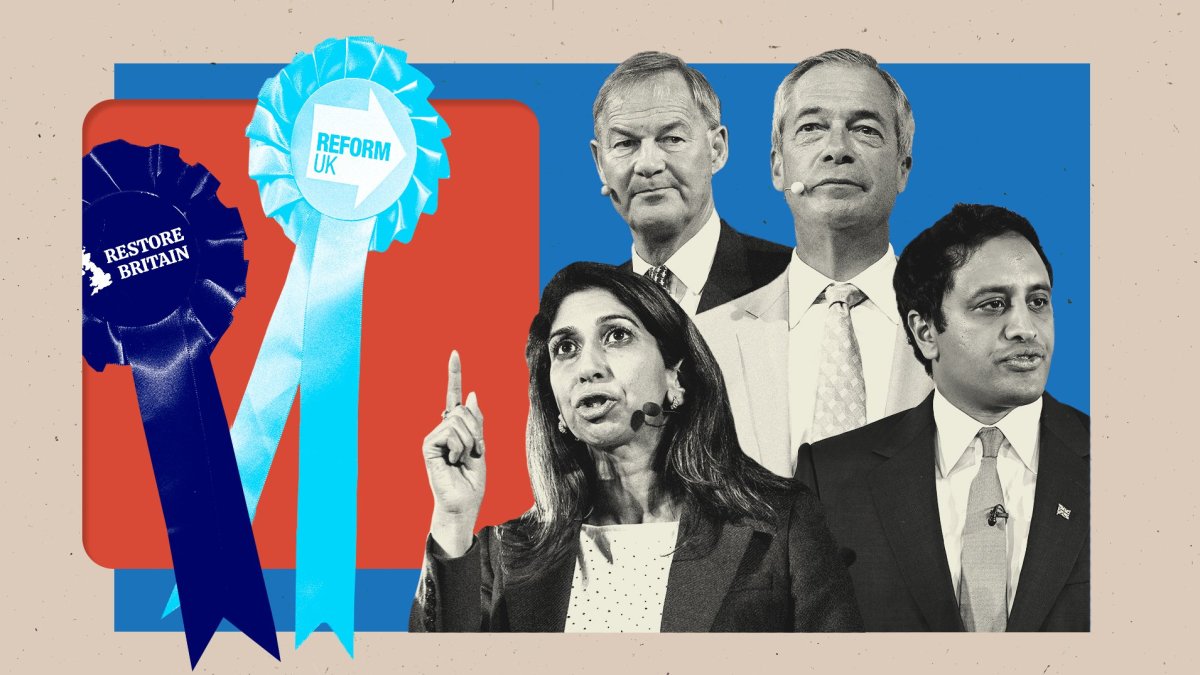
Columnist, broadcaster and former chief leader writer of The Observer Welcome to The Fight for the Right, The i Paper’s opinion series exploring the ideas, personalities and parties battling to shape the right of British politics. • The Tories’ birthplace reveals a party fighting for its life• Farage could walk away from Reform – this is how• The Facebook star wrecking Farage’s 30-year dream of power There has been a whiff of nastiness in the political air in recent weeks. Suella Braverman, Reform UK’s education and equalities spokesperson emphatically implied people have to be white in order to be considered English on Question Time last month. Zia Yusuf, the Reform home affairs spokesperson posted on social media that Sagal Abdi-Wali, Labour’s now-elected candidate in the Holborn and St Pancras by-election, was born in Somalia, before posing the question “do you understand what’s happening?”. And treasury spokesperson Robert Jenrick, in defending this intervention from Yusuf, posed the question “do they love our country? Will they always put British people first?” It is all starting to feel increasingly – and explicitly – ethnonationalist on the hard right of British politics, with dogwhistles traded in for blaring foghorns. Race has become one of the clearest dividing lines between the Conservatives and the parties to the right of them. One of the strongest sections in Kemi Badenoch’s speech to her party conference in Birmingham was when she attacked Reform MPs for their divisive rhetoric on race: “I don’t want to explain to my son when we’re watching our brilliant England team play that some people don’t think our black players are English.” It has earned her racist attacks from allies of Nigel Farage: Raheem Kassam, one of his former advisers, branded her a “Nigerian scammer” online, telling his followers not to “give her your credit card number”.What has driven this shift from Reform? There are three key dynamics at play here. Most importantly, the electoral calculus has evolved since Rupert Lowe last year broke away from Farage before starting the harder-right party Restore Britain. Reform now confronts the dilemma: do they prioritise competing with the more moderate Conservatives to the left of them on the political spectrum, or with Restore Britain? There is a battle within Reform over whose votes the party should be focused on, with Braverman and Yusuf facing squarely towards Restore. Depending on how you look at it, Lowe has either freed up senior Reform figures like Yusuf and Braverman to say what they really think on race, or it has given them an electoral incentive to harden up their position. Second, Reform is doing business within a broader hard-right online ecosystem that includes players like Tommy Robinson and Elon Musk, and is also acting to drag the party even further to the right. Many of their interventions appear designed to appeal specifically to the online world: good for social media engagement, perhaps, but Reform’s dip in the polls would suggest not necessarily as good at winning round swing voters. Last, there is no getting away from the fact that some of Reform’s grassroots are racist and so would enthusiastically welcome this shift in direction. An ITV undercover investigation surfaced examples of several Reform councillors and candidates dabbling in disgusting levels of overt racism. The Reform deputy mayor of Solihull, Alan Feeney, was recorded referring to Asian homeowners as “parasites”. Feeney has since apologised and stepped down from his political positions. Two local candidates joked about burying pork chops in the ground to prevent a mosque being built. A South London councillor held up the fact “you never used to get any blacks over in Bromley” as evidence that white people have been “ethnically cleaned out of London”. Farage has argued the party cannot vet its candidates for future comments. But that excuse holds little water in an age where people have extensive online history, and Reform seems loathe to ask itself what it says about itself as a party that it is attracting people with these views to its ranks. There are signs this strategy of flirting with ethnonationalism are not working out electorally for Reform. Reform’s support in the polls has trailed off since their peak last autumn. They are nowhere near where they would need to be to win a general election. And Farage’s personal ratings have tanked: more of the public take a dim view of him than any other political leader – 54 per cent. He is more of a Marmite figure than ever: attractive to his base, but offputting to swing voters, and a big motivating factor for opponents of all shades to vote for whichever candidate is best placed to beat Reform locally. The Restore-lite gameplan – with its focus on picking fights about what it means to be British – cannot carry Farage to Downing Street, yet he seems unable or unwilling to stop his frontbench spokespeople from going down that road. It is the Conservatives who stand poised to gain from this. At the moment, their electoral and poll performance is still pretty dire, reflecting the fact that many voters are simply not prepared to give the Tories another chance after booting them out so decisively in 2024. Badenoch undoubtedly went hard on Reform musing on British identity because she believes in it, but it suits her to have Reform as well as Labour to define herself against. Labour is also likely to benefit from splits in the right vote at the next election. The pollster More in Common has estimated that even on a fairly small percentage of the vote, Restore could end up costing Reform scores of seats in a general election under first-past-the-post. But if it is good for mainstream parties, the hardening of Reform is very bad news for the political conversation in the UK. It will continue to drive further polarisation of the discourse, and encourage more hostility towards non-white communities. While Farage has in the past condemned far-right agitators like Tommy Robinson and Danny Tommo – the latter alleged Farage had called protestors at the “Unite the Kingdom” rally earlier this year “knuckle-draggers” – Reform’s deputy leader Richard Tice recently argued that in allegedly slashing a dinghy in the English channel with a knife, Tommo was “doing the job the police and the border force should be doing”. Reform’s failure to maintain a clear bright line between them and implicit support for violent unrest only helps to normalise it in a world where misinformation can spread like wildfire online. They are playing a dangerous game.
Farage’s Reform lieutenants are trading dog whistles for foghorns
Full Article
Original Source
Read the full article at Inews →KhanList aggregates and links to publicly available news content. We do not host full articles from third-party sources. Always verify important information with original sources.