
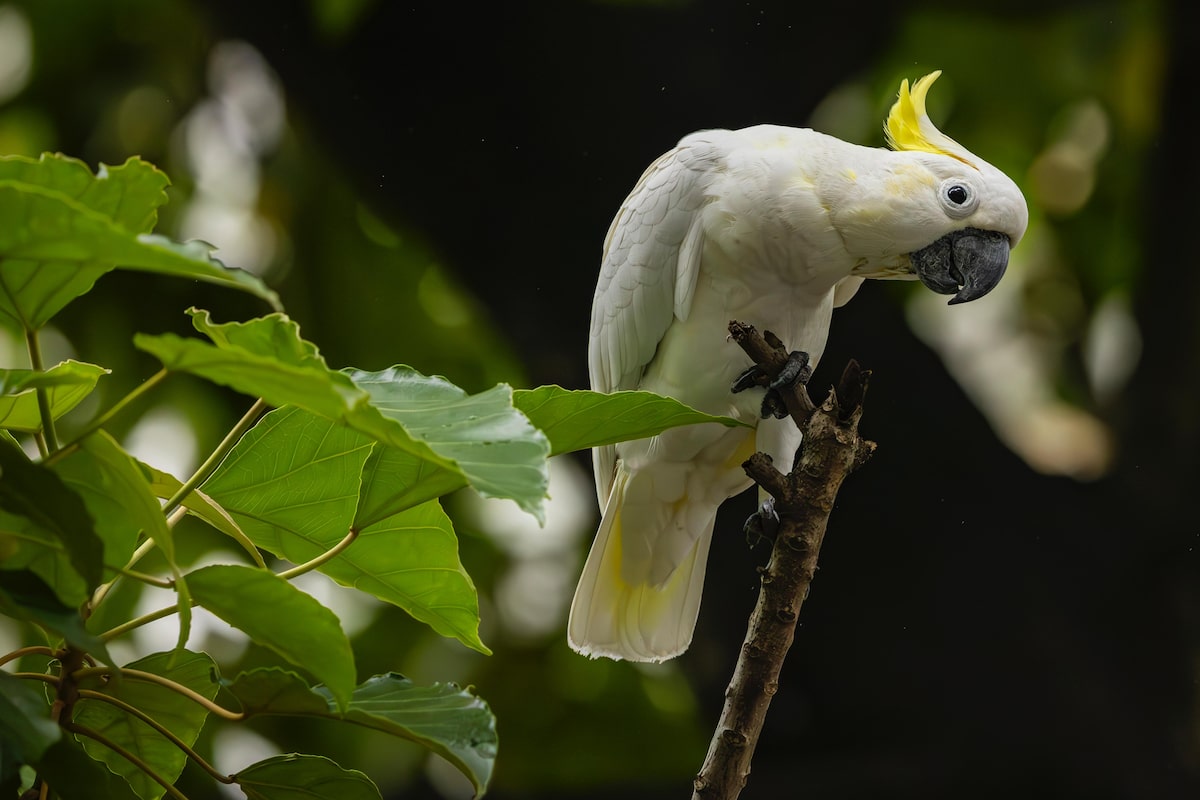
Open this photo in gallery:A cockatoo perches on the branch of a blooming cotton tree in Hong Kong's Admiralty area.Karma Lo/ReutersCockatoos are instinctively destructive. Stand under a tree in which one is perched and you will soon be dodging branches as the bird, mostly for its own amusement, starts ripping up the canopy and dropping it to the floor. The natural habitat of the yellow-crested cockatoo is the jungles of central Indonesia, though coming across one in the wild in that vast territory is a relatively unusual experience. About 10 per cent of all yellow-crested cockatoos live in a very different environment: Hong Kong. Those birds could be critical to maintaining the rest of the critically endangered species, of which there are some 2,000 mature specimens in the wild, threatened by deforestation and climate change and hunted for the pet trade. “Instead of dismissing urban, introduced populations as ecologically redundant, we should view them as a potential ‘biodiversity ark’ that can actively help prevent extinction,” said biologist Astrid Andersson, lead author of a recent study of Hong Kong’s cockatoos. Open this photo in gallery:Introduced to Hong Kong as pets, there are now an estimated 200 yellow-crested cockatoos living wild in the city, accounting for around 10 per cent of the global population of this endangered species.Winster Wong/The Globe and MailAccording to popular legend, cockatoos were originally brought to Hong Kong by British colonial authorities in the early 20th century and released into the wild during the Japanese invasion of 1941. But there is scant evidence for this − the first reference to an escaped cockatoo is in 1959, and gene sequencing suggests most arrived in the 1960s as part of the exotic pet trade. However the cockatoos arrived, they have thrived in Hong Kong, with around 200 birds now calling the city home. But there are inherent problems in transitioning from a jungle to an urban environment. Cockatoos love to nest in tree hollows, natural cavities in the trunk that unfortunately mean the tree is structurally unsound and could fall during one of the many typhoons that buffet the city every year, potentially killing not only the birds but any human unlucky enough to be nearby. In recent years, storm damage and intentional felling has meant that Hong Kong cockatoos have lost some 60 per cent of their natural habitat. In response, a team from Hong Kong University has begun erecting dozens of nesting boxes across the city, giving the birds safe and secure spots in which to lay eggs and rear their young. Open this photo in gallery:Yellow-crested cockatoos rest atop a light pole in Hong Kong's Sai Ying Pun neighbourhood.YAN ZHAO/AFP/Getty ImagesSuch boxes can also come in handy when cockatoos are found in places they are not supposed to be, as happened in May, when a homeowner on Hong Kong Island heard loud noises coming from the ceiling of her bathroom. “A pair of cockatoos had got in and laid eggs,” said Harry Wong, a conservationist and arborist who works with the HKU team. A chick had hatched, and now all three birds were inside the ceiling, scrabbling and squawking and generally being destructive. The homeowner did not want to throw the chick out, but equally couldn’t leave the birds in place, so she called Kadoorie Farm, a Hong Kong nature sanctuary. Experts there said that without its parents the chick would likely die. And so Mr. Wong, wearing a harness and helmet, eased himself out of the bathroom window and, watched by two nervous cockatoo parents, attached one of the team’s nesting boxes to the side of the building. “It was very close to the hole they had been using, and so we put the baby back in the box, hoping the parents would find him again,” Mr. Wong said. “We had a camera watching the whole time. Luckily it was a success, and eventually the chick grew big enough to fly away.” Open this photo in gallery:Conservationist Harry Wong shows a live feed of a cockatoo inside a bird box he installed on the campus of Hong Kong University.James Griffiths/The Globe and MailAny bird born to a critically endangered species such as the yellow-crested cockatoo is a gift, but particularly for the Hong Kong population, which is remarkably genetically diverse and could one day be an important reservoir population for the wider species. While the HKU team is actively working to prevent habitat loss, that does not mean yellow-crested cockatoos in Hong Kong are safe from another threat that has so devastated the wider population: the pet trade. “Pet cockatoos are expensive,” Mr. Wong said. “So people will sometimes try and trap them and take them away to sell in other parts of the world.” Wild turkeys, once hunted out of existence in Ontario, are retaking TorontoLast year, reporters found a three-month-old cockatoo chick being sold for $2,400 in the city’s bird market. While selling wild-caught cockatoos is illegal, as the species is protected by the Convention on International Trade in Endangered Species (CITES), Hong Kong does allow the sale of birds born in captivity − even though there is no registered breeding program in the city. Conservationists have long called for Hong Kong to adopt its own red list of endangered and vulnerable species, as mainland China first did in 2013. The government recently pledged a five-year plan that would include greater environmental protections, with the first phase of such a list currently under preparation. “We could do a lot better,” Mr. Wong said as a pair of cockatoos squawked loudly from a tree above him. “There are a lot of endangered species in Hong Kong − we need to learn to co-exist with them.”
Far from home, Hong Kong’s wild cockatoos could save their species from extinction
Full Article
Original Source
Read the full article at Theglobeandmail →KhanList aggregates and links to publicly available news content. We do not host full articles from third-party sources. Always verify important information with original sources.