
"Since Wednesday, life has been upended," Upadhyay told BBC Radio Wales Breakfast on Tuesday. "For the first few days, we were we were waiting very hopefully for some information. There was some hope that he would somehow have walked up to higher ground and would have made the long trek, sort of the 60-mile trek home. "But as the days passed, that hope has definitely faded."Authorities said rescue efforts had been largely focussed on the Trishuli 3A and 3B sites - hydropower projects with tunnels.Nepali authorities are blasting into hillsides to try and reach those trapped, with a controlled blast carried out at the Trishuli site in an attempt to open up access in the early hours of Monday."It has been extremely difficult to reach the site. What we understand is that all the buildings are under meters of mud and it has been impossible to search for anyone there," Upadhyay told BBC Radio Cymru's Bwrw Golwg programme on Sunday."Within 20 minutes the connections were all down. The phone signals have not been working and that is why it has been so difficult to hear anything."It took about three days for us to get any information. We have been looking at the news, trying local contacts and trying to see what the army and the police have been doing."She continued: "We know that the only way to reach the site is by helicopter. You need special skills to be able to drive a helicopter in that area. It is an extremely difficult place. We have been waiting for special machines to be able to work through the mud."There is some good news from other stations along the river as some people were able to hide in tunnels within the hydropower stations ."There's not a lot of hope for that particular site - but we don't know until someone can get in. At the moment everything is under mud."Upadhyay said there were about 14 hydropower stations along the river valley, and Chaudhary was a driver.Though he was on site at the time, Upadhyay said it was unlikely he would have been deep in the tunnel network. "So our expectation is that the first wave came and he was washed away," she said. The disaster was caused by a "glacial collapse", which is when a glacier or part of a glacier disintegrates, according to the US Geological Survey (USGS).The collapsed glacier hit the bottom of a valley so powerfully that it registered a tremor with a magnitude of 5.2, according to the agency.This caused "subsequent catastrophic impacts downstream" - powerful floodwaters and debris travelled some 62 miles (100km).Upadhyay said about 300 bodies had been washed up, but they had had no news of Chaudhary. "In Nepal, their death rituals are extremely important," she said. "With the beliefs around the afterlife and trying to ensure the best passage through to the afterlife... for that the body is essential."If people have been washed away, then how can people move on and how do they complete these rituals?"Upadhyay explained that some tourists were among those missing, because the "area is important for pilgrimage to many religions".She added the region was used to natural disasters, but that no one had expected flooding on this scale."In Nepal, we know that earthquakes can happen [but] this is worse than what has happened before," she said, adding the main concern was rising temperatures causing "more cases of glaciers melting and collapsing".In terms of what is next for Nepal, she said "a lot of hydropower infrastructure will need to be rebuilt", as well as "big solar infrastructure" which was damaged or destroyed in the flood. She added that "many bridges along the the river valley, which provide access to to communities and towns and villages" were also washed away, "and so many have been cut off".
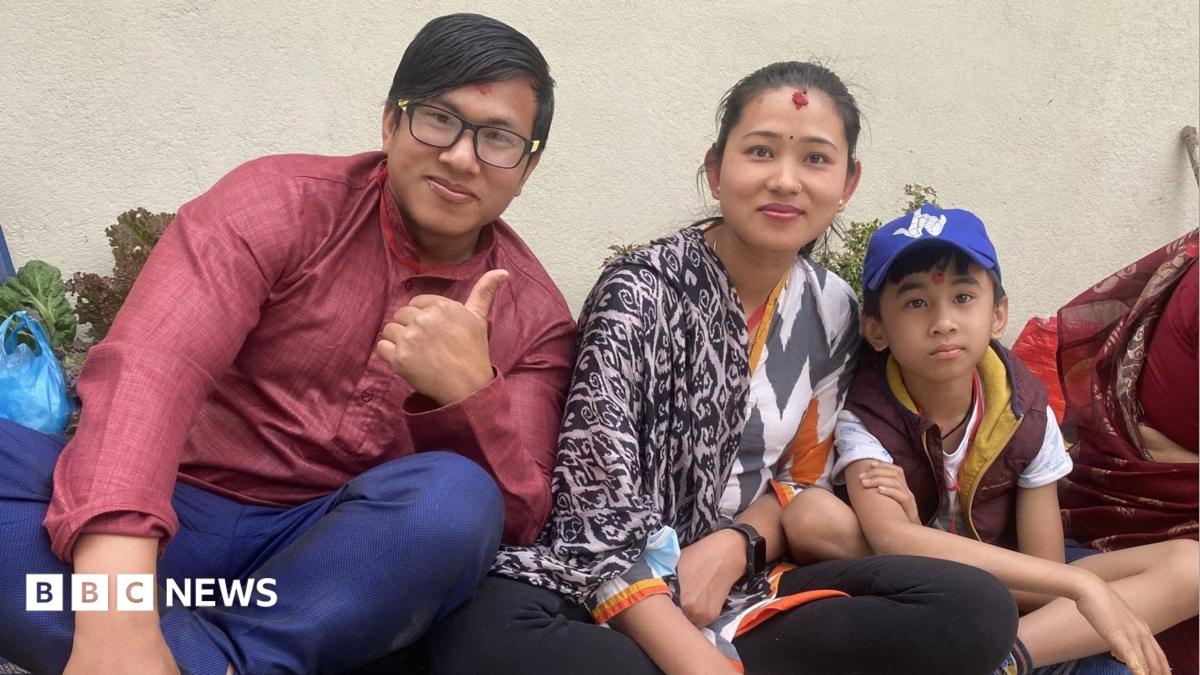
Family fear for missing hydropower worker after Nepal flood
Full Article
Original Source
Read the full article at Bbc →KhanList aggregates and links to publicly available news content. We do not host full articles from third-party sources. Always verify important information with original sources.