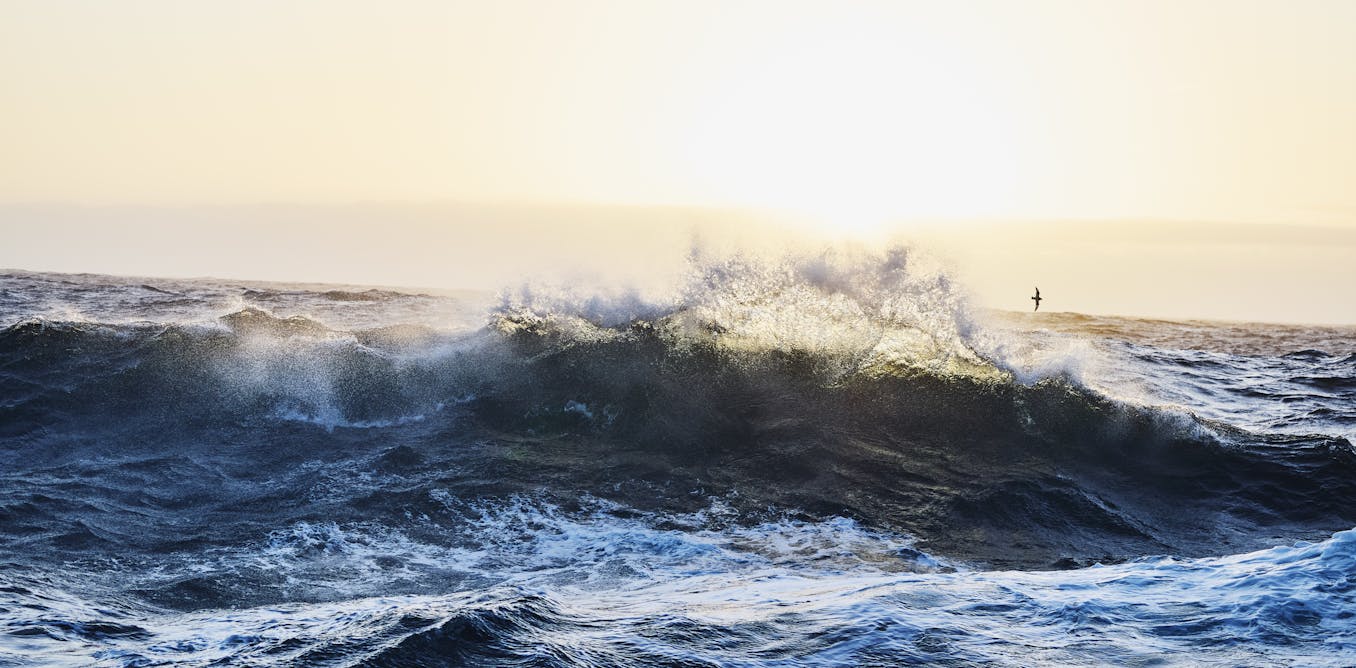
In late June, whale watchers in southwest Western Australia sounded the alarm. They had seen far fewer humpback whales at a time when they normally migrate up from the Southern Ocean to calve and feed. Numbers were 60% below normal. A week later, birdwatchers spotted a “once in a lifetime event” as large numbers of rarely seen albatrosses and petrels appeared off Australia’s east coast, thousands of kilometres from their usual foraging grounds deep in the Southern Ocean. Many birds were in poor condition. The sightings came just weeks after a dying migratory seabird was confirmed as Australia’s first case of highly pathogenic H5N1 bird flu. These sightings raise troubling questions. Seabirds and marine mammals such as whales use ocean currents and weather to travel long distances to feeding and breeding grounds. If these species are changing their behaviour, it could be a sign of altered conditions in the Southern Ocean. We know the world’s oceans are running very hot. Marine heatwaves can affect any part of the ocean – even frigid Antarctic regions. If species are used to water temperatures around 2–6°C, a sudden boost of a couple of degrees can upend ecosystems. If the heatwave lingers, the cumulative effect can be much bigger. We don’t yet know for sure, as monitoring in the Southern Ocean is limited. But we know marine heatwaves can alter currents, weather conditions and prey availability. Seals and other species are abundant on sub-Antarctic islands. Mary-Anne Lea, Author provided (no reuse) Oceans running hot Since February, a large and persistent marine heatwave has affected waters around Australia’s Heard Island and McDonald Islands, stretching as far south as the edge of Antartica’s sea ice. These remote islands are extraordinarily rich in life. But researchers have found their waters are exposed to damage from climate change. A long-lasting marine heatwave is affecting the Southern Indian Ocean, as shown in these monthly averaged temperature anomalies. Heard Island is roughly in the center of the image. Chris Chapman/NOAA-OISST, CC BY-NC-ND The southern Tasman Sea has also endured a marine heatwave since at least April, likely due to the fact we are coming out of successive La Niñas. The Tasman Sea between Australia and New Zealand is running hot, as these monthly averaged temperature anomalies show. Chris Chapman/NOAA-OISST, Author provided (no reuse) Both areas of ocean are among the fastest-warming on the planet. The steady drumbeat of climate change can make marine heatwaves more severe, more frequent and longer-lasting. It’s possible this marine heatwave is putting pressure on seabird and whale food supply. But there remain significant gaps in our knowledge. One reason is that extreme events don’t occur very often. Given this, it’s worth looking at past events. Devastation from ‘the Blob’ Between 2014 and 2016, the North Pacific Ocean was hit by an event scarier than any monster movie. A huge, long-lasting and extreme marine heatwave stayed in place for many months. It became known as “the Blob”. Water temperatures were between 2°C and 6°C above normal. While this may not seem like a drastic change, it led to widespread ecosystem disruption. At least 240 species were found outside their normal ranges – some further north than ever recorded. It’s hard to overstate how extensive its effects were. Kelp forests disappeared. Millions of starfish dissolved into goo. Whales died. Seabirds starved. Toxic algal blooms appeared. It’s possible reported falls in whale numbers and unusual sightings of seabirds might be linked to a smaller version of the Blob in the cold Southern Ocean. We already know marine heatwaves can disrupt the feeding behaviour of marine predators such as little penguins in Tasmania. Our research has shown marine heatwaves lead to significant shifts in the types of zooplankton – tiny floating animals – found in coastal seas off Tasmania. Zooplankton are important food sources for seabirds, whales and fish. As early as 1997–98, researchers found warmer surface waters in the Southern Ocean made it harder for female Antarctic fur seals to find prey while raising their pups. Deaths of pups and adults are becoming more common in the South Atlantic. The population has fallen by around 1.5 million in the 15 years to 2022. The species was once considered abundant. But it’s now has recently listed as endangered. Many humpback whales migrate from Antarctic waters to Australia’s east and west coasts. Mary-Ann Lea, Author provided (no reuse) We don’t know what we don’t know By studying past events, scientists now have a better understanding of how marine ecosystems respond to extreme events. Even so, there’s a lot we don’t know. For example, we have strong evidence climate change is affecting Antarctic krill. But we still don’t fully understand how a particular marine heatwave affects these tiny crustaceans or how ocean predators such as whales and seabirds respond during such events. In short, our knowledge of how extreme events affect ecosystems isn’t keeping pace with climate change. For scientists to understand how vulnerable species respond to environmental triggers, we need to monitor key species over the long term, while tracking environmental conditions in breeding and foraging areas and their food sources. This type of monitoring is expensive, time-consuming and challenging. It would require national coordination, international collaboration and sustained support. But if we want to understand what’s driving ecosystem changes affecting local and migratory species in our waters, it will be necessary. Once up and running, these dynamic monitoring systems would help authorities respond quickly by, say, reducing or redirecting fishing boats if there’s a sudden drop in fish numbers. Monitoring would also show areas in need of better protection. We know changes are taking place in these cold oceans. Fewer whales and rare seabird sightings are a warning sign. If we don’t have better monitoring, we will keep flying blind as global warming accelerates.
Falls in whale sightings, rare seabirds appearing – is something unusual happening in the Southern Ocean?
Full Article
Original Source
Read the full article at Theconversation →KhanList aggregates and links to publicly available news content. We do not host full articles from third-party sources. Always verify important information with original sources.