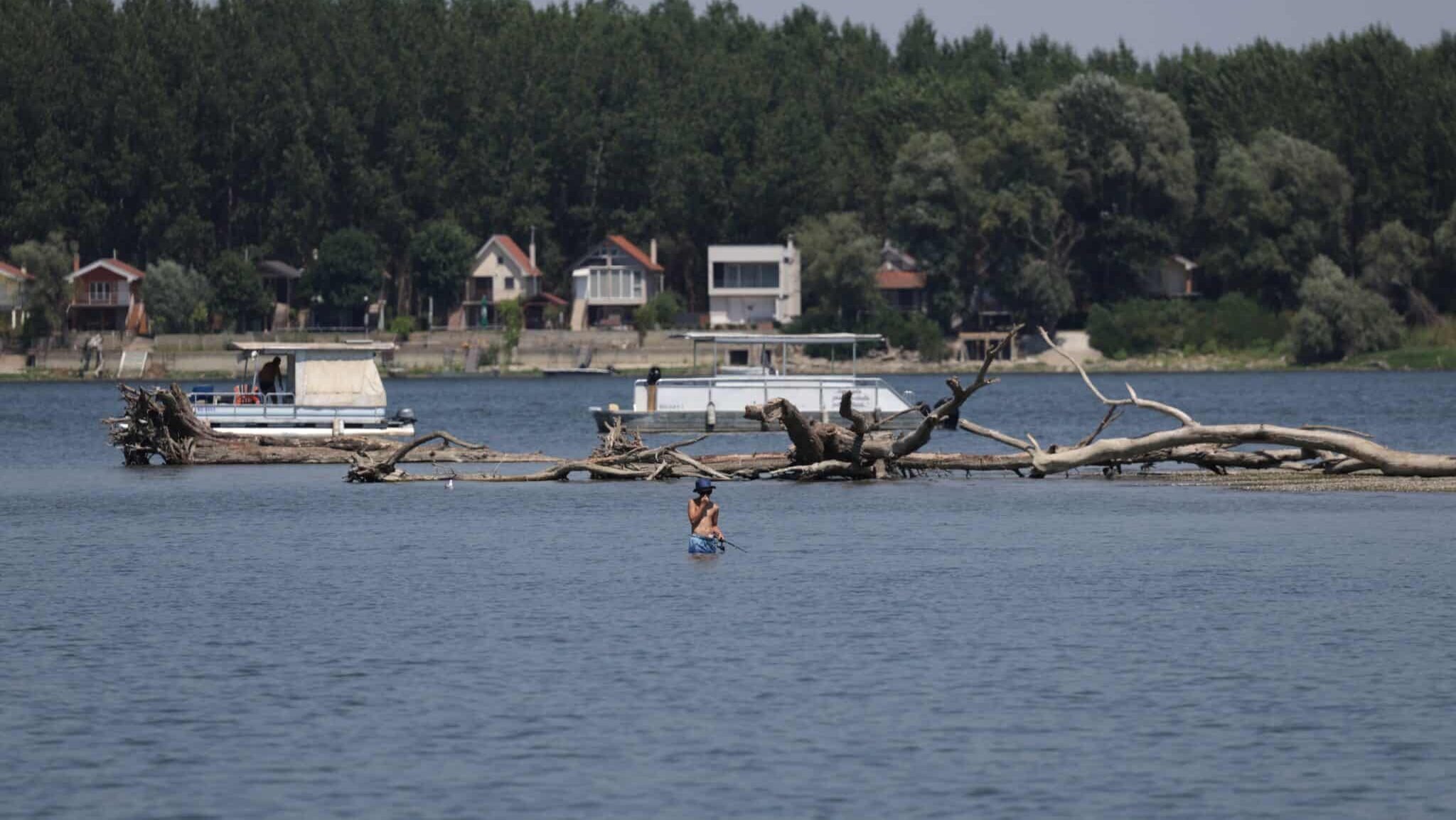
Serbia’s Hydrometeorological Service on Wednesday said the water level in the Danube was either still slightly declining or stable, with a tendency to rise slightly or remain stable over the next four days. However, prolonged low river levels in Serbia generally are creating challenges for the country’s energy sector and fuel imports. Shells are seen on a dry bank of the Danube River in Belgrade, Serbia, 05 August 2026. EPA/ANDREJ CUKIC Ljiljana Krec, director of the Apatin-based public utility company Dunavska Obala, said meteorologists expected a slight rise in the Danube water level, but the situation remained serious. “The situation is far from harmless. It is quite tense, both regarding the pontoons and the boats that have been left stranded on dry ground,” Krec told Serbia’s public broadcaster RTS. A tire is seen stuck on the dried out bank of the Danube River in Belgrade, Serbia, 05 August 2026. EPA/ANDREJ CUKIC The low level of the Danube is especially affecting electricity generation. However, Dusan Zivkovic, director of the Electric Power Industry of Serbia, EPS, told RTS on Wednesday that the electricity supply was stable – and would remain so. “This is a period of major challenges, but I would again emphasise that citizens and businesses should not be concerned about the regular supply of electricity,” Zivkovic said. According to him, electricity generation at the Djerdap hydropower plants has been reduced by the exceptionally low water level, but EPS had prepared the system for such circumstances. He expects the period of low inflows to continue, partly because of limited snowfall in the Alps during the last winter as well as more recent weather. A man cools off in the water at Lido beach on the Danube River in Belgrade, Serbia, 05 August 2026. EPA/ANDREJ CUKIC Due to the low river levels, the supply of petroleum products has become challenging and measures to ensure a stable fuel supply have been stepped up. Serbia’s Minister of Mining and Energy, Dubravka Djedovic Handanovic, met representatives of the Association of Oil Companies of Serbia and the Petroleum Industry of Serbia, NIS, on Wednesday to discuss the transport and delivery of petroleum products amid low water levels on the Danube. Women cool off in the water at Lido beach on the Danube River in Belgrade, Serbia, 05 August 2026. EPA/ANDREJ CUKIC More than half of the 39,000 tonnes of diesel planned for import in August was due to arrive by river. Those deliveries are now uncertain, forcing the authorities to rely on increased domestic production and NIS’s operational reserves. “Imports were reduced to a minimum in July, and we expect a similar situation in August,” Djedovic Handanovic said. She added that the government is “monitoring the water level of the Danube and the availability of rail transport, supervising the situation and taking action to facilitate the delivery of petroleum products wherever possible”. A bird takes off from the shade on the banks of the Danube River in Belgrade, Serbia, 05 August 2026. EPA/ANDREJ CUKIC Following the meeting, the ministry said NIS would release around 23,000 tonnes of its operational reserves to other oil companies and increase daily crude oil processing later in August. A ban on fuel exports would remain in force until the end of the month.
Falling Water Levels on Danube Threaten Serbia’s Electricity Supply
Full Article
Original Source
Read the full article at Balkaninsight →KhanList aggregates and links to publicly available news content. We do not host full articles from third-party sources. Always verify important information with original sources.