
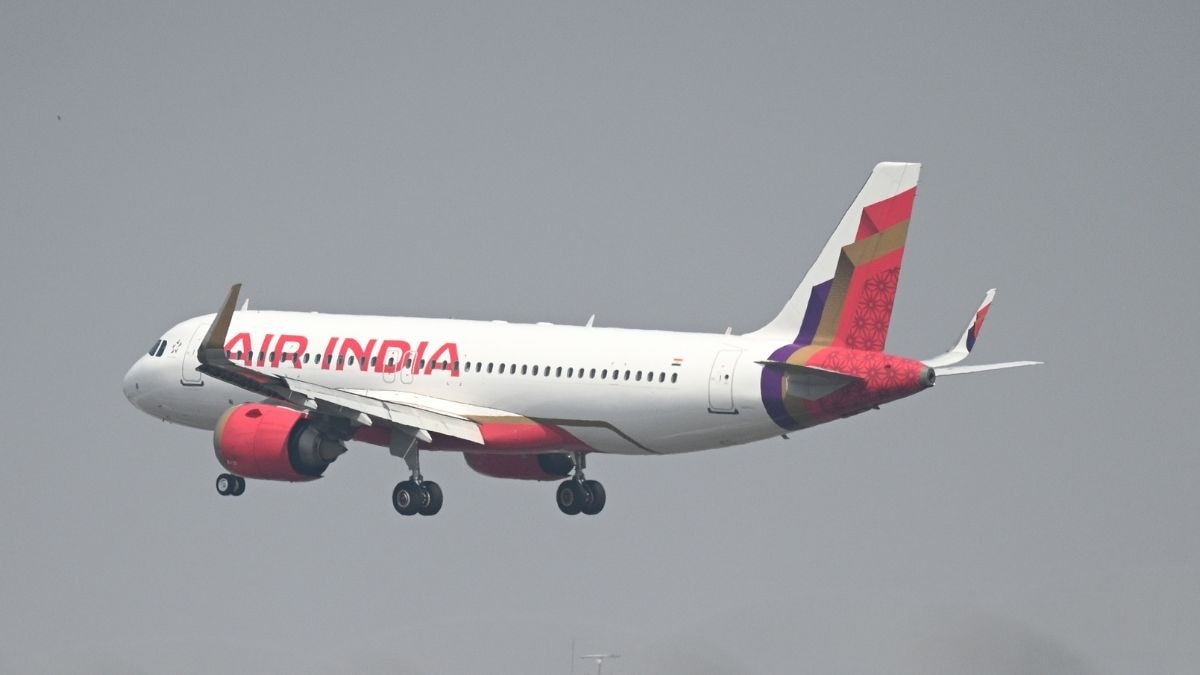
The preliminary probe report doesn't clarify why the August 4 Phuket-Delhi flight lost pressure in all three hydraulic systems and suffered a sharp altitude dropPhoto: Representational imageA preliminary investigation into the sudden altitude drop on Air India’s Phuket-Delhi flight on August 4 has found the plane to have briefly experienced loss of pressure in all three hydraulic systems at a flying height of 36,000 feet before its autopilot disengaged and the Airbus A320 experienced a major altitude variation. The pilot in command has tested “non-negative” for psychoactive substances, and Air India, on September 4, terminated his services.The findings raise two safety questions: the cause of the unexpected technical failure of the flight-control systems and the safety fitness of the captain to command the flight. So far, however, the government’s Aircraft Accident Investigation Bureau (AAIB) has not established any relationship between the result of the psychoactive substance test and the hydraulic systems failure or the resulting altitude drop of the airplane.The report, while separately recommending action by aviation regulator DGCA (Directorate General of Civil Aviation) on abuse of psychoactive drugs, has added that the technical cause of the altitude drop was still under investigation.The incident, which left 24 people injured, happened on Air India flight AI2379. The plane had 137 passengers and eight crew members on board. At the time of the altitude upset, the aircraft was flying at 36,000 ft over the Kolkata Flight Information Region. The injured—20 passengers and four crew members—had to be treated upon landing at Delhi. Four of them were seriously injured. The incident was initially dubbed as a turbulence encounter, but the investigation has focused on the aircraft's hydraulic systems. While the preliminary report suggested what caused the aircraft to suddenly lose altitude, it hasn’t confirmed why. The sequence recorded by the aircraft reveals that as soon as hydraulic pressure losses were detected, the autopilot disconnected, followed by a short stall warning (a pilot alert system) and the plane’s deviation from the assigned altitude.Investigators are yet to determine why the hydraulic pressure was lost. According to the report, at 04:02:43 UTC (coordinated universal time), the aircraft’s flight-control system noted loss of the green hydraulic system. Four seconds later, it lost the blue and yellow systems.“At 04:02:48 UTC, the autopilot disengaged and continuous repetitive chime (CRC) came,” the report said. The stall warning was activated three seconds later. Initially, it was the co-pilot who responded to the situation. Thereafter, the captain took control of the aircraft. The aircraft rose 372 ft and then descended 292 ft from the altitude assigned, said the report.The hydraulic system failure wasn’t prolonged, however. “At around 04:02:52 UTC, the blue hydraulic system was recovered, and few seconds later, the yellow hydraulic and the green hydraulic systems were also recovered,” the report said. The flight-control surfaces then returned to normal and the plane flew normally again.The sequence is important because the A320 has three hydraulic systems (green, blue and yellow) that are required to generate pressure for essential aircraft functions, such as flight controls. Investigators have taken pertinent hydraulic components from the aircraft for analysis.Since July 28, the aircraft had been flying out of Phuket with its power transfer unit (PTU) under the minimum equipment list (MEL), meaning some on-board systems and equipment were temporarily unavailable or inoperative. Auxiliary hydraulic pressure can be supplied to the green or yellow system by the PTU. The preliminary report does not state that the ensuing loss of hydraulic pressure was due to PTU issues.The results also contradict the original description of the turbulence. “No adverse weather was reported by flight crew and ATC (air traffic control),” stated the report.Meanwhile, the finding on the captain's psychoactive substance test has raised another avenue for the safety inquiry. Breath analyses and tests for psychoactive substances were conducted on both pilots after landing. The breath tests were satisfactory. The co-pilot tested negative for psychoactive substances but the pilot in command was “found non-negative” in the initial and confirmatory tests, as per the report.Accordingly, AAIB has recommended that “DGCA may take appropriate actions as deemed fit to prevent abuse of psychoactive substance” since one of the crew members had returned a non-negative result.The non-negative test result is not an indication that the captain was responsible for the incident. The initial investigation report does not list pilot action as a factor leading to the hydraulic pressure losses, and the AAIB states it is continuing to investigate the “technical and other aspects”.Air India responded to the preliminary report on August 4, saying it was extending “full cooperation” to the investigation by making relevant operational, maintenance and technical records accessible to investigators. “Safety remains Air India's highest priority. Our pilots undergo rigorous training, regular proficiency checks, medical examinations and other regulatory assessments in accordance with applicable national and international requirements,” an Air India spokesperson said.After the August 4 incident, the airline has voluntarily begun testing all its pilots as an added safety measure, the airline said. “The airline maintains zero-tolerance for any breach of safety, fitness or regulatory requirements and will take appropriate action wherever warranted,” the spokesperson said, adding that recommendations coming out of the investigation would be implemented.The incident has occurred at a critical period for Air India, which is in the midst of an extensive modernisation of fleet and operations. While each incident is independent in terms of occurrence and investigation, there has been greater regulatory and public focus on the carrier since the June 2025 crash of an Air India Boeing 787 flight just after take-off from Ahmedabad.In the A320 case, investigators are studying the hydraulic components and fluid samples, flight-recorder data, maintenance and operational records and other evidence. The investigation has also involved a technical inspection of the aircraft by experts from Airbus.The key question remains: what caused the hydraulic systems to lose pressure in the first place? The systems recovered within seconds and normal flight-control operation returned, but the preliminary report doesn't determine what caused the failure. Establishing that sequence would be a critical component of telling what happened on AI2379 at 36,000 ft on August 4.Subscribe to India Today Magazine- EndsPublished By: Akshita JollyPublished On: Sep 4, 2026 19:27 IST
Failed hydraulics, 'non-negative' pilot drug test: Air India flight probe raises red flags
Full Article
Original Source
Read the full article at Indiatoday →KhanList aggregates and links to publicly available news content. We do not host full articles from third-party sources. Always verify important information with original sources.