
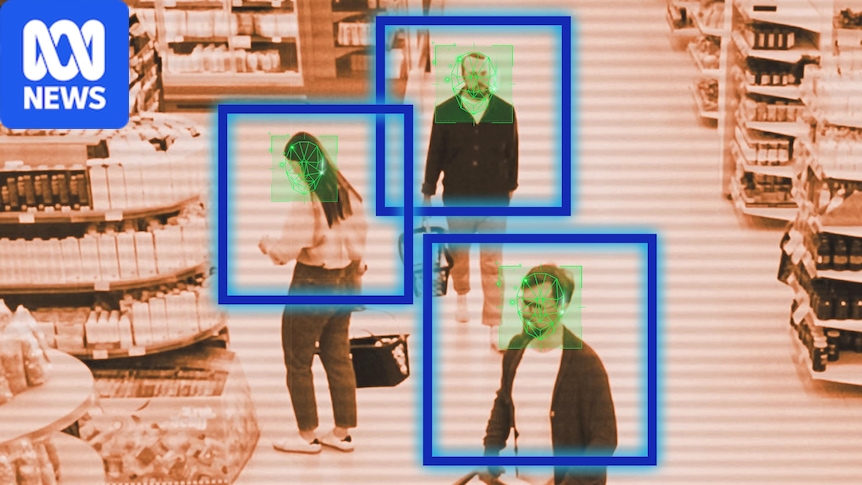
A shopper walks into a supermarket and grabs a basket. By that time, a camera has scanned their face.That is what experts warn could be the new normal for Australians.Supermarkets started with exit gates and bagging-area cameras. Now they are trialling facial recognition technology.In August, Coles and Woolworths rolled out facial recognition technology trials in a bid to combat crime with about a third of retail workers not feeling safe in their workplace, according to a union survey of about 3,000 staff.The technology scans the features of a person's face to create a unique digital code and identify them.Neither of the supermarket giants has said if it would be rolled out in their Australian stores.However, both companies said they were looking into improving protection for their customers and staff.Industry groups say the move is about safety, but experts warn once the technology is installed the "scope creep" does not stop.Experts have serious privacy and human rights concerns. (ABC News)'Scope creep'Scope creep, also known as function creep, is when society incrementally allows things to happen over time that people feel uncomfortable about."We let it pass and all of a sudden you see a layering of the technology being used for more privacy intrusive purposes," said responsible technology policy specialist Lauren Perry from the University of Technology Sydney.She is concerned face scans could shift from safety and security to customer experience in ways that could disadvantage and harm the consumer.Lauren Perry says facial data could give companies more information about consumer purchasing behaviour. (Getty Images: gorodenkoff)The layering of new technologies such as face scan-enabled EFTPOS machines and the widespread rollout of digital price tags across supermarkets could tailor real-life shopping experience."I hear people say, 'I don't really care about my personal information that much. It's all over the internet anyway. I've got nothing to hide,'" she said."You've only got one face. You can change your password if it gets hacked … but you can't change your face."Would every single person who walks into a supermarket have to give up their sensitive biometric data to buy a bottle of milk?Australia is rapidly adopting digital prices tags, while politicians and unions in the US want them banned from supermarkets. (Getty: d3sign)Facial data gives companies more information about consumer purchasing behaviour and how they move through the store, paving the way for options like discriminatory pricing, Ms Perry said."Now they have your face, they have your loyalty card, your bank card, they can piece together a pretty clear picture of individual shopping behaviours," she said."For example, supermarkets know that a lot of women visit suburban grocery stores with their kids at the end of the school day. They could use this information to jack-up the prices of things like lunch box foods at those stores."A Coles spokesperson told the ABC: "While no decision has been made about the use of this technology, we absolutely reject any claim that this technology would be used to monitor team or regular shoppers, or for marketing or pricing purposes."Lauren Perry says there is a risk that retailers could use this information to unfairly charge customers more for products. (ABC News: Abbey Haberecht)Surveillance tech can alter our behaviourKiley Seymour, a neuroscience and behaviour researcher, said adopting face scans in supermarkets was another form of surveillance that changed how people behave.She said being watched could unconsciously alter mental processes that made us more hypervigilant and tuned into threats around us."We might experience more social anxiety and paranoia in our society as surveillance increases," she said."This puts our brains into this threat detection and fight mode without us even realising it."If our brains are always in this hypervigilant state due to surveillance, that could have other impacts that are similar to psychosis. For instance, leading to paranoid thoughts and beliefs."'Locked out of the supermarket'Experts warn that face scans do not work the same for everyone.Surveillance expert Mark Andrejevic from Monash University said the technology was historically less accurate for people with darker skin, women and older people, leading to more mix-ups."We have seen instances in the United Kingdom of people being wrongly banned from shops because of an incorrect match," he said.UK shoppers told The Guardian they were unable to challenge the companies after being falsely identified.Mr Andrejevic was particularly concerned with systems that had no option for customers to challenge the outcomes."Are you banned for life from all supermarkets if you walk out with a pack of chewing gum?" he said.Australia has no facial recognition lawFacial recognition technology is one of the biggest privacy risks Australians face today, with almost 90 per cent of the population more concerned about it than they were five years ago, according to a government survey this year.Australia does not have a dedicated facial recognition law.Instead, it is governed by the Privacy Act which does not explicitly ban or permit its use.Mr Andrejevic said retail outlets had not been transparent about their use of the technology."If they want to put us all in databases there needs to be some very clear guidelines and regulations about how this works," he said. "Accuracy and bias ratings for the technology being used should be publicly available and a notification should be provided to people who are included in the database."
Facial recognition technology 'scope creep' is upon us, experts warn
Full Article
Original Source
Read the full article at Abc →KhanList aggregates and links to publicly available news content. We do not host full articles from third-party sources. Always verify important information with original sources.