
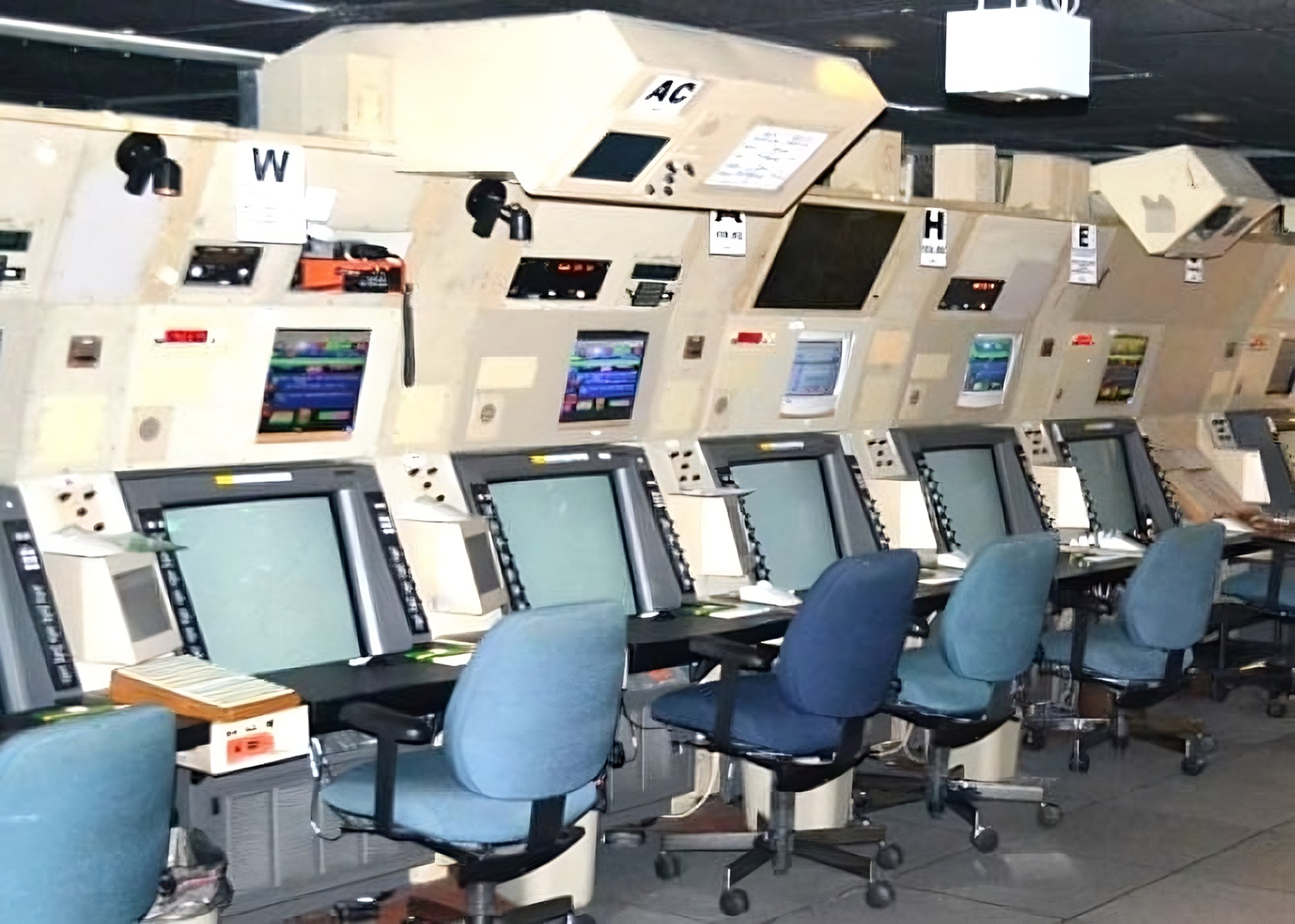
The FAA has ordered departures stopped at every U.S. airport after a communications failure hit air traffic control centers across the country. Planes are being held on the ground as Friday afternoon travelers head into the weekend, with no announced time for flights to resume. Aircraft already in the air are being allowed to continue and land. There isn’t a general order to put every plane down at the nearest airport, like 9/11. The FAA says inbound international flights will be handled individually. The agency’s national ground stop advisory, issued at 3:54 p.m. Eastern on November 13: DUE TO EXTRAORDINARY CIRCUMSTANCES AND FOR REASONS OF SAFETY. ATTENTION ALL AIRCRAFT OPERATORS, BY ORDER OF THE FEDERAL AVIATION COMMAND CENTER ALL AIRPORTS ARE GROUND STOPPED. ALL DEPARTING TRAFFIC SHOULD REMAIN GROUND STOPPED UNTIL FURTHER NOTICE. INBOUND INTERNATIONAL FLIGHTS WILL BE MANAGED ON A CASE BY CASE BASIS. The FAA’s status board lists the reason as “EQUIPMENT / OUTAGE.” This is in place “until further notice.” Transportation Secretary Sean Duffy confirms a communications issue affecting all Air Route Traffic Control Centers, with FAA technicians investigating. These are the facilities that handle aircraft flying between airport areas. Secretary Sean Duffy’s statement — November 13, 2026 Aviation watchdog JonNYC reported widespread frequency failures before the nationwide order. His initial reports named Boston Center, New York Center, Chicago Center and New York Approach, with Boston Approach also experiencing problems. Some New York Center sectors reportedly couldn’t accept traffic. Then things spread. Chicago O’Hare and Midway were placed under ground stops before the nationwide halt. JonNYC’s reports of air traffic control frequency failures — November 13, 2026 A cockpit message shared by JonNYC tells crews: ATTENTION ALL CREWS- PER FAA GUIDANCE, ALL DEPARTURES ARE STOPPED NATIONWIDE. PLEASE STANDBY FOR FURTHER INFORMATION. UPDATE IN 15 https://t.co/XQvj5neLF2 — JonNYC (@xJonNYC) November 13, 2026 A Software Upgrade Issue Has Been Reported The New York Post reports that an unnamed source points to a possible software upgrade behind the disruption. The FAA hasn’t identified the failed system or what triggered the outage. However, controller and pilot message boards have several more specific accounts. In Reddit’s air traffic control forum, one commenter writes, “Allegedly all [backup emergency communications] sites on the east coast went out at the same time. They’re trying to figure out why.” Another commenter describes those backups as a third radio system, with separate radios, antennas, power and communications links. If the reported simultaneous failures are accurate, the behavior of those backups becomes a particularly important part of the investigation. In a second controller forum, a poster reports, “A lot of the frequencies and landlines in the Houston area started going hot on their own randomly over the past hour.” That adds a report of unexpected activity on both radio and telephone connections. In the flying forum, a commenter says the word they’re hearing is a communications problem between en route facilities. Others report hearing controllers announce the nationwide stop in Seattle and Redmond. JonNYC reports facilities preparing for “ATC Zero,” the status used when a facility can’t provide air traffic services. The FAA Has A Long History Of Technology Failures The closest recent comparison is the January 11, 2023 nationwide ground stop, when the system that provides safety notices to pilots failed. The FAA later traced that outage to contractors accidentally deleting files while trying to correct synchronization between the primary database and a backup. That was only the second nationwide ground stop, after 9/11. In March I covered an overheated circuit board that disrupted five Washington area airports. Transportation researcher Bob Poole reported that the board was part of a 25 year old voice switch, describing an FAA maintenance policy that allowed equipment to run until it failed, with fewer technicians and inadequate training to keep old systems going. The FAA’s own equipment photos illustrate what they’ve been working with: When I reviewed the administration’s air traffic control overhaul, the plan called for replacing 25,000 analog radios and 800 voice switches, along with moving thousands of sites off legacy telecommunications connections. My criticism was that the same organization that spent decades failing to deliver upgrades would be asked to deliver another one. The FAA regulates itself, both running the system and regulating its safety, while long term capital projects depend on annual congressional appropriations. Buying equipment doesn’t fix bad incentives or project management. Earlier today, the administration asked Congress for another $30.1 billion in aviation funding, including $10.1 billion for air traffic control modernization. Congress approved $12.5 billion last year. The new request also includes money for control towers and airport projects. They want taxpayers bailing out the system, rather than airlines and passengers. Even a quick repair won’t immediately put the airlines back on schedule. Planes held now will be late for their next flights, connecting passengers will miss departures, and crews can run out of permitted duty time. Then with planes out of position, disruptions continue.
FAA Ground Stop: Every U.S. Airport Departure Halted As Air Traffic Control Communications Fail
Full Article
Original Source
Read the full article at Viewfromthewing →KhanList aggregates and links to publicly available news content. We do not host full articles from third-party sources. Always verify important information with original sources.