
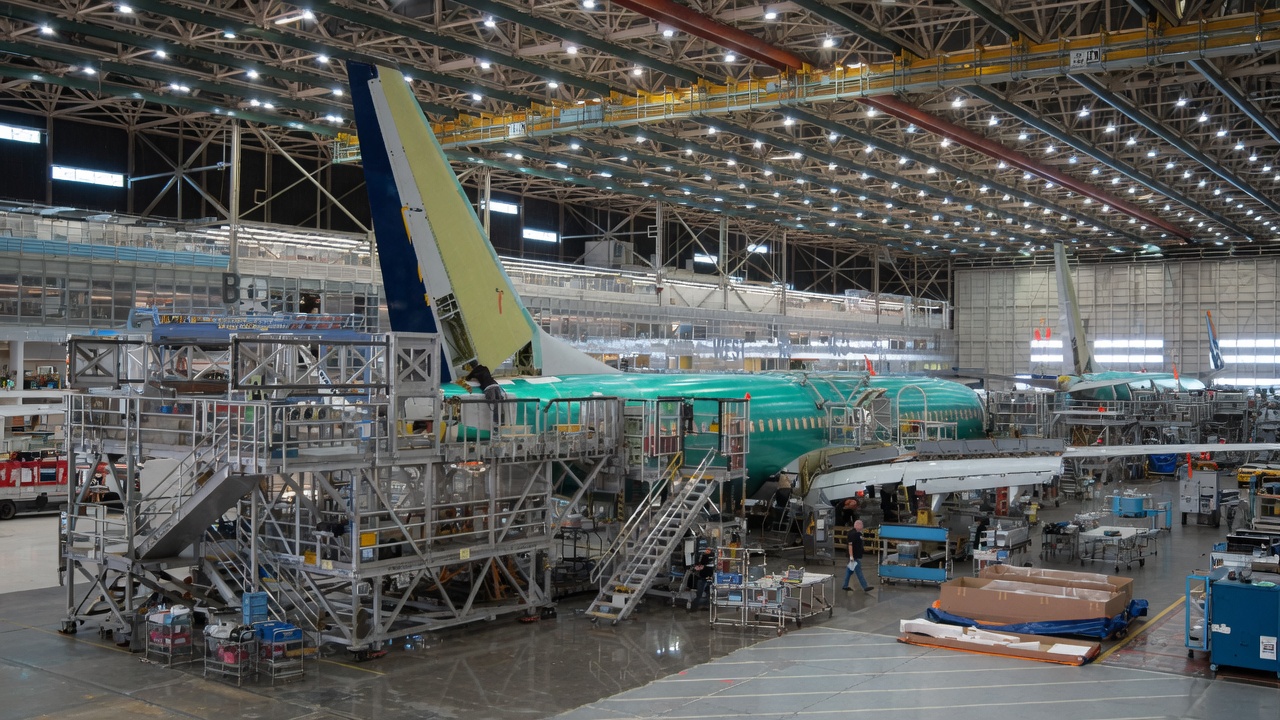
Starting on Monday, July 20, the FAA will let Boeing issue its own final airworthiness certificate for newly-produced 737 MAX and 787 aircraft. This completes a long saga that began with the crashes of two MAX aircraft in 2018 and 2019. Since September 29, 2025, Boeing and FAA inspectors have alternated certification responsibility week-by-week. After eight months, the FAA says Boeing and FAA inspections produced “comparable production quality findings.” Boeing will now handle all routine final certificates, while the FAA continues production line inspections, audits, assembly surveillance, quality monitoring and oversight of Boeing’s safety culture. When And Why Authority Was Removed The FAA didn’t revoke Boeing’s entire delegated-certification authority. It reserved final airworthiness and export certificate issuance to FAA employees for the two programs. Boeing 737 MAX (November 26, 2019) following the Lion Air and Ethiopian crashes, while the MAX remained grounded and its MCAS design, pilot training and certification process were under review, the FAA said it would retain final certification until Boeing had “fully functional quality control and verification processes” and complied with all regulatory requirements. The MAX returned to service in November 2020, but FAA inspectors continued signing every newly built aircraft. Boeing 787 (February 15, 2022) following repeated delivery stoppages and production defects such as fuselage gaps, improper shimming and questions about Boeing’s inspection and rework processes. FAA officials tried to restore Boeing’s authority back in August 2023, but the DOT inspector general found that this wasn’t based on any objective critiera, that problems with 737 inspections were actually trending up, and that restoration of authority to Boeing for 787s was based on only three inspections. The January 2024 Alaska Airlines door-plug blowout put the brakes in this. Boeing received partial authority back on September 29, 2025, with the airframe manufacturer and the company trading weeks in which it would do certifications. What Is Delegated Certification Authority? The FAA authorizes qualified private individuals or organizations to perform certification work on the agency’s behalf. It’s effectively where Boeing declares its own planes safe, though legal authority remains with the FAA. For Boeing’s Organization Designation Authorization (‘ODA’) the FAA establishes the safety standards and defines which functions get delegated. Boeing engineers and inspectors perform tests, approve designs or production changes, and issue final airworthiness certificates. ODA personnel are legally acting as representatives of the FAA, even though Boeing employs and pays them. Boeing’s ordinary engineering and production groups supply data to the ODA group which determines whether it’s compliant. The FAA supervises and audits the ODA group. There are several different certifications that get into “self-certification.” What’s at issue here is just airworthiness certification. Type certificate: The aircraft design complies with regulations Production certificate: The manufacturer can repeatedly build aircraft conforming to that approved design Amended or supplemental approval: A design change or modification complies Airworthiness certificate: a finished aircraft conforms to the approved design and is safe to operate Boeing is receiving back delegated authority to its ODA group for completed 737 MAX and 787 aircraft. They don’t get to independently approve the MAX 7 or MAX 10 design. Delegating Certification Authority To Boeing Makes The Most Sense This is the part for most people to wrap their mind around. The FAA cannot reproduce Boeing’s technical organization. There are roughly 400 FAA certification engineers versus approximately 40,000 – 45,000 Boeing engineers, with historically fewer than 100 FAA engineers assigned directly to Boeing. The expertise sits with the manufacturer. Boeing’s engineers know the design, production system, software and failures in far greater detail than an outside agency could independently recreate. It’s not feasible for the FAA to do it themselves at scale. This would require the government to build a second Boeing just to redo Boeing’s work. FAA resources are more valuable doing broader safety tasks. Inspectors should scrutinize critical design judgments, safety assumptions, quality systems and production trends, rather than spending spend most of their time repeating routine end-of-line inspections. Delegation is supervised – and revocable. Boeing’s authorized representatives act for the FAA under specific authority. The FAA sets standards, audits performance, spot-checks work and can reclaim these functions, as they did in this case. This isn’t new authority. Delegation dates to 1956. It’s used internationally, and indeed during commercial air travel’s long-run tremendous improvements in safety. Duplication wouldn’t necessarily get different results. There’s little reason to believe the FAA would have put the kibosh on 737 MAX assumptions. The essential failure was inadequate disclosure, scrutiny, redundancy and oversight, not who performed the paperwork. It’s easier to regulate this way. The ODA supplies documented procedures, internal quality systems, peer review and clearer institutional accountability than thousands of separate approvals. Boeing has a stronger incentive to get this right. Its failures cost tens of billions of dollars, impaired production, discounted its products and destroyed shareholder value. Long-term profit depends on getting this right. We now have data backing this up. There is an actual comparison period where both Boeing and the FAA were doing inspections, and the agency says they came to comparable findings. That suggests having the FAA do it directly wouldn’t add safety value. There were crucial errors in judgment with the Boeing 737 MAX, and there were cultural and priority problems at Boeing. Those led to disaster. But the fundamental issue wasn’t with the airworthiness certification process. Indeed, the Alaska Airlines 737 MAX which blew out a door plus in January 2024 was delivered October 31, 2023 – when the FAA itself was doing that certification itself. Topics on this page
FAA Gives Boeing Back The Power To Declare New 737 MAX And 787 Jets Safe
Full Article
Original Source
Read the full article at Viewfromthewing →KhanList aggregates and links to publicly available news content. We do not host full articles from third-party sources. Always verify important information with original sources.