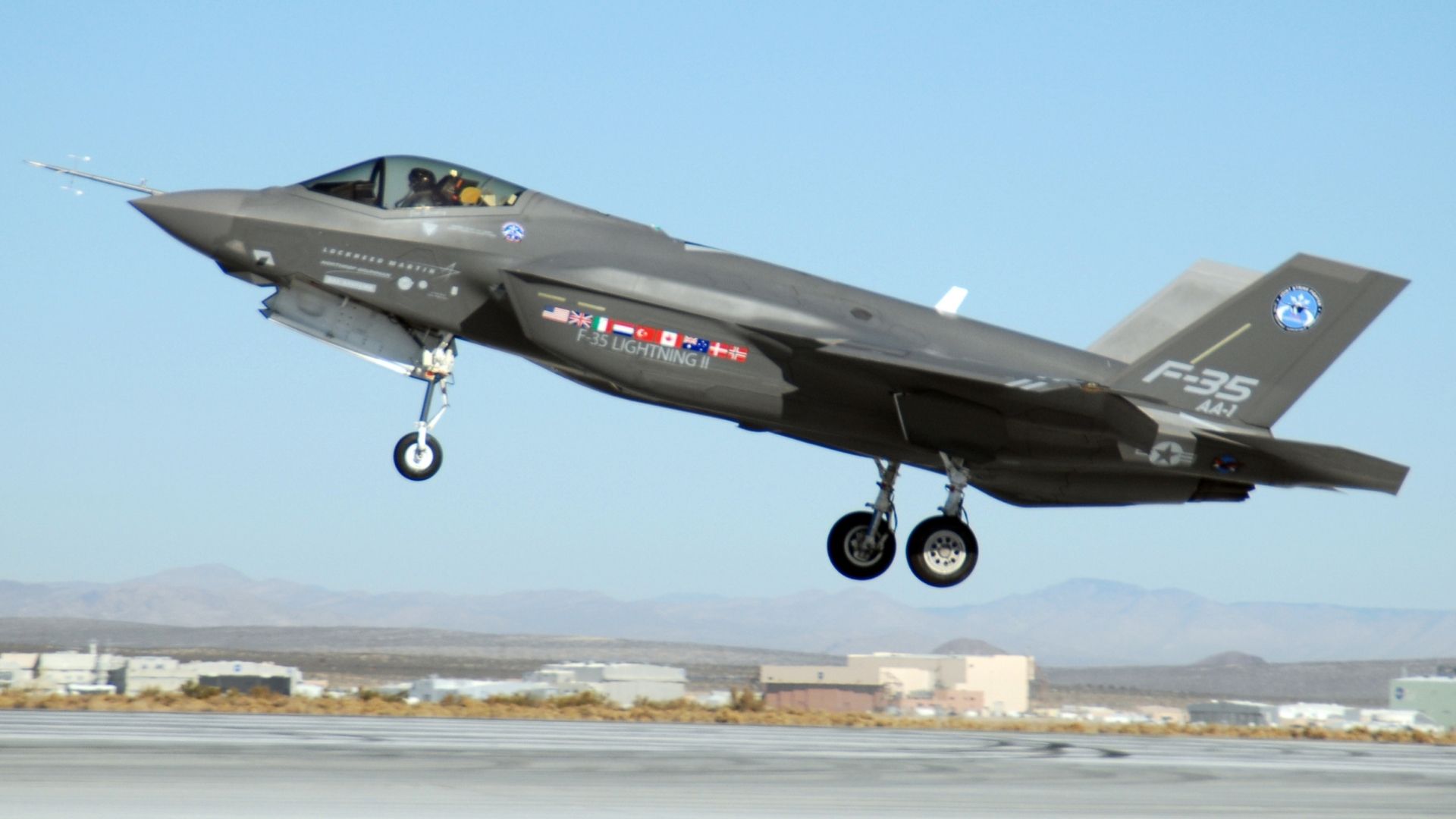
The F-35 and J-20 are often grouped together simply because both are fifth-generation stealth fighters. But that comparison only tells part of the story. The Lockheed Martin F-35 Lightning II was built as a multirole combat aircraft designed to penetrate defended airspace, strike targets, collect intelligence, and share battlefield data with other forces. China’s Chengdu J-20, meanwhile, is a much larger, twin-engine fighter built primarily for long-range air combat and operations against high-value aerial targets. That difference in design philosophy shapes nearly every part of the two aircraft, from their stealth and engines to their weapons, sensors, and operational roles. Here is how the F-35 and J-20 compare across five key areas. Stealth and radar signature Stealth is central to both aircraft, but the two fighters approach it differently. The F-35 uses a combination of low-observable shaping, internal weapons carriage, radar-absorbent materials, carefully aligned surfaces, and specially designed engine inlets to reduce its radar signature. It also benefits from decades of US experience developing stealth aircraft, including platforms such as the F-117 and F-22. As a result, the F-35 is widely regarded as having highly mature signature management, particularly from the frontal aspect. China has incorporated many of the same principles into the J-20. The fighter uses diverterless supersonic inlets, internal weapons bays, radar-absorbing materials, and a carefully shaped forward fuselage. However, the J-20’s larger airframe, canards, vertical tails, and rear geometry have led analysts to question whether its low-observable performance is as consistent across different angles. Exact radar-cross-section figures for both aircraft remain classified. That means precise numerical comparisons regularly circulated online should be treated as estimates rather than confirmed specifications. Speed and engines Wikimedia Commons This is where the J-20’s size and twin-engine configuration could give it an advantage. China has steadily upgraded the fighter’s propulsion system, moving from earlier Russian-derived and indigenous engines toward more advanced powerplants such as the WS-15. The WS-15 is expected to improve thrust and overall performance, including sustained high-speed flight, although many detailed claims about the engine remain difficult to verify publicly. The F-35A, by comparison, uses a single Pratt & Whitney F135 engine and has an officially listed maximum speed of Mach 1.6. But outright speed was never the F-35’s main priority. The aircraft was designed around survivability, sensors, strike capability, and battlefield connectivity rather than competing with dedicated air-superiority fighters in raw speed. Range and payload The difference between the two fighters becomes even clearer when looking at range and weapons carriage. The F-35A carries a large internal fuel load and is designed to conduct deep-penetration missions without relying entirely on external fuel tanks, which would increase its radar signature. It can also carry both air-to-air and air-to-ground weapons internally while remaining in its stealth configuration. Additional weapons can be carried externally when low observability is less important. The J-20’s larger airframe gives it significantly more internal volume and supports its role as a long-range fighter. Its main weapons bay is associated primarily with long-range air-to-air missiles, while smaller side bays carry short-range missiles. That configuration reflects the J-20’s emphasis on engaging enemy aircraft at long distances, particularly high-value targets such as tankers, surveillance aircraft, and airborne early-warning platforms. Sensors and networked warfare This is arguably where the F-35 separates itself most clearly from traditional fighter aircraft. Its strength is not simply the number of sensors it carries, but the way it combines their information. The aircraft fuses data from radar, infrared sensors, electronic warfare systems, and external platforms into a single battlefield picture for the pilot. It can then share that information with other aircraft, ships, and ground forces. In practice, that allows the F-35 to act not only as a fighter, but also as a sensor and information node inside a larger combat network. The J-20 is also equipped with advanced systems, including an AESA radar and electro-optical sensors. China is also investing heavily in airborne early-warning aircraft, data links, and networked warfare capabilities that could allow the J-20 to operate as part of a wider sensor network. However, considerably less reliable public information exists about how mature the aircraft’s sensor fusion and data-sharing systems are compared with those of the F-35. Production and deployment The final difference is scale. The F-35 has become one of the most widely deployed fifth-generation fighters in the world, operating not only with the United States but across a large network of allied air forces. Lockheed Martin reported delivering 191 F-35s in 2025 alone, setting a program record. That multinational fleet creates an advantage beyond aircraft numbers. Pilots, maintenance crews, logistics systems, weapons, software, and training are increasingly shared across a large coalition ecosystem. Ultimately, the F-35 and J-20 reflect two different approaches to modern air combat. The J-20 prioritizes range and air superiority, while the F-35 emphasizes stealth, sensor fusion, and networked operations. In a real conflict, their effectiveness would depend as much on supporting systems as on the fighters themselves. Recommended Articles
F-35 vs J-20: The biggest differences between American and Chinese stealth jets
Full Article
Original Source
Read the full article at Interestingengineering →KhanList aggregates and links to publicly available news content. We do not host full articles from third-party sources. Always verify important information with original sources.