
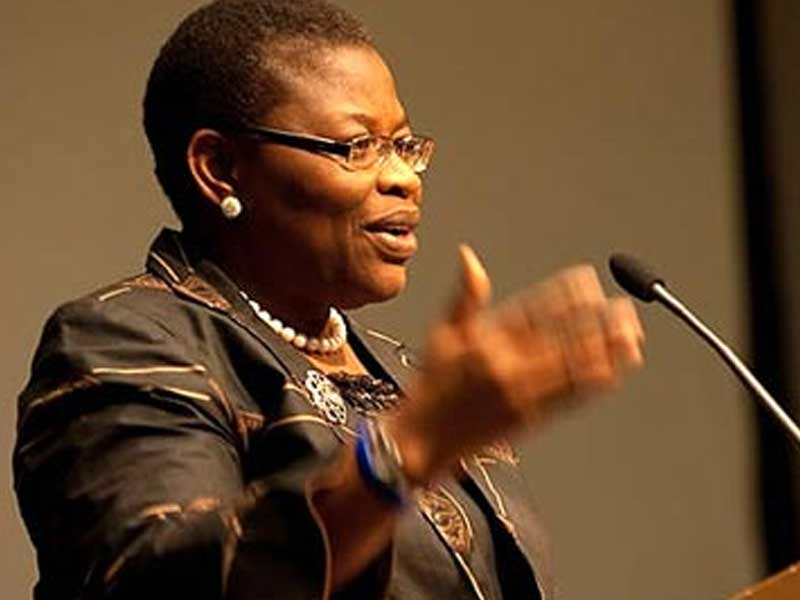
Follow THISDAYLIVE on GoogleAdd us as a preferred source to see more of our stories in Google Follow us on Google Nigeria’s most invisible health crisis was dragged into the open in Lagos on yesterday, as former Minister Dr. Obiageli Obi Ezekwesili, Minister of Communications, Innovation and Digital Economy Dr. Bosun Tijani, and Special Adviser on Health to the Governor of Lagos State Dr. Kemi Ogunyemi united on one stage to demand that home care be recognised, funded, regulated and protected as national infrastructure. The historic convergence happened at The Care Conference 2026, convened by The Purple Global Mission at IALA Hub, The Chair Centre, Lagos, under the theme “Care as Infrastructure: Building a National Position on Home Healthcare for Nigeria,” where delegates also witnessed the launch of The Homecare Framework: Care as Infrastructure for Everyday Life, a new book by Founder Abiola Hakeemat Etti-Ayilara. The first issue is invisibility. Care in Nigeria has never been scarce, it has simply been unseen. Ezekwesili, who served as Special Guest of Honour and Chair of The Homecare Framework and flew in from Abuja at dawn to deliver the address “Care as Infrastructure for Everyday Life,” told delegates that care is carried on the back of families and carried on the back of mostly women, yet it appears nowhere in policy. Citing Nigeria’s first Time Use Survey, she revealed that women spend about five hours every day on unpaid domestic and care work, compared to about one hour for men, a second full-time job with no payroll line and no national account. That invisibility, she argued, is becoming dangerous as Nigeria changes, with over 6.5 million Nigerians now aged 65 and above, young people migrating, cities growing, and households shrinking, while the extended family that once absorbed the work of care is stretched thin. When a patient leaves hospital, she said, the system’s responsibility ends at the gate and the family’s responsibility begins, in silence. The second issue is money. Nigeria’s health system is already asking too much of families. With approximately 71 per cent of health expenditure borne out of pocket and health insurance covering only an estimated 10 to 13 per cent of the population, recovery at home too often means debt at home. Ezekwesili insisted that care must be counted before it can be financed, because what is not measured is not managed, and home care must find its place in health insurance and public budgets so that a family does not have to choose between care and survival. She also reframed care as an economic opportunity, not just a cost, pointing to estimates by the National Bureau of Statistics and UN Women that investing in Nigeria’s care economy could create 17 million jobs, especially for young people searching for decent work. For her, care as infrastructure is not a health programme alone, it is an industrial strategy. The third issue is connection. A home, a clinic and a hospital in Nigeria still too often operate as three separate islands, with no shared record, no shared referral, and no shared accountability. In his keynote on “Digital Health Infrastructure and Care Data Systems and Finance,” Tijani argued that this fragmentation cannot be solved by goodwill alone, it must be solved by foundations. He pointed to Nigeria’s need for about 120,000 kilometres of fibre to deliver quality connectivity, the Federal Government’s ongoing build of 90,000 kilometres, and the explosion in data consumption from 400,000 terabytes to 1.7 million terabytes as of last August. More important, he said, is Nigeria’s shared technology stack: digital identity through NIN, instant payments through NIP, and now, for the first time, the ability to identify places through Nigeria’s new postcode system. Before a few weeks ago, he explained, Nigeria could not reliably identify places, but now it can identify people and it can identify places. That matters for care because emergency responders can find a patient at home accurately without relying on informal directions, caregivers can be coordinated and medicines delivered after discharge, telemedicine can be linked to physical care for the elderly and disabled, and government can map service gaps and plan outreach with privacy safeguards. His central demand to the sector was interoperability, the ability for patient data to move safely with the patient, so that if a patient leaves one care provider, the next provider can pick up the record without the family starting all over again. The fourth issue is safety. Access to care that is unsafe, delegates heard, is not access at all, it is a risk. Ogunyemi, speaking on clinical governance, warned that a beautiful hospital with no infection prevention protocol has not healed anybody, and a free medical mission that gives a wrong dose has not helped. Clinical governance, she said, means every patient, every time, receives the right care in the right way, by the right person, in a safe environment, and you can prove it. She spoke bluntly about the abuse and negligence that can happen when care is unregulated, from caregivers harming vulnerable patients and stealing from the elderly to giving wrong medication without consulting family, and she insisted that no woman should die from postpartum haemorrhage because her blood was not checked, and no child should die from a wrong injection. Safety, she said, lives in the small disciplines of hand hygiene, double-checking drugs, checking expiry dates and doses, and in a culture where a junior nurse can tell a senior doctor to stop because something is not safe. It also lives in evidence, not habit, in following protocols, auditing practice, and using data to improve, and in dignity, in explaining procedures, seeking consent, respecting privacy, and speaking the patient’s language. She revealed that Lagos has established quality improvement units in all general hospitals, strengthened HEFAMAA as a regulator not to punish but to protect, and introduced mandatory incident reporting, and she urged partners to work with the state system, not parallel to it, to use its protocols, report back to its facilities, and leave behind skills, not just supplies. The final issue is the worker. Behind every patient at home is a caregiver who is often exhausted, untrained, unsupported, and unprotected. Ezekwesili said caregivers deserve training, certification, fair pay and a career path, and those who care must not themselves be left uncared for. Ogunyemi echoed that warning, saying a nurse on a 24-hour shift is a risk, a doctor who has not been trained for five years is a risk, and a supported worker is a safe worker. Both argued that Nigeria cannot build a care system on burnout and goodwill, it must build it on standards, supervision, rest, and accountability, including clear rules for who is allowed to enter a home and what they are allowed to do there. As the conference closed, Ezekwesili issued a challenge that captured the mood of the hall: government should not receive the framework politely and file it away, it must legislate on it, budget for it, and report on it, while citizens must demand it as their own. The message from Lagos was no longer that families should try harder. It was that Nigeria must finally build the infrastructure that makes care visible, fundable, safe, connected, and professional, because care is what carries people, the child who must learn, the worker who must recover, and the elder who must live and die in dignity.
Ezekwesili, Tijani, Ogunyemi Lead Historic Push to Make Home Care National Infrastructure
Full Article
Original Source
Read the full article at Thisdaylive →KhanList aggregates and links to publicly available news content. We do not host full articles from third-party sources. Always verify important information with original sources.