
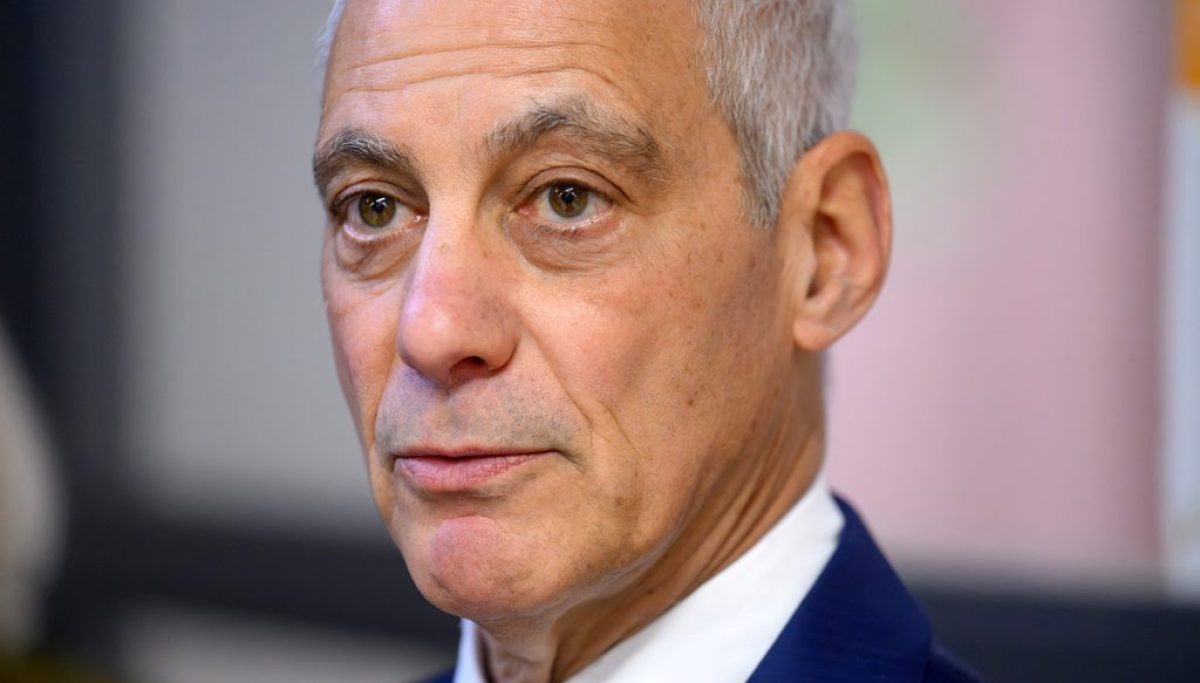
PITTSBURGH — For most of a century, the land along this stretch of the Monongahela River glowed.Jones and Laughlin Steel ran its South Side Works here, a massive integrated steelmaking complex of open-hearth furnaces, blooming mills and finishing mills, where molten iron was refined into steel and rolled into the structural beams that framed American cities.Across the river, J&L’s Eliza blast furnaces produced pig iron, and the company built a rail bridge to carry ladle cars full of it, still molten, directly into the South Side furnaces. That crossing became known as the Hot Metal Bridge, and the street beside it took the same name. The mill employed generations of Pittsburgh families. Then it was gone. LTV, which had absorbed J&L, shut down operations and demolished the mill buildings, and by the early 1990s, the riverfront tract sat cleared and fallow. For most of that decade, the ground where IBEW Local 5 now stands lay vacant while crews worked to clean up what a century of steelmaking had left in the soil. The union opened its headquarters there in 2000.But across the region, the story told for decades was one of loss: lost mills, lost trades, lost paychecks, and the young people who left to find work somewhere else. On Monday, a former White House chief of staff stood on that ground to hear a different story.Rahm Emanuel, who is weighing a run for the 2028 Democratic presidential nomination, chose western Pennsylvania, a region where the relationship between work, opportunity, and political trust is anything but abstract, as one of his early stops. Before delivering an economic policy speech at Carnegie Mellon University, Emanuel, also a former mayor of Chicago, came to 5 Hot Metal St. to see the workforce being trained for what comes next.Rachel Hienz, Local 5’s assistant training director, led him through the center: a motor control lab, stations that simulate the electrical systems of a skyscraper, building automation and security systems, and transformer trainers running at a safe 48 volts instead of the 480 found in the field.“Why you’re doing what you’re doing is important,” she told him. Tom McIntyre, the local’s business manager and financial secretary, told Emanuel the region is going to be short on electricians four years from now, with retirements a big reason; Local 5 had just sworn in 180 apprentices, its biggest class ever. The program drew 2,400 applicants, Emanuel was told, and the average first-year apprentice is 26 years old.Natural gas, he said, is “really the big thing, especially here in Western Pennsylvania because it’s right here. It’s below us.” And even if the data centers never come, “we’re still going to need the power.”McIntyre also pointed to two wins that came out of Harrisburg on Oct. 22, when Gov. Josh Shapiro (D-PA) signed Senate Bill 908, tying off-site prefabrication to the state’s prevailing wage law, and Senate Bill 1260, creating the first statewide licensing system for electricians. “We’ve been trying for decades,” McIntyre said. Emanuel, noting that the bills were signed less than two weeks before Election Day, recognized the timing. “The smell of jet fuel and the coming of an election,” he said, “can really focus the mind like nothing else in politics.”Rahm Emanuel visits the IBEW Local 5 and their training center on Monday, Nov. 16, 2026, in Pittsburgh’s South Side neighborhood. Emanuel is actively weighing a potential 2028 Democratic presidential run, positioning himself as a pragmatist and centrist voice. (Justin Merriman/for the Washington Examiner) Much of the work is already underway. In Indiana County, more than 2,000 tradespeople are turning the former Homer City coal plant into a natural-gas-fired power and data center campus. In Shippingport, the former Bruce Mansfield coal plant is being converted into a roughly 2.5-gigawatt gas plant, with Aligned’s 2-gigawatt Project Phoenix data center rising next door. GE Vernova is spending $166 million to expand its western Pennsylvania grid-equipment factories, and more projects, from NextEra’s proposed gas complex in Fayette County to Vistra’s Beaver Valley nuclear expansion, are moving through approvals.Jason Markovich, business manager of the Pittsburgh Regional Building Trades, said the recent growth traces largely to energy infrastructure. Asked what that means for his members, he went straight to the kitchen table.“It means pension contributions, healthcare contributions,” he said. “It means that families can send their kids to college, support their households, support their local communities.”He also took on the argument that construction jobs don’t count because they are temporary.“The building trades members, they build their careers on temporary projects,” he said.That is the distinction Washington often misses. The project ends; the career does not. A union electrician may spend 30 or 40 years moving from one job to the next, with wages, healthcare, and pension contributions following. Markovich said more than 40,000 members of the Pittsburgh Regional Building Trades depend on “responsible development using union labor” and that his members want a say in how it happens. “We’re open for that debate,” he said, “and we want a public, transparent process.”Hienz had not planned on any of this.“It wasn’t my first love,” she said.She graduated from high school in 1986 and went to college because that was what you did. The dream job never followed. What led her to electrical work was an old house on Pittsburgh’s North Side, its wiring so inadequate that “I couldn’t blow my hair dry and have coffee because I would trip a breaker.”She took classes at Connelley Technical Institute to fix the house herself, loved it, and tried a nonunion job before committing to an apprenticeship. Even then, she doubted the union wanted her.“I’m 5-3,” Hienz said. “I’m a woman. I was not young. I wasn’t born with a screwdriver in my hand, so I didn’t think that I was really what they were looking for.”An encouraging assistant training director changed her mind. She completed what was then a five-year apprenticeship (it now takes four), began teaching at night and was so eager to give back that she taught for a month before learning she was being paid. She became a full-time instructor, earned a master’s degree in adult learning and training, and now holds the job of the man who once encouraged her to apply. The program she helps run has 644 apprentices, and its work has shifted. “We’re very much industrial these days,” she said.A bucket at IBEW Local 5. (Justin Merriman/for the Washington Examiner) John Galuska, president of the Allegheny-Fayette Central Labor Council and an Army veteran who has worked as a Teamster, a laborer, and an AFSCME director, put it in plain terms.“They want to work under a collective bargaining agreement,” he said. “They want to have protections at work. They want to have a pension, healthcare, and job security — and the safe work conditions.”At Carnegie Mellon that afternoon, Emanuel called for taxing the hyperscalers, the giant technology companies building data centers, to help pay for transmission upgrades, along with a 24-month deadline on permitting decisions and investment in geothermal, battery storage, small modular reactors, and fusion. He said those same companies should pay to train the workers.“The hyperscalers should underwrite the cost of training of the new legions of electricians and line workers who will build a robust, reliable, resilient system that benefits the whole country, not just hyperscalers,” he said.He warned, too, against betting a region’s future on one industry, a lesson the ground beneath the training center teaches better than any speech. “Pittsburgh knows what happens when a single industry dominates,” he said. “Pittsburgh came back by building a diversified economy.”And he named the apprentices directly: “You are America’s tomorrow — whether you’re a student at Carnegie Mellon, Penn State, the Community College of Allegheny County, a new recruit for the Marine Corps, or an apprentice at IBEW Local 5.”Before his interview ended, Markovich asked to add one thing for the record: The people building these projects live in the communities where they will operate.“Our members are members of those communities, and they want what’s best for their families as well,” he said. “They want clean drinking water.”To them, the choice between jobs and a healthy place to live is a false one. “It doesn’t have to be one or the other,” he said.Hienz believes in the opportunity enough to have recommended it to her younger brother, who was at the center that day.“I wouldn’t have told him to do this if I didn’t believe in it,” she said. “It’s life-changing.”SALENA ZITO: PITTSBURGH’S MOON SHOTApprentices get four years of free schooling, she said, and can then earn a journeyman wage of $49.11 an hour, nearly $100,000 a year, without leaving the region.A generation ago, this riverbank was where Pittsburgh’s working families watched their future get torn down. Now the next generation of electricians is learning its trade on the same ground, preparing to build the power plants that will light the region’s next chapter.
Eyeing 2028, Rahm Emanuel meets Pittsburgh trades on old steel ground
Full Article
Original Source
Read the full article at Washingtonexaminer →KhanList aggregates and links to publicly available news content. We do not host full articles from third-party sources. Always verify important information with original sources.