
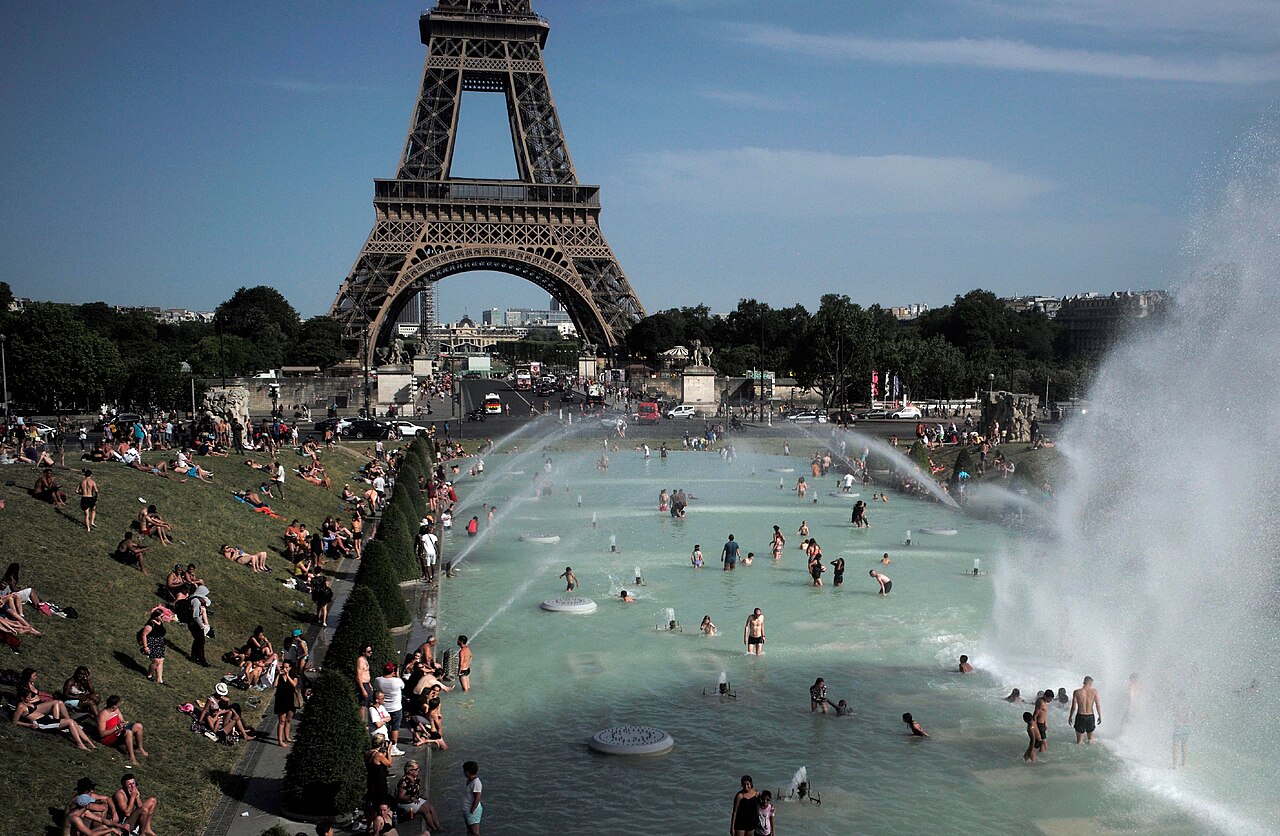
A study of climate data from 1980 to the present showed a broad global expansion of extreme heat days outside of summer months, extending into spring and fall.Extreme heat occurrences varied by region: Western Europe, southern Africa and northwest India are seeing hotter springs, while eastern China, northern Africa, eastern Europe and the western U.S. are largely experiencing hotter autumns.Extreme heat (and humidity) occurring outside the traditional summer window threatens both public health and agriculture. It also increases the risk of wildfires and accompanying health-threatening smoke, and even hurricanes.Researchers warn that vulnerable populations can be caught off guard by unseasonable extreme heat days. Likewise, governments need to extend summer heat precautions into the spring and fall to protect citizens. There was a time when, across large swathes of the world, the seasons fed into each other in a relatively predictable cycle of warmer and colder weather. In temperate nations, frigid winter thawed into spring. Spring bloomed into summer, where extreme heat beat down until cooler weather provided autumn’s relief. No longer. A recent study of four-plus decades of global weather records found that these seasonal norms have been replaced by an expanded summertime with a dangerous surge in seasonally inappropriate extreme heat days, extending into spring and fall. “We already know that [heat] extremes are becoming more frequent. They’re becoming more intense. They’re lasting longer,” said lead author Casey Ivanovich, a climatologist at the NASA Goddard Institute for Space Studies in the U.S. “We find that over the last 45 years, both extreme dry and extreme humid heat have expanded in their seasons over about half the globe.” Phoenix, Arizona, U.S., is experiencing an earlier wet heat season and a later dry heat season, which can’t be explained by the current research. While extreme heat days are increasing in both spring and fall globally, researchers note that these shifts vary across regions. Image by Amine Abassir via Wikimedia Commons (CC BY-SA 4.0). The team, including Ivanovich, Benjamin Cook of Monash University in Melbourne, Australia, and Sonali Shukla McDermid of New York University in the U.S., isolated the hottest 5% of days occurring around the globe using data from both NASA and the European Centre for Medium-Range Weather forecasts. They gathered maximum ambient air temperature readings to establish a dry heat data set, and wet bulb temperature to measure humid heat. The scientists found that over half of the planet had a distinctly longer dry heat season, and nearly half had a longer wet heat season, than it did between 1980 and 1989. The study found summer to be encroaching on its neighboring seasons, but it also revealed unexpected dynamics in exactly how and where that shift is showing up. “We are seeing an extension of the extreme heat season into the shoulder seasons. We are also seeing that it is not happening symmetrically,” Cook told Mongabay. “Some places seem to be increasing at certain times of year, and some in other times of year.” The shoulder seasons, spring and fall in four-season climates, are taking on more characteristics of midsummer, but with variations between regions. Western Europe, southern Africa and northwest India are experiencing hotter springs, while eastern China, northern Africa, eastern Europe and the western U.S. are largely experiencing hotter falls. Climate activists demonstrate outside a Scottish government building in 2017. It’s estimated that 489,000 heat-related deaths occurred globally each year between 2000 and 2019, with 45% of those being in Asia and 36% in Europe. Image by Colin Hattersley/Friends of the Earth Scotland via Flickr (CC BY 2.0). “We know that extreme heat events are increasing in frequency most broadly because of the effects of anthropogenic climate change,” Ivanovich said. “What we are curious about is what is generating some of these regional differences,” a problem needing more study. The team plans to use climate models to try to determine climate change’s footprint and share of responsibility in this new heat environment. But causality aside, some of the study data was particularly unexpected. In Phoenix, Arizona, U.S., for example, the team found that the dry heat season had shifted later, while the wet heat season shifted earlier. While extreme heat is always dangerous, dry and humid conditions pose different problems for people and nature. “Extreme [heat and] humidity is much more difficult for the human body,” to cope with, Erica Fleishman, director of the Oregon Climate Change Research Institute in the U.S., told Mongabay. “It can exacerbate pre-existing [health] conditions. It can increase heat stress and the likelihood of heat exhaustion and heat stroke.” The distribution of extreme dry heat days (top), and extreme humid heat days (bottom) in Phoenix, Arizona, U.S., in the 1980s (blue), and from 2015-2024 (maroon), show shifting seasonality. Image by Ivanovich et al., 2026. Fleishman explained that the body can no longer cool itself with sweat when the atmosphere is saturated with moisture, making a string of very hot humid days more dangerous for human health. Conversely, dry heat days are significantly more damaging to plants. “Dry heat means a much more arid atmosphere, which means much more water stress on the plants,” Cook said. “You oftentimes get declines in crop and vegetation productivity, and in some extreme cases … large-scale [plant] mortality events.” As heat arrives early or lingers late, other seasonal complications threaten lives. “In a lot of the United States … heat season is creeping into the fall,” Ivanovich said. “If you’re someone living in the western U.S., this has the potential to increase the overlap between the extreme heat season and peak wildfire season.” As climate change progresses, U.S. “wildfire seasons are lengthening and intensifying,” according to the nonprofit Climate Central. And with those fires comes health-threatening smoke. “In the northwestern United States, the surge in health care demand [historically] has been in winter, where people get colds and flu,” Fleishman added. “There is now a surge in summer [health care demand] due to wildfire smoke.” Firefighters survey California’s McKinney fire in 2022. High heat is increasing the likelihood of wildfires and health-harming smoke occurring beyond summer, well into both spring and autumn. Image courtesy of the U.S. Forest Service via Wikimedia Commons (free to use). A Florida woman in tears in the aftermath of 2017’s Category 5 Hurricane Irma in the U.S. Extreme heat in autumn can help intensify Atlantic hurricanes, storms that have long-term impacts on health, including post-traumatic stress disorder, and disease-causing mold inside homes that can cause allergic reactions, chronic inflammatory conditions and serious lung infections. Image courtesy of Voice of America via Wikimedia Commons (free to use). Ivanovich noted that the hotter East and Gulf coasts face increased threats from the Atlantic hurricane season. Wildfires and hurricanes both intensify with heat, as do a variety of other global natural disasters, including floods and drought. Cook emphasized that government mitigation strategies focused on traditional summer heat patterns aren’t designed to handle unseasonable spring or autumn heat waves. Resources like public pools and cooling centers often close at summer’s end, exposing vulnerable elderly and poor populations to heat and humidity risk. Similarly, power grids that are equipped to handle air conditioning demands in summer can fail when hit more frequently by unseasonable prolonged and unexpected hot spells. Fleishman suspects many global health systems will experience increased strain in summer and shoulder season months due to unanticipated high heat and humidity related maladies. “We need to be ready to deal with extreme heat when historically we haven’t had to think about it,” Ivanovich said. “We need to update our infrastructure so that on … the city scale, the state scale and even further, we have the tools at our disposal to tackle this increasing risk.” Banner image: Parisians try to stay cool on a hot summer day. Europe’s record heat wave this summer claimed 50,000 lives. Scientists suggest the historic 2026-27 El Niño between June 2026 and February 2027 could result in 451,000 additional heat-related deaths above those seen over that same monthly period in an average year. Researchers are urging governments to take action to protect citizens. Image courtesy of the U.S. Embassy in France (free to use). Rooftop rainwater sprinkler systems could help cool warming cities, study says Citation: Ivanovich, C. C., Cook, B., & McDermid, S. (2026). Extreme dry and humid heat seasons are changing asymmetrically. AGU Advances, 7(6). doi:10.1029/2026av002516 FEEDBACK: Use this form to send a message to the author of this post. If you want to post a public comment, you can do that at the bottom of the page. Credits Topics
Extreme heat no longer confined to summer, extending health risks, study finds
Full Article
Original Source
Read the full article at News →KhanList aggregates and links to publicly available news content. We do not host full articles from third-party sources. Always verify important information with original sources.