
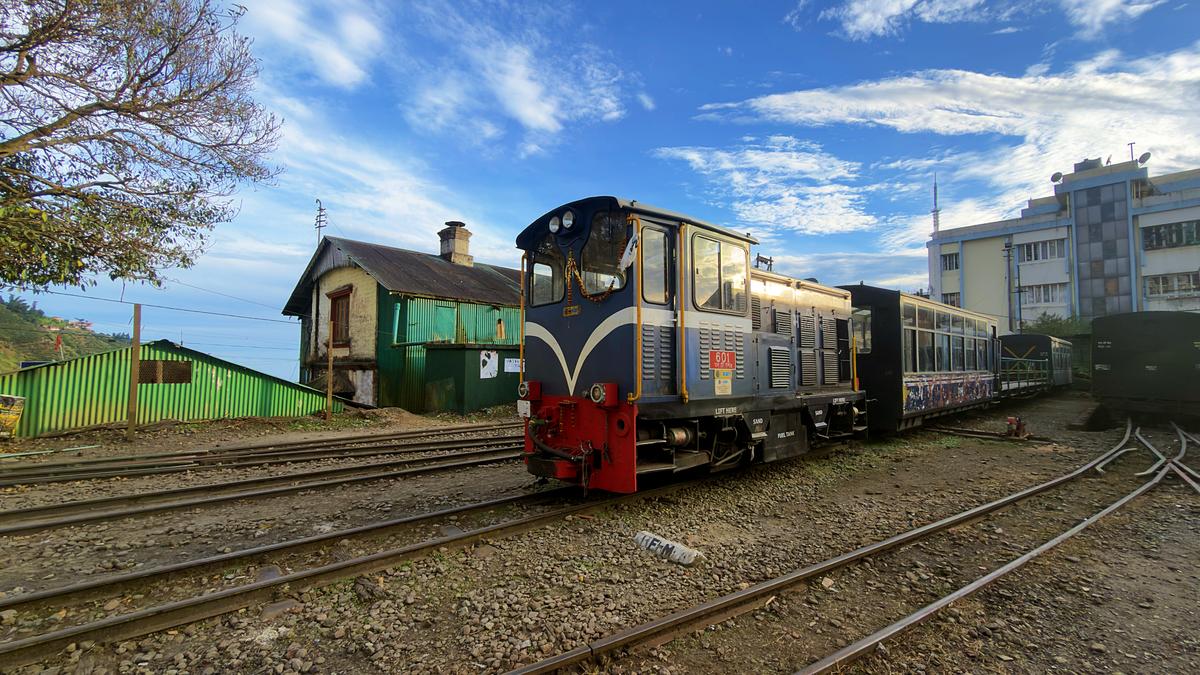
Kurseong is more than just a stopover on the way to Darjeeling. With the West Bengal Government giving in-principle approval to a proposed 21-km ropeway between Kurseong and Darjeeling, let us take a detour from the usual journey between the two hill towns and find out what makes Kurseong worth a longer stay.I settle into the restored colonial-era Manager’s Bungalow at the 155-year-old Singell Tea Estate, where my mornings begin with first flush Darjeeling tea, overlooking the Kurseong Hills. On clear days, I spot the tip of the Kanchenjunga, the world’s third-highest peak. The West Bengal Government has given an in-principle approval to a proposed 21-km ropeway between Kurseong and Darjeeling | Photo Credit: Special Arrangement Where the toy train meets the tea trailI am here to learn about the upcoming Ghum Winter Festival, which commemorates 27 years since the railway was inscribed on the UNESCO World Heritage List in December 1999.Kurseong Market leads me to its Railway Museum, a UNESCO World Heritage site that opened in 1881. For a modest fee of ₹30, I entered a single, well-lit room with railway artefacts ranging from 1879 to 2025 where station master Sangam Khati eagerly shares the history of the famous narrow gauge with me. “It was proposed by Franklin Prestage, agent of the Eastern Bengal Railway, and the purpose of the 2 feet (610 mm) narrow gauge was to reduce the haulage rates of commodities (such as rice) to Darjeeling and to improve the viability of local industries such as tea production,” he says.In 1880, the Darjeeling Himalayan Railway received eight steam locomotives from Sharp Stewart in Manchester, and remarkably, a few still chug through Kurseong. The annual Ghum Winter Festival keeps this railway legacy alive. The view from the 155-year-old Singell Tea Estate | Photo Credit: Special Arrangement Literature meets AI innovationsThe Darjeeling Himalayan Railway’s nine-day Festival runs from November 28 to December 6. It kicks off at Ghum Station with a series of cultural performances, followed by a Station Mahotsav and awards for individuals who have contributed to the station. The programme includes film screenings at the Ghum open-air museum, a literature festival, a heritage run, an open-air wagon ride at Kurseong and a robotics workshop for students.On December 3, Ghum will host a student event, called Himalayan AI Innovation, where in collaboration with GDG Siliguri, students will develop AI-powered solutions inspired by Darjeeling’s culture aboard a moving heritage train from Kurseong to Darjeeling. On December 4, the literature festival will feature conversations, poetry readings and storytelling sessions centred on the history of the Darjeeling Himalayan Railway. Tongba, a traditional fermented finger millet drink | Photo Credit: Special Arrangement Into the hillsBack at the property, as the October mist lifts, naturalist Ruchi Tamang takes me on hours-long interpretive Nature trails where we spot migratory Himalayan birds: yellow-browed and greenish warblers, red-vented and black bulbuls, and blue-fronted redstarts, while scanning the canopy for hornbills. In the afternoon, I head back to my hotel where I am served a Nepali thali with tongba, the traditional fermented finger millet drink of the Limbu people. Intrigued by the design of the Tibetan tongba wooden pot, which comes with a bamboo straw that draws out the liquid, filtering the grains, I find myself wondering how the drink is actually made.The next morning, I set off to meet Shristy Bishwakarma, the only Nepali woman in the Estate’s neighbourhood, who has been making tongba, white rice wine and rhododendron wine for the last two decades. She warmly welcomes me into her beautiful pink mountain home on Pankhabari Road, and shows me how she prepares washes kodo (finger millet/ragi) to remove any husk, keeps it aside for a day, then boils it. “After it gets cold, I add marcha (a fermentation starter) to it,” she tells me, as she transfers the millet mixture into a plastic bucket, where it will stay for an additional 15 days. After a fortnight, she will transfer the liquid to another container, from which she will either serve it, or sell it. The Tashi Samten Ling Monastery | Photo Credit: Special Arrangement Forest trails and colonial landmarksBy the third day of my stay, the rain has settled over Kurseong, and the entire landscape is veiled in mist, yet we are still up and about exploring the pine forests of Dow Hill, bordered by historic educational institutions that offer a glimpse of Kurseong’s colonial past.The Kurseong travel guideBest time to visit: March until May for clear views, or October until December for post-monsoon greeneryWhere to stay: From Taj Chia Kutir Resort & Spa to colonial-era Windamere Hotel, Nirvana Retreat, Anandalaya Homestay, Arms Homestay and Girls Hostel and White Sea Homestay Dowhill Kurseong, there are plenty of stay options in Kurseong from five star hotels to highly rated homestays.Getting there: Fly into Bagdogra Airport and rent a prepaid cab for the two-hour uphill drive. A standard hatchback/sedan will roughly costs ₹3,000 one-way and an SUV around ₹5,500 for. App-based cabs such as Uber are generally not reliable for on-demand rides in the hills. Shared jeeps and cabs (such as Wizzride) are available on a per-seat basis if traveling solo or on a budget.Market tips: While UPI works at many shops in the main market, ATMs can occasionally run out of cash, and smaller shops and local drivers often prefer cash. Most restaurants and cafes close by 9 pm, so plan your dinners accordingly. When heading back to Bagdogra, leave early, and take the scenic Pankhabari Road which is less crowded. Fog, afternoon traffic near Siliguri can cause unexpected delays. The Kurseong Market | Photo Credit: Special Arrangement The autumn blooms in the forest — wild daisies, Banmara, purple Himalayan weeds, and Anaphalis — are quite something. On to Giddapahar, the view is simply spectacular with the tea gardens stretching before us. The downpour prevents me from visiting the Chimney Village, known for its single 23-foot brick chimney, and being the last remaining vestige of a bungalow from the British era. Nearby, the historic Sarat Chandra Bose residence, now a museum and research centre, recalls the period when Subhas Chandra Bose was placed under detention in Kurseong in 1936. Paintings at the Tashi Samten Ling Monastery | Photo Credit: Special Arrangement In the evenings I gravitate towards Kurseong Market along Hill Cart Road. Sometimes for shopping, and other times, for the love of the colonial landmarks such as St. Paul the Apostle’s Church that dates back to the 1904 British colonial period. I also pause at the 1925 Tashi Samten Ling Monastery, a place of worship for the Tamang community associated with Tibetan Buddhism. As we walked into the stillness of its main prayer hall, Ruchi (who is a Buddhist) points out the Thangka’s and frescoes on the walls. The fiery Dalle Khursani | Photo Credit: Special Arrangement Household recipes and fiery Dalle KhursaniOf course food was my best window into understanding how Kurseong really works. And not just the traditional Nepali, Tibetan, and East Himalayan dishes that you find in the region but also small, everyday snacks.The green tea cookies at Margaret’s Deck Tea Lounge come as a rather pleasant surprise. At Cafe De’ Central, I try fish rawa fry, while at Ghosh Dada Hotel, I ate like the locals, feasting on the freshly fried samosas, pakoras and an egg omelette. Of course, I also try Kurseong’s fiery Dalle Khursani chillies.For my final meal, I relish rayo saag (mustard greens) with fafar (buckwheat flatbread), shaphaley (deep-fried, meaty bread), thukpa in a hot bowl, chhurpi (Himalayan cheese) and gundruk (fermented leafy green) at Singell Tea Estate; where Sujan Biswakarma, the chef explains that there are not just items found on a tourist menu.: “They are a reflection of our ingredients, climate and memories as well.” Thukpa | Photo Credit: Special Arrangement
Explore Kurseong’s monasteries, UNESCO railway museum at the Ghum Winter Festival 2026
Full Article
Original Source
Read the full article at Thehindu →KhanList aggregates and links to publicly available news content. We do not host full articles from third-party sources. Always verify important information with original sources.