
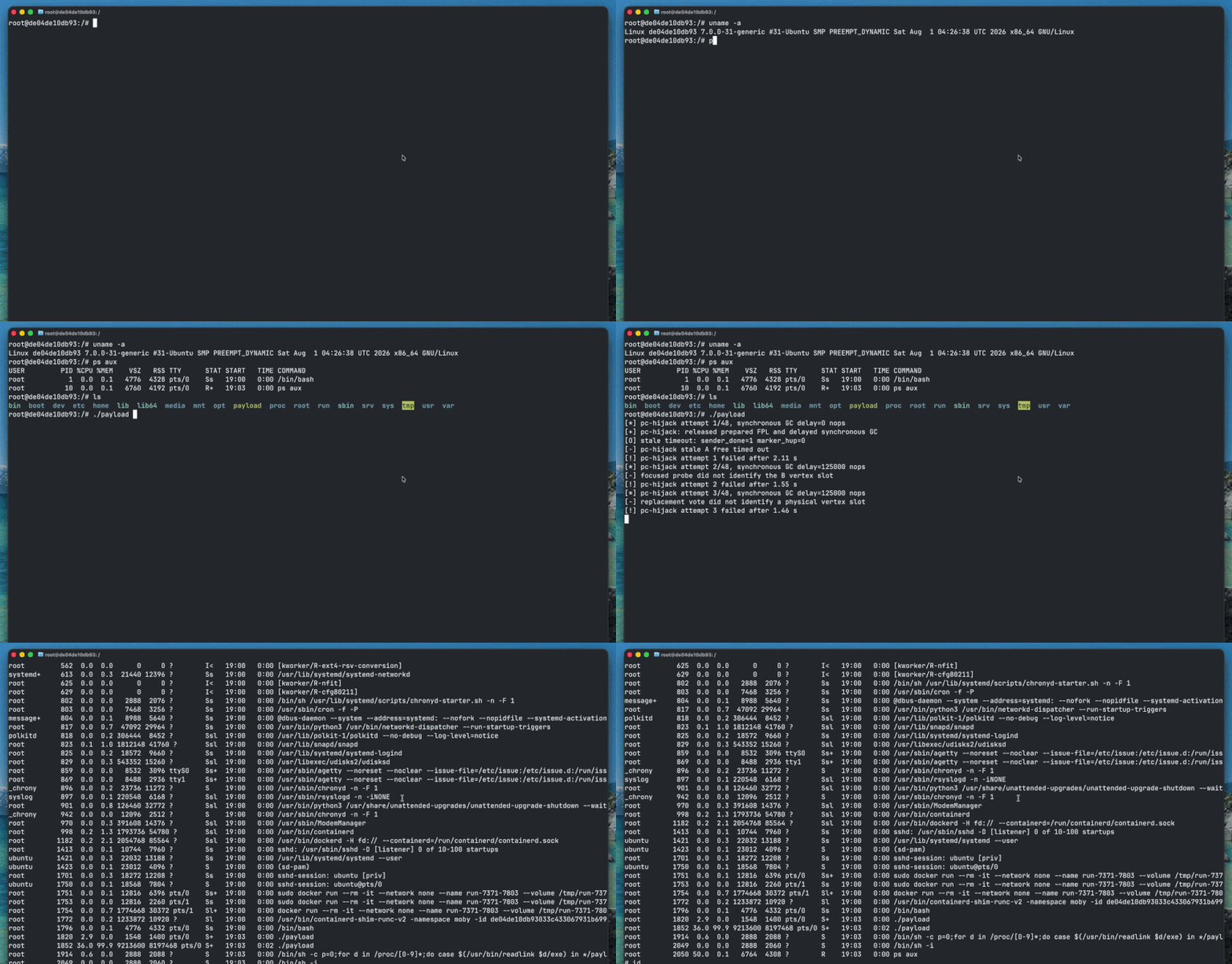
A use-after-free in the Linux kernel's AF_UNIX socket subsystem can be used to escape a container and gain root on the host, security firm DepthFirst said in research published September 22. The flaw, tracked as CVE-2026-80521 (CVSS score: 7.8), was fixed upstream on August 6, but Ubuntu has not shipped the patch for its 26.04, 24.04, or 22.04 LTS releases. DepthFirst released exploit code targeting Ubuntu 26.04. Ubuntu's security tracker lists the Linux package on 26.04 as "vulnerable, work in progress." The 24.04 and 22.04 releases are also affected through newer kernel packages, including those for AWS, Azure, and GCP workloads. No fix has shipped on any affected release. The flaw is not in CISA's Known Exploited Vulnerabilities catalog, and there are no confirmed reports of attacks using it. The vulnerability sits in the kernel's garbage collector for AF_UNIX sockets. That collector cleans up file descriptors passed between processes through SCM_RIGHTS messages. AF_UNIX sockets handle local communication between processes and are allowed by default in Docker and Kubernetes seccomp profiles, which is why the flaw can be reached from inside a container. A race condition in the garbage collector lets it see new references before the data carrying them has been queued. If the collector runs during that window, it can free part of a group of linked sockets without removing a pointer from a persistent internal list. The next collection pass follows that pointer into freed memory. Because the exploit reaches the kernel through ordinary system calls that containers are allowed to make, it bypasses namespace isolation, cgroup limits, and seccomp filtering. The upstream fix landed on August 6 in mainline kernel 7.2 and stable branch 7.1.10. The vulnerable code was introduced in kernel 6.10 and also backported to stable branches 6.1 and 6.6. Organizations running an affected kernel can apply the upstream patch directly. Ubuntu's tracker shows "work in progress" with no published date for the distribution update. Neither DepthFirst nor Ubuntu has published a temporary workaround. DepthFirst recommends moving untrusted workloads to microVM isolation, such as Firecracker or Kata Containers, which give each workload its own kernel rather than sharing the host's. How the Flaw Was Found DepthFirst said its AI model, dfs-large1, trained for vulnerability detection, found the flaw alongside a human-operated testing harness. The company won a Google kernelCTF slot with the exploit on July 24 and reported the bug to the kernel security team on August 5. The kernel maintainers replied that a researcher at OpenAI had independently reported the same bug, according to DepthFirst's timeline. The CVE commit credits kernel-exploitation researcher Kyle Zeng as the reporter. The disclosure is the latest in a series of 2026 kernel flaws that allow attackers to escape containers. A futex vulnerability disclosed in July and a flaw in the kernel's cryptographic subsystem in April also allowed an unprivileged user to escalate to root on the host. Both discoveries involved AI-assisted research. DepthFirst argues that AI-accelerated vulnerability discovery has lowered the barrier to container escapes to the point that organizations should not treat containers as a security boundary. "The barrier to escaping containers by attacking the kernel has fallen so significantly that we must assume attackers can do so at will," the company said. Nearly 5,700 Linux kernel CVEs have been published in 2026, the highest annual total on record, according to LinuxCVETracker. The demonstrated exploit and the rising volume are the basis for the company's assessment. Found this article interesting? Follow us on Google News, Twitter and LinkedIn to read more exclusive content we post.
Exploit Released for Unpatched Ubuntu Linux Flaw Enabling Host-Root Container Escape
Full Article
Original Source
Read the full article at Thehackernews →KhanList aggregates and links to publicly available news content. We do not host full articles from third-party sources. Always verify important information with original sources.