
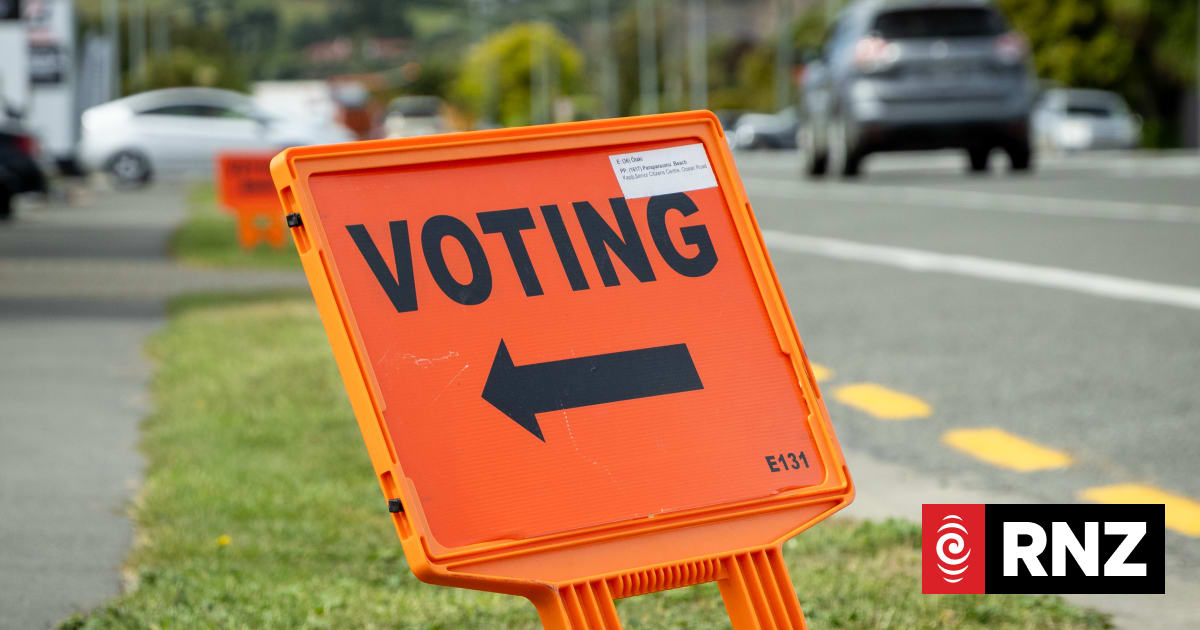
Explainer - Election Day was nearly three weeks ago, but we still don't quite know who won. Tomorrow's special votes and the final count will reveal all.Special votes, which are counted slower, have shifted the last preliminary election results the last several times. They may well do it again in 2026.Here's what you need to know about what makes a vote special, why they take longer to sort and why some may end up getting discarded.What are special votes?Special votes are made by anyone who isn't on their electoral roll at their voting place, on the unpublished roll, lives overseas or votes away from a polling place because they can't get to one.Anyone who enrolled after the printed roll for this year's election closed on Writ Day, October 4, but before voter enrolment closed entirely on October 25, has also cast a special vote.Are there fewer special votes this year?Based on the preliminary count information, they have dropped considerably from the 602,488 seen in 2023 and what was a forecast 700,000 for this year.Statements by the Electoral Commission since the election indicate only approximately 400,000 special votes were received this year.If that holds, it'd be the lowest special vote total since 2014.Why such a big drop? We won't truly know until all the final count is settled and post-election analyses are done.When RNZ inquired of the Electoral Commission if there were any indications of why the special vote numbers were so much lower, a spokesperson said on Monday, "we haven't done that analysis yet - right now, our focus is on the post-election period and the official count."Richard Shaw, professor of politics at Massey University, tipped one possible cause as the government changing the deadline so one had to be enrolled 13 days before the election, instead of being able to enrol right up to election day."Given the numbers, the most plausible explanation for the drop in number of expected specials has to do with the coalition's electoral law reforms (which, to no one's surprise, have had precisely no impact on the time taken to process the final vote)."Shaw noted that in the last election many people enrolled during the early voting period.He said that Electoral Commission "data points from 2023 include that about 450K specials were cast during the voting period (can't do that any more); about 110K were cast on the big day (can't do that either)."In 2023, Shaw said 12.8 percent of all special votes were from overseas voters, which he said was likely to be higher this year, while voters casting a vote outside their home electorate comprised 24.7 percent of all specials cast.Before the election, the Electoral Commission told RNZ it had expected more special votes than ever."Our forecasts indicate we could receive around 700,000 special votes," a commission spokesperson told RNZ in mid-October.The number of special votes had been steadily rising in recent elections."Over 600,000 special votes were issued in 2023 - meaning 21 percent of voters cast a special vote," the commission spokesperson told RNZ.This year, that doesn't seem to be the case."What the commission can't estimate is what proportion of specials were cast by people who enrolled during the advance voting period/on election day," Shaw said. "We can only extrapolate."Opposition politicians have called the enrolment changes a form of voter suppression, which National party leader Christopher Luxon has denied."I know we can't use the language of voter suppression in polite society but perhaps we can say the reforms have had a 'chilling effect,'" Shaw said.Have special votes made a difference in past elections?They have. In the last three general elections, the final results including special votes have seen National lose two party seats and some electorates have changed sides from the preliminary tally.With this year's knife-edge preliminary vote, that could make all the difference.Special votes generally tend to benefit the left-leaning parties.Shaw said that tends to reflect the demographics of those who cast them: "typically younger; typically more mobile (e.g. renters); typically a little less attached to institutional politics"."Those groups don't always break left, but they tend to. Or they tend not to engage at all."In 2017, 2020 and 2023, National lost two seats with special votes, while Labour gained one in 2017 and 2020, Te Pāti Māori gained one in 2020 and two in 2023, and the Greens gained one party seat in 2017 and 2023.The enrolment deadline change is likely to affect special votes, Shaw said before the election."There will almost certainly be a higher rate of rejection of special votes this time round."At this point, of course, we have no way of knowing how many people are going to show up and cast a special which won't be counted ... some specials will be tallied, of course, because they are overseas votes or people out of their electorate or whatever, but plenty won't."Voting papers being printed in Petone, Wellington weeks ahead of the election.Samuel Rillstone/RNZWhy do they take longer to count?They have a stricter checking procedure, and any overseas votes can also take longer to process. In 2023 it took three weeks for special votes to be counted to confirm the election results."We understand how important it is to deliver timely results, and we also need to make sure they are accurate," Karl Le Quesne, Chief Electoral Officer, said.When you cast a special vote, you must also sign a declaration form that must be witnessed by another person. (If you vote at a voting place, that witness can be an Electoral Commission volunteer or staff member.)By law, 10 days are allowed for votes to be returned from overseas.Special votes have to be returned to the electorate they were cast for before they're counted. Every special vote declaration is checked to make sure the voter is enrolled and eligible to vote."We check the voter was enrolled in the electorate where they voted, and check that the special declaration form has been completed and witnessed," the Electoral Commission spokesperson said."Special votes that are allowed can only be counted after these checks have been done. Votes are tallied and quality assurance checks are made before we release the results."Shaw said overseas votes, once they're counted, could also affect how the election shakes out."The overseas voting population is interesting this year: there are more of them than previously (and at least some of them are presumably people who have left the country while they might rather have remained, had the economic conditions been better), so that might count against the incumbent administration too."The government pushed for this year's changes to enrolment deadlines and one of the reasons it gave was to speed up vote counting."I just think three weeks is way too long to count special votes, I think that needs to be sped up," Prime Minister Christopher Luxon said in 2023.However, when those enrolment changes were still being considered last year as part of the Electoral Amendment Bill, Le Quesne said it ultimately wouldn't make results arrive any faster.And in the end, it's taken 20 days for the final count after election day.ACT party supporters watch returns on Election Night.Baz MacdonaldWhy can special votes be tossed out?In the 2023 general election, 15,555 special votes were disqualified."Reasons special votes are disallowed include if the voter is not enrolled, the vote received was late, or the declaration was not signed by an authorised witness or not signed by voter," the Electoral Commission spokesperson said.The Electoral Commission has a full breakdown of why special votes were disallowed in 2023 broken down by electorate on their website.By far the biggest reason was that voters were not actually enrolled at all, with 10,566 discounted for that reason. Far behind was having a declaration not being signed by an authorised witness, with 2384 rejections.Auckland Council said 4162 special votes were deemed invalid, due to incorrect or missing declaration details, or outdated enrolment details. Special votes were only 1.68 percent of the total vote cast, it said. Similar high rates of disqualification were seen in Kaipara's local council election.However, it's important to note that local body elections are not run by the Electoral Commission, but by local councils, and have different rules and procedures.Shaw said before the election that the changes to voter enrolment this year are a bit of an X-factor in trying to figure out how important special votes will be this year."One possibility, given the new policy settings, is that special votes are less, not more, important as far as the final outcome is concerned, in the sense that there may well be fewer of them that count this time round."In another respect, they might be more consequential - if there is a large number that are disqualified, that may cast shadows over any outcomes."
Explainer: What are special votes and why they could decide New Zealand's election?
Full Article
Original Source
Read the full article at Rnz →KhanList aggregates and links to publicly available news content. We do not host full articles from third-party sources. Always verify important information with original sources.