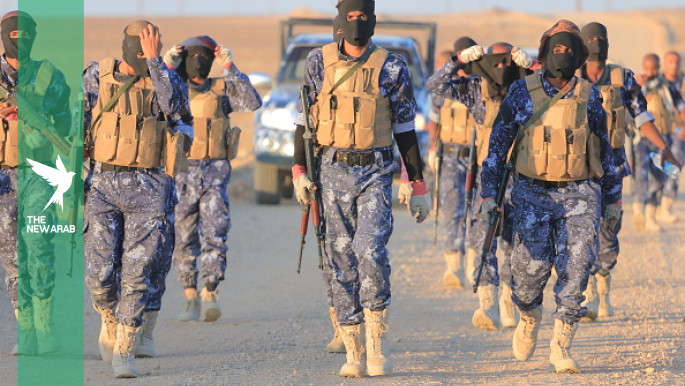
Five strategic fronts could decide the future of Yemen as government forces and the Houthis prepare for a potential return to large-scale ground fighting. Yemeni government forces take part in military training exercises in Seiyun, eastern Yemen, on 28 December 2023. [Getty] The prospect of a renewed ground war in Yemen is growing as military, political and regional tensions intensify, with five key fronts that could determine the outcome of any large-scale confrontation. The warnings come as the Houthi movement has stepped up its rhetoric against Saudi Arabia and signalled a willingness to abandon years of stalled negotiations in favour of military action, raising fears that the conflict could expand beyond Yemen and further destabilise the region. Both the internationally recognised government and the Houthis have used the relative lull since the April 2022 truce to strengthen their military capabilities in preparation for what could become a decisive phase of the conflict. While international attention has focused on maritime security in the Red Sea and Arabian Sea, Yemen's ground battlefields have re-emerged as a strategic arena that could reshape both the country's internal balance of power and wider regional dynamics. Government forces have also acquired warplanes and advanced drones, which have reportedly been used to strike Sanaa airport and Houthi military positions in Marib and Al-Jawf. Government forces and their allies are assessed as holding significant advantages in conventional weaponry, logistics and international backing. They include the Yemeni army, National Shield Forces, Joint Forces, Giants Brigades and southern formations, supported by the Saudi-led coalition. Their strengths include combat aircraft, modern drones, naval assets, armoured vehicles and control of key coastal areas as well as oil and gas infrastructure. By contrast, the Houthis are relying on ideological and tribal recruitment, asymmetric warfare and mass mobilisation. Their arsenal centres on suicide drones, short-range ballistic missiles, heavy artillery, tunnels and landmines, supported by a unified command structure that enables rapid decision-making and tactical flexibility. The New Arab identifies five principal fronts that could shape the next phase of the war. Marib and Al-Jawf The energy-rich provinces of Marib and Al-Jawf are considered the most likely flashpoint due to their economic importance and strategic value. Control of oil and gas facilities would strengthen either side's ability to finance operations and consolidate authority in northern Yemen. Government forces are heavily fortified across the area, while the Houthis have concentrated troops, artillery, drones and missile units around the frontlines. Members of Yemen's internationally recognised government forces participate in military drills in Seiyun, eastern Yemen, on 28 December 2023, amid ongoing tensions with the Houthi movement. [Getty] Hodeidah and the western coast The Red Sea coast remains strategically important because of its ports and proximity to the Bab al-Mandab Strait, one of the world's busiest shipping routes. Government-aligned Joint Forces may seek to capitalise on international pressure against the Houthis to reopen the coastal front, while the Houthis view the area as vital for maintaining maritime capabilities and launching attacks on international shipping. Taiz Any battle around Taiz would likely centre on mountainous terrain and entrenched urban positions, producing trench warfare, sniper engagements and artillery exchanges. Government forces continue to defend the city, while the Houthis maintain a tight military encirclement supported by artillery, drones, tunnels and extensive minefields. Dhalea and Lahij The mountainous fronts around Karsh and Yafa form the main gateway between northern and southern Yemen and serve as the first line of defence for Aden and Al-Anad airbase. Southern and government forces are equipped for mountain warfare, while the Houthis have reinforced the area with special forces, heavy mortars, guided missiles and suicide drones. Saada and the northern border The northern border region, stretching across Saada, Hajjah and adjacent districts, is regarded as the Houthis' ideological and political heartland. Government forces could attempt to open new fronts there to force the Houthis to divert elite units away from Marib, Al-Jawf and the western coast. However, the report notes that the terrain, tunnel networks and defensive fortifications would make any offensive particularly costly. The outcome of any renewed ground offensive would not only determine military control on the battlefield but also shape Yemen's political future and its role in the wider regional balance of power. Related Articles
Explainer: Five battlefronts poised to shape Yemen's next war
Full Article
Original Source
Read the full article at Newarab →KhanList aggregates and links to publicly available news content. We do not host full articles from third-party sources. Always verify important information with original sources.