
Gippsland unionist Steve Dodd remembers a time when the Latrobe Valley was an economic and literal powerhouse for the state.Home to Victoria's coal-fired power stations, workers in the Latrobe Valley worked day and night for generations to keep the lights on.It was also home to timber harvesting, paper manufacturing and dairy produce.The Latrobe Valley has grappled with high unemployment since the state government privatised the power stations in the 1990s, resulting in the loss of thousands of jobs.Steve Dodd says the Latrobe Valley has suffered from job losses. (ABC News: Jarrod Whittaker)The town of Morwell still has an unemployment rate of 12.4 per cent, according to the federal government's latest Small Area Labour Market results.Anxiety about the future of employment has increased since the closure of the Hazelwood power station in 2017, with the Yallourn plant to follow in 2028."Hazelwood power station shut down. Hundreds of jobs disappeared," Mr Dodd, who is the Gippsland Trades and Labour Council secretary, said."Forestry has shut down. We've seen jobs lost at Australia Paper where we used to make Reflex copy and paper … that doesn't get done anymore."We can't see any development in the region."A sign outside Hazelwood power station on its last day of operation, on March 31, 2017. (ABC News: Nicole Asher)It has left Latrobe Valley community scrambling for replacement industries, employment opportunities, and hope in the lead-up to the Victorian state election."We just want more support in this region from the governments, to try and develop industries in the manufacturing industries in this region that delivers good, well-paid jobs," Mr Dodd said.Gippsland's state seats — Morwell, Gippsland South and Gippsland East — are held by the Nationals.But incumbent MPs are facing pressure from a One Nation campaign rooted in pledges to revive industry, manufacturing, and the native timber sector, with the seat of Morwell particularly vulnerable to voter dissent.'A sense of loss'The Coalition, Labor, and One Nation have made election pledges in the energy and renewables space in recent months.One Nation have made a broad commitment to keep Loy Yang A power station open beyond its forecasted closure date in 2035.It has also promised to revive Victoria's native timber industry if it wins.Labor announced earlier this year a Regional Energy Jobs Guarantee, which it says will deliver $4.62 billion between 2026 to 2040 in Gippsland alone.The Coalition has promised to create a $20 million fund to attract private investment to the region if it wins government.Planned burns would also be doubled with salvaged wood used to support the timber industry, if the Coalition wins.Kos Samaras says blue-collar communities across Australia were no longer supporting Labor in the way they once had. (Supplied: Peter Healy)Former Labor official turned pollster at RedBridge Group, Kosmos Samaras, said while voters felt a sense of loss for industries in decline, promises rang hollow if they were not grounded in figures, facts, and timelines."That's what's causing some of the discontent, frustration," he said."They know from bitter experience the state's books are in trouble, and they now connect debt to the lack of resources. The idea that you're going to convince them you're going to deliver something without figures, they don't believe it."In Gippsland, Mr Samaras said the Nationals remained strong in Gippsland, but Morwell was shaping up as contest between the Coalition and One Nation."Morwell has always had this history of a much more fragmented, less party-loyal constituency," he said.He said nostalgia and a desire to return to a "boom" time had driven voter sentiment in regions across the country."Across all of regional Australia, that is exactly the new world that we're dealing with, where former blue-collar constituencies are now no longer voting for the Labor side. You could see that right across the country," Mr Samaras said."This is where I think the Nats will do well, because they have steadfastly been representing those communities that feel like they have got a voice."The power of nostalgiaUniversity of Canberra postdoctoral research fellow Emily Foley said regional areas often felt a sense of neglect, particularly as cost of living pressures increased.Dr Foley said One Nation had deployed nostalgia as a rhetorical tool during the election, evoking feelings "for an Australia that really never was".Dr Emily Foley says politicians use nostalgia for traditional industries as a tool during elections. (Supplied: Dr Emily Foley.)In Gippsland, Dr Foley said voters could point to the period before the decline of industries as a time when there was more work."The power of using nostalgia as a tool, it's able to grasp onto feelings rather than facts," she said."They're able to sort of say, let's bring Australia back to this golden era. And very rarely do they pinpoint when that golden era was."Dr Foley said One Nation has discussed dying industries and the regional impact "while at the same time ignoring the emerging, urgent needs of regional Australians".Victoria's native timber industry closed on January 1, 2024. (ABC News: Richard Willingham)It is a sentiment Mr Dodd said Latrobe Valley locals were savvy to, particularly when pledges were made about extending the life of the region's power plants."They're actually falling apart," he said."All these people who were saying, 'oh, you know, we can keep it going'. It's just not going to happen because of the end of life of the equipment."Unless we develop new manufacturing in this region, whatever that may be, then, you know, people are just going to move off."The Valley will die."
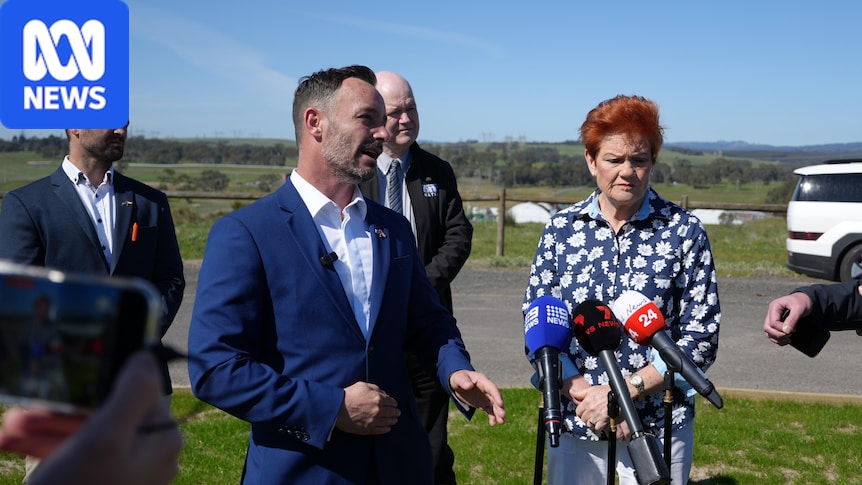
Experts say nostalgia for traditional industries resonates with voters
Full Article
Original Source
Read the full article at Abc →KhanList aggregates and links to publicly available news content. We do not host full articles from third-party sources. Always verify important information with original sources.