
The blue tsunami will reach far beyond the United States. In Tuesday’s midterm elections, Democrats won control of both chambers of Congress by wide margins, ushering in divided government over the final two years of President Donald Trump’s term in office. Below, our experts assess the global implications of the sweep on issues ranging from energy and the economy to US foreign policy. This article will be updated as more expert reactions come in. Landon Derentz: Trump may double down on energy policy Josh Lipsky: Markets are unsure what to make of the Democratic sweep Torrey Taussig: The power of the purse will be the route to shaping US NATO policy Graham Brookie: Public trust is driving politics—and perhaps now policy—on AI Kenton Thibaut: US-China AI safety talks could be back on the agenda Jörn Fleck: Democrats could extract some concessions on Ukraine, but don’t expect a sea-change on Europe Tressa Guenov: Congress will double down on defense and intelligence oversight Leslie Shedd: Expect tougher scrutiny of Israel and Iran, and potentially more support for Ukraine Landon Derentz is the Atlantic Council vice president for energy and infrastructure and senior director of the Global Energy Center. He previously served as director for energy on the National Security Council. Trump may double down on energy policy With Democrats having gained control of Congress, Trump is likely to lean more heavily on his substantial executive and foreign policy authority. Despite mounting legislative headwinds, the president faces a narrowing window to translate his priorities into durable policy and investment decisions before the 2028 presidential race takes hold. Affordability dominated the run-up to yesterday’s elections, with a Reuters/Ipsos poll finding that 48 percent of registered voters identified the cost of living as their top voting issue. Retail gasoline and diesel prices have also risen sharply this year, reinforcing the political pressure on the administration. But with the midterms behind him, Trump may increasingly weigh near-term consumer-price concerns against longer-term strategic objectives. The tension will be particularly apparent in energy policy, where foreign policy ambitions, domestic industrial priorities, and consumer affordability do not always align. That starts with Iran, where Trump may place greater weight on his long-term objective of preventing a nuclear-armed Iran than on short-term electoral considerations. His behavior before the 2025 and 2026 strikes demonstrates that diplomatic rhetoric and military escalation can coexist. Sustained economic pressure remains a likely course, with renewed military escalation a viable alternative, even at the expense of regional stability and energy prices. Presidential power has its limits, however. Trump may seek an energy-centered resolution to the war in Ukraine in negotiations with Moscow, but achieving one is another matter. Bipartisan congressional resistance to sanctions relief on this side of the Atlantic and Europe’s determination to eliminate its dependence on Russian gas—backed by a legally mandated phaseout through 2027—present formidable obstacles. And this doesn’t even account for the fact that restoring Russian energy flows to Europe would undercut US liquefied natural gas export interests and Trump’s broader energy dominance agenda. Beyond foreign policy and diplomatic ambitions, the president has considerably more latitude to advance his domestic energy agenda without the cooperation of foreign governments or Congress. Expect a renewed push to expand conventional energy production, export capacity, and the infrastructure needed to power the United States’ artificial intelligence (AI) and manufacturing ambitions. These priorities may offer limited near-term consumer-price relief, but they present the administration with an opportunity to translate executive authority into long-term infrastructure investment and commercial commitments that will be harder for future administrations to unwind. Josh Lipsky is vice president and chair of international economics at the Atlantic Council. He previously served as an advisor at the International Monetary Fund. Markets are unsure what to make of the Democratic sweep Two years ago, as Trump was reelected to the presidency, bond yields shot up—as markets expected higher tariffs and more deficit spending. They were right. Two years later, as Democrats swept Congress, bond markets initially reacted in the opposite direction—on the belief that AI-related infrastructure spending would have to slow down and gridlock would mean fewer spending deals. This time, the markets may be mistaken. The Democrats are planning a hundred-hour legislative blitz in January on a range of their priorities, including rolling back tariffs—which, based on exit polls, were among the least popular policies of Trump’s second term—and restoring cuts from Medicaid and the Affordable Care Act. All of that would increase the deficit. The markets assume Trump will veto the full package. But it’s not so simple. The strength of the Democrats’ majorities in both the House and Senate means they will enter two major fiscal fights in a strong negotiating position. First up will be federal government appropriations, as current funding only runs through December 11. The lame-duck Congress may pass a continuing resolution, but in 2027 a budget fight will almost certainly take place. It could happen at the same time that the US hits the debt ceiling—the $41 trillion limit is projected to be breached sometime in the first half of the year. The Democrats will insist on their spending priorities as a condition of reaching an agreement. Don’t be surprised to see some deals in the coming year—ones where both sides get their spending priorities met and the debt continues to pile up. Tariffs, meanwhile, are not likely to change. Voters delivered a clear message about how they felt about Trump’s trade policies and the impact they have on prices. But Trump will reject any attempt to limit the use of his favorite tool. The Democrats’ legislation will be important because it will show where the party wants to head on trade in 2028 and beyond. But for those countries looking for a break on tariff rates after the midterms, the wait will be at least a little longer. The one exception may be China. Trump’s trade détente with Beijing was driven in part by the series of summits the two leaders had this year (with two more expected before year-end). Once those pass, Trump may refocus in his final two years on what has been the core animating economic idea since he first ran for president—China’s unfair trading practices. On that issue, he may find a rare area of bipartisan consensus. Torrey Taussig is the director of and a senior fellow at the Transatlantic Security Initiative in the Atlantic Council’s Scowcroft Center for Strategy and Security. Previously, Taussig was a director for European affairs on the National Security Council. The power of the purse will be the route to shaping US NATO policy As long as Trump is in office, questions and concerns about US engagement in NATO will remain. It was not Congress, but rather the president, who created a transatlantic crisis by repeatedly threatening to annex Greenland, make Canada the fifty-first state, and withhold protection from NATO allies that do not spend enough on defense. It was also the administration, not Congress, that bypassed all efforts to build European support for (or even awareness of) its war with Iran. The administration took not only Europeans but also Congress by surprise when it canceled troop deployments to Europe earlier this year. Now that Democrats control the legislative branch, many on both sides of the Atlantic will be looking to see if the party can wrestle some degree of control away from the executive branch in foreign and security policy. Democrats who favor a robust US presence in Europe and a strong commitment to NATO are starting from a solid foundation. Despite the administration’s unwieldy approach toward allies, support for NATO in Congress already crosses party lines—and to meaningful effect. In the fiscal year 2026 National Defense Authorization Act (NDAA), Republican majorities passed multiyear security assistance for Ukraine, as well as limits on the administration’s ability to enact troop cuts in Europe, and required the US military commander of European Command to retain the supreme allied commander Europe role in NATO. Despite this already strong bipartisan support for NATO, Democratic control of Congress will still have a recalibrating effect on transatlantic security. Come January 2027, Democrats will chair every committee and subcommittee in the House and Senate, including the appropriations committees and those important for European security and foreign policy (the Senate Armed Services Committee, Senate Foreign Relations Committee, House Armed Services Committee, and House Foreign Affairs Committee). Democrats will decide which bills get hearings, control investigations, and oversee about two-thirds of committee staff and budgets. We will see the effects of this shift in the NDAA negotiations for fiscal year 2028 and hearings regarding US force posture in Europe. While Trump maintains broad executive privileges in the foreign policy arena, Democrats will start paving the way for a new approach to working with US allies. Graham Brookie is the Atlantic Council’s vice president for technology programs and strategy, as well as the senior director of the Digital Forensic Research Lab. He previously served in various positions at the White House and National Security Council. Public trust is driving politics—and perhaps now policy—on AI For the United States to compete effectively in the age of AI, the country must address the significant trust deficit the American public has toward the technology. This was a key finding of the Atlantic Council’s Commission on AI earlier this year, which brought together bipartisan members of Congress, industry leaders, and civil society experts. The deep anxiety Americans feel about the technology and skepticism of the titans building it were on full display throughout the midterm elections and in the results. For example, an NBC News exit poll found 56 percent of voters said AI and associated infrastructure were a “crucial or major factor” in their vote for Congress. There is little reason to believe these concerns won’t remain on full display in the next Congress and at the state level in California, Texas, Ohio, and elsewhere. Despite the significant Democratic gains in the election, AI skepticism transcended partisan lines, with many Republican candidates—from Michigan to Texas—advocating for slowing down the AI infrastructure buildout or increasing the regulation of the tech sector. Likewise, there are an increasing number of bipartisan policy proposals on AI safety in the current Congress—such as the FRONTIER ACT or the AI Kill Switch Act—which will likely reemerge in some form in the next Congress. The bottom line is that, despite the increasing use and integration of AI in daily life around the country, polling as recent as last month shows that 75 percent of Americans view AI with fear or concern rather than excitement, especially when it comes to affordability, employment, education, the environment, safety and security, and many other issues. These concerns are especially prevalent among young people. The election comes one week after one of the largest tech-driven sell-offs wiped out nearly one trillion dollars in market value due to subpar earnings reports across the AI industry. Much of that sell-off was driven by shaky confidence in whether the record borrowing and spending fueling the AI industry will translate into sustainable revenue, even as the infrastructure buildout takes time and has become a political flashpoint. Either way, the US economy is extremely dependent on whether the huge bets being placed on AI will pan out. Taken together, we’re likely in for continued market and policy adjustments related to AI. AI is here to stay as a general-purpose technology, but it is also increasingly a determinant of geopolitical competition. As AI development outpaces institutions’ ability to manage it, we’re past due for a coherent national dialogue on AI’s impact and what US leadership in AI should look like. That debate will be on full display in the coming Congress. Kenton Thibaut is senior resident China fellow at the Atlantic Council’s Digital Forensic Research Lab within the Atlantic Council Technology Programs. US-China AI safety talks could be back on the agenda Democratic control of Congress could strengthen political support for US-China coordination on AI safety, particularly around frontier-model risks, incident reporting, and crisis communications. The election comes at a consequential moment: During their September 2026 summit, Trump and Xi agreed to establish a bilateral AI dialogue and a communication channel for AI-related incidents, with follow-up talks scheduled for November. Congressional Democrats have already articulated a more ambitious agenda for bilateral engagement: In September, representatives Gregory Meeks, Ami Bera, and Sara Jacobs, along with twenty-six of their colleagues, urged the administration to pursue shared AI safety standards, establish crisis communications mechanisms, address the proliferation of advanced capabilities, and facilitate exchanges between American and Chinese AI researchers. A separate initiative led by Senator Chris Van Hollen and sixteen Democratic colleagues went further, calling for a formal agreement on frontier AI testing, oversight, human control, and verification. The senators also proposed considering a mutual pause in frontier AI development, highlighting growing congressional interest in managing the risks of an accelerating technological competition. With control of both chambers, Democrats could use committee hearings, appropriations, and legislation to press the administration to operationalize the new dialogue. Potential priorities could include defining which AI incidents trigger bilateral notifications, establishing protocols for information sharing, and supporting technical exchanges on model evaluations and catastrophic risks. There is some bipartisan support for this approach. In September, members of the bipartisan Problem Solvers Caucus also called for US-China coordination on AI testing and incident reporting. Growing public backlash against current AI policy—including data center buildouts, permissive AI self-regulation, and growing concerns about the impacts of AI on employment—could also add momentum to renewed engagement on AI. However, significant constraints remain. The executive branch controls diplomatic negotiations, while disagreements over semiconductor restrictions, technology access, and verification complicate cooperation. Democratic lawmakers also differ significantly on how far bilateral commitments should extend, with more national-security-oriented Democrats expressing greater skepticism about such a process. The election’s most immediate effect may be to make implementation of the existing AI safety dialogue a more prominent congressional priority. Whether this develops into formal agreements will depend on the administration’s willingness to negotiate and Beijing’s readiness to accept reciprocal safeguards—a tall order, considering that Beijing has previously rejected Washington’s efforts to frame AI safety talks around US-defined priorities. Jörn Fleck is the senior director of the Atlantic Council’s Europe Center. Europe can expect the Democrats in the next Congress to signal a more constructive US reengagement in transatlantic relations, on Ukraine, and even on trade issues. But European decisionmakers are right to have tempered expectations about how much a Democratic Congress will translate into substantial US policy changes on what matters most to the continent: support for Ukraine, US commitments to European security, and greater stability in trade and tariff policies. Even with a strong majority in both chambers of Congress, Democrats will struggle to impose meaningful limits on Trump’s conduct of foreign policy, given his constitutional powers and willingness to push the envelope. Democrats may put him and Republicans on the record with messaging bills on items such as the Russian diesel deal and waived Russia sanctions. They can put supplemental funding for Ukraine on the agenda and leverage must-pass legislation such as the NDAA to try to extract concessions on Ukraine support or US security and troop commitments in Europe related to the administration’s ongoing force posture review. The new majority will also try to claw back trade and tariff powers that Congress has ceded to the executive branch in Trump’s second term. But Trump has stated a willingness to use his veto, and hard limits on the president’s power are unlikely. Much will also depend on where congressional Republicans go politically in response to the midterm rout. The remaining Reaganite hawks in the Senate may not continue to mute their opposition to the president’s dealings with Moscow and Beijing or his pressure on Kyiv and allied European capitals. Large Democratic majorities in both houses of Congress may make it easier to assemble the two-thirds majorities needed to override a presidential veto. Republican hawks will have more leverage to confront the White House, even if they will have to pick their battles. Complicating matters, Europe will have to navigate two poles of power in Washington. Europe will, on the one hand, confront a Democratic Congress that wants to drive a reengagement agenda with European allies but will not be able to deliver significant policy changes on key areas of concern, at least not on its own. And on the other hand, Brussels and national capitals must be prepared to counter continued disruption from the president on trade and Ukraine, while avoiding antagonizing him with overly partisan approaches. NATO and EU countries will continue to confront a mercurial US president who may double down on foreign policy as he is likely to come under significant pressure at home from congressional investigations, budget fights, and political gridlock under divided government. Unshackled from having to face voters at the ballot box again, Trump may shift into deal-making overdrive to cement his legacy. In doing so, he will lean into the instincts that have defined his foreign policy Weltanschauung—one of sphere-of-influence arrangements among supposedly great powers, personalized leader-to-leader dealings, and hard power realism. Trump’s deal-making mode carries both risks and opportunities for Europe and its adversaries. Moscow and Beijing will now have to contend with a more boxed-in Trump administration. Trump’s instincts may still be to look for deals with Putin and Xi. So Europeans should assess which opportunities and deals they can shape, from Ukraine to European security and trade, even if these may turn out to be more tactical than strategic, as broader initiatives with this White House may remain elusive. But Europe simply cannot afford to fatalistically write off the next two years given the president’s powers and what is at stake for the continent in US foreign and defense policy. Tressa Guenov is the senior director for programs and operations and a senior fellow at the Scowcroft Center for Strategy and Security at the Atlantic Council. She previously served as principal deputy assistant secretary of defense for international security affairs in the Office of the Under Secretary of Defense for Policy. Congress will double down on defense and intelligence oversight Democratic leaders in the House and Senate will need to focus immediately on essential foreign policy issues such as Iran and Ukraine, but equally important will be the possibility of renewed oversight of core defense and intelligence issues. Expect Democrats to press on issues such as the Pentagon’s force posture plans around the globe and getting numbers on critical munitions stockpiles and associated defense production issues. Democrats are also likely to look into reports of inappropriate business practices within the department and seek out accountability on recent military actions against targets in the Caribbean and Iran. Trump’s programmatic priorities such as Golden Dome, and broader issues of personnel readiness, promotions, and recruitment, are also likely to be on the agenda. On intelligence issues, we may see a revived bipartisan core of members who will want baseline information on how layoffs and retirements have affected US collection capacity, where AI offers expanded risks and opportunities, and how adversaries may be working together in new ways against US interests and those of the international community. These fundamental issues won’t be easy to address. They will require urgent bipartisan attention and rapid coordination across several committees before the new Congress is even sworn in this January. Much more work lies ahead. Leslie Shedd is a nonresident fellow at the Atlantic Council’s Eurasia Center and former senior adviser to the US House Foreign Affairs Committee. Expect tougher scrutiny of Israel and Iran, and potentially more support for Ukraine Last night’s resounding loss for the Republican Party will have some immediate impacts on foreign policy. First, the new Congress will be without a slew of experienced Republican national security voices, who either lost last night, retired, or passed away. Senators Susan Collins (ME), Thom Tillis (NC), John Cornyn (TX), Lindsey Graham (SC), and Mitch McConnell (KY), and representatives Mike Lawler (NY), Michael McCaul (TX), Ann Wagner (MO), Don Bacon (NE), and Brian Fitzpatrick (PA) have been advocates for American strength and strong alliances, including with Ukraine. That is a significant loss of expertise and experience for the Republican conferences in both chambers that will take years to rebuild. Israel is also facing a brand-new world this morning—one with a Congress far less supportive of its causes and far more likely to cut military aid. The Israeli government and its supporters in the United States would be wise to begin immediate outreach to Democrats open to mending fences and attempt to rebuild support. Trump himself announced Tuesday that he would cut off four billion dollars in annual aid to Israel, but he will need Congress to agree, since it is actually responsible for appropriating that money. He now likely has a Congress that will. On the war in Iran, which drove many voters to turn on Republicans, the next Congress is likely to prioritize legislation to halt, or at least significantly curtail, US military action. Still, it is unclear what that would look like beyond a resolution of disapproval, because Iran has been unwilling to have any reasonable discussions to end the conflict. The new Congress also injects a measure of uncertainty into Ukraine policy. While Democrats have been generally solid in supporting Ukraine militarily and financially during the conflict, voters sent a resounding message in this election to focus on domestic policy and affordability. It’s unclear whether this new crop of Democrats will be interested in sending money and weapons overseas—regardless of the destination. In good news for Ukraine, the likely chairs of national security committees—particularly Representative Adam Smith (D-WA) at House Armed Services and Senator Chris Coons (D-DE) at Senate Foreign Relations—have a strong record of support. They will be powerful allies for Ukraine in the new Congress, as Kyiv fights for access to much-needed weapons
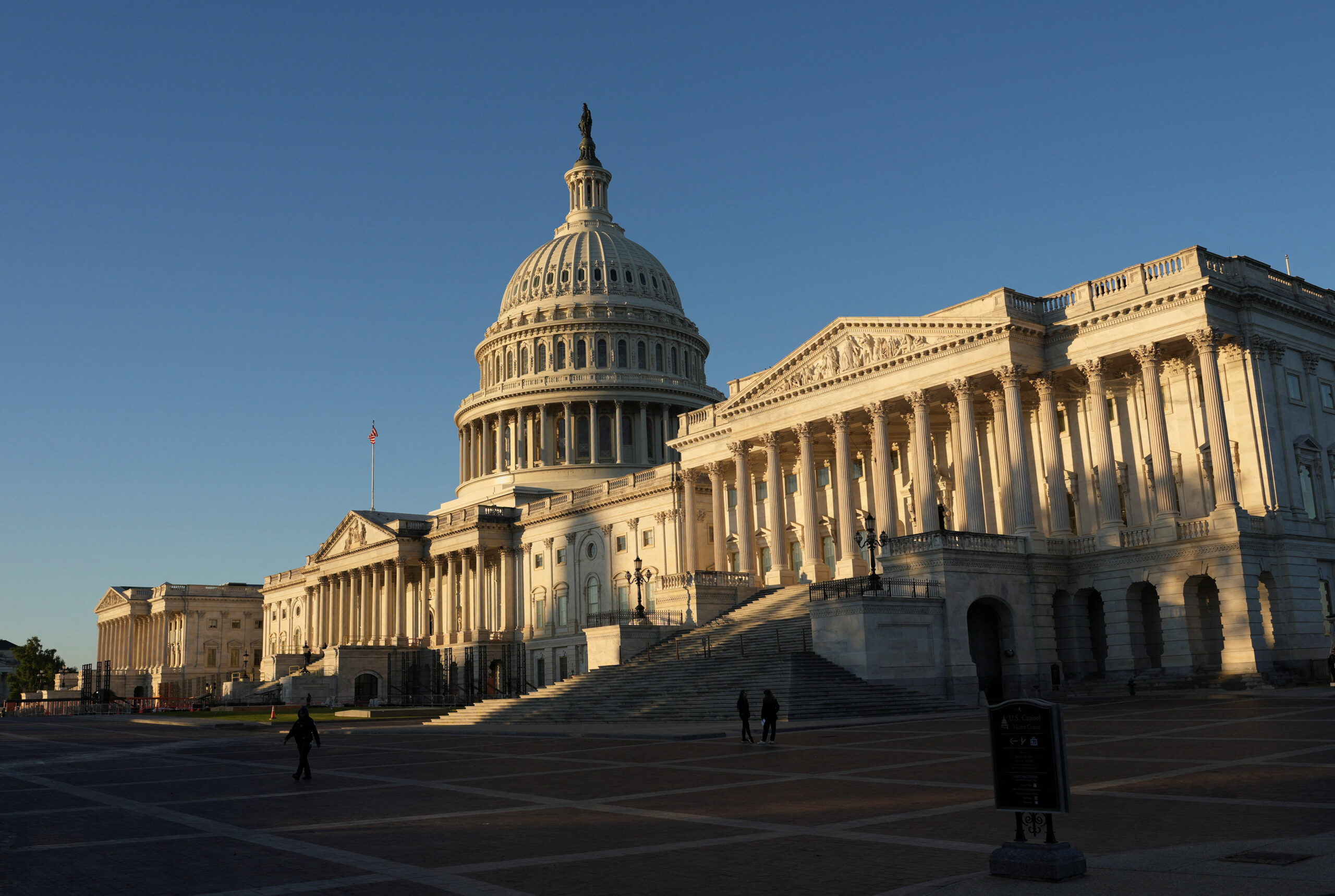
Experts react: Democrats just swept the US midterms. Here’s what it means for the world.
Full Article
Original Source
Read the full article at Atlanticcouncil →KhanList aggregates and links to publicly available news content. We do not host full articles from third-party sources. Always verify important information with original sources.