
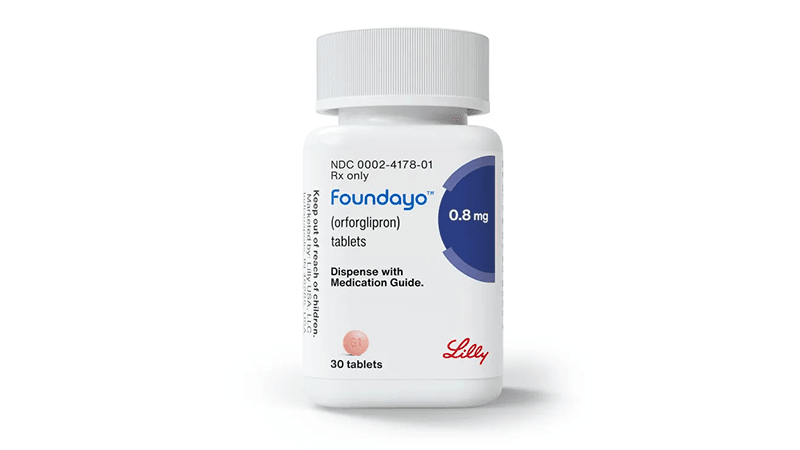
An investigational oral GLP-1 receptor agonist improved obstructive sleep apnea (OSA) among patients with obesity or overweight, according to results from a clinical trial recently published in JAMA.Patients taking orforglipron (Foundayo) experienced about a dozen fewer breathing stops or significant obstructions during sleep than patients receiving placebo. The manufacturer, Eli Lilly and Company, has plans to submit the drug for an OSA indication to the FDA before 2027.While continuous positive airway pressure (CPAP) devices are a first-line treatment, poor patient tolerance often undercuts effectiveness. If approved for OSA, orforglipron would join a growing list of sleep apnea treatments, including the injection tirzepatide.“The injections are not for everybody. Some people have needle phobia, some people don’t like weekly injections,” said Atul Malhotra, MD, professor of medicine and sleep medicine specialist at UC San Diego Health, who led the study. “Because orforglipron is a tablet…I think this could reach a lot of patients.”Nearly 84 million adults have OSA in the US, with nearly half living with moderate or severe cases. Excess body weight is a significant risk factor for sleep apnea.The study involved two trials of 712 adults (70.8% men; average age, 49.8 years) with moderate-to-severe sleep apnea and a BMI ≥ 27. Enrolled at 66 clinics across the US and in eight other countries starting in November 2024, participants received orforglipron (n = 358) or placebo for 52 weeks. Participants were also counseled on proper diet and exercise.In the first trial, participants (n = 363) had not used CPAP to treat their sleep apnea prior to or during the study period and had a baseline apnea-hypopnea index (AHI) score of 50.7 events per hour. Participants in the treatment group experienced a decrease in their AHI score by 17.8 events per hour compared with a decrease of 4.5 events in the control group (P < .001).In the second trial, participants (n = 349) had used CPAP therapy for at least 3 months but paused 7 days prior to polysomnography assessment. The mean baseline AHI score was 57.6 events per hour, at which time they were able to continue using the device. Participants in the treatment group improved by 17.3 events per hour compared with a decrease of 5.3 events per hour in the control group (P < .001).In both trials, participants in the treatment group also experienced a significant improvement in their sleep apnea burden, a measurement of blood oxygen desaturation depth and duration (P < .001).Participants taking orforglipron also lost more weight. Average body weight reductions were a little over 10% in the two trials compared with 2.2% and 1.1%, respectively, among those receiving placebo.Gastrointestinal adverse events were common, occurring in approximately 70% of participants receiving orforglipron and 37% of those receiving placebo.Although participants in the treatment group experienced fewer breathing stops or significant obstructions during sleep, many still had moderate-to-severe OSA at the end of the trials. Therefore, clinicians should still defer to CPAP as the first-line treatment for sleep apnea if the drug does enter the market for OSA, said Anup Katyal, MD, internal medicine and sleep specialist at Mercy health systems in St. Louis. However, GLP-1s may complement existing treatments for patients with obesity.“They took patients with average mean AHI that was pretty high,” Katyal said. “In that situation, if you are able to lower the AHI by 17, 18, or 20, and you are at a resulting AHI of 30, that still leaves you with severe sleep apnea.”Additional clinical trials are needed to explore exactly how GLP-1s fit alongside various other treatment plans, wrote Diego Mazzotti, PhD, professor in the Department of Internal Medicine at the University of Kansas Medical Center in Kansas City, Kansas, in an editorial accompanying the studies.“For many years, individuals with OSA had few alternatives when PAP was inadequate,” Mazzotti and colleagues wrote. “Orforglipron adds an oral option to a growing number of treatments from which clinicians and patients can select and work together to build better individualized care.”Eli Lilly and Company funded the study. Malhotra reported receiving personal fees from Eli Lilly, ZOLL, LivaNova PLC, and Aerin Medical. Katyal reported having no financial conflicts of interest.Kelsey Mesmer, PhD, is a freelance journalist and journalism professor at Saint Louis University in St. Louis.
Experimental Weight-Loss Pill Helps Sleep Apnea
Full Article
Original Source
Read the full article at Medscape →KhanList aggregates and links to publicly available news content. We do not host full articles from third-party sources. Always verify important information with original sources.