
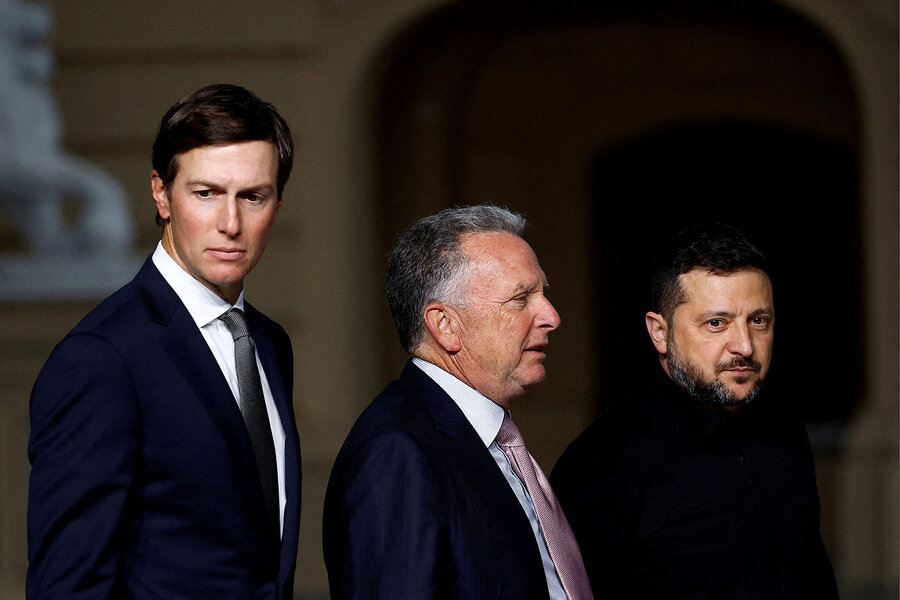
After a nine-month hiatus, the United States is set to restart peace talks between Russia and Ukraine in Abu Dhabi Tuesday – though with little optimism from any of the parties that Moscow’s nearly five-year-old war on its neighbor is ripe for resolution.With prospects for a general ceasefire almost nil, U.S. negotiators Steve Witkoff and Jared Kushner are expected to focus discussions on the security commitments that would be part of any future accord ending the war.The expected two days of talks will explore a “postwar security arrangement” that would be part of a peace accord and necessary to stop the war from flaring up again, Mr. Witkoff said in a weekend social media post. But with the big issues feeding the war left off the table – territorial demands, Ukraine’s government, and its relations with Western Europe for Russia; Russia’s illegal annexation of Ukrainian territory, and its attacks on civilians and civilian infrastructure for Ukraine – any end to the war seems far off.The Abu Dhabi talks will only address “technical questions,” Dmitri Trenin, president of the Russian International Affairs Council, told journalists in Moscow last week. None of the bigger issues important to Russia will be addressed, he said.The U.S.-sponsored talks broke off in February after Ukraine refused Russia’s territorial demands and the U.S. launched its war on Iran. Mr. Witkoff, President Donald Trump’s special peace envoy, and Mr. Kushner, Mr. Trump’s son-in-law, largely turned their attention to Iran. Hopes for a ceasefire were kindled recently when U.S. first lady Melania Trump and Pope Leo XIV managed to negotiate a temporary humanitarian ceasefire in Ukraine’s Kherson region to evacuate Ukrainian civilians trapped in the Russian-occupied city of Oleshky. Mrs. Trump said Thursday at a White House gathering of Russian and Ukrainian officials that she hoped the Oleshky truce could provide a “spark” to build a “powerful flame of peace” to end the war.But diplomats and analysts say conditions on the ground do not favor the concessions that would be necessary from both sides to end the conflict. Deepen your worldviewwith Monitor Highlights.Politics with respectGet political stories with respectful analysis.There‘s a world of new ideas in everyBooks newsletter.There‘s more to life, enrich yours withCulture & Learning weekly.Follow humanity‘s discoveries withScience & Nature stories in your inbox.Gain a spiritual perspectivefrom the stories in your inbox.Want to understand the deeper impact of critical events? Learn the Monitor‘s insight.Already a subscriber? Log in to hide ads. In recent weeks, Ukraine has taken back territory earlier seized by Russia, making Kyiv even less likely to accept the territorial concessions Moscow demands, analysts say. Russia wants all of the Donetsk region in southeastern Ukraine – even the 20% of the region it does not occupy. Ukraine has also imposed some of the heaviest losses of the war on Russia’s ground forces in recent months.At the same time, Russia has launched its winter campaign of missile and drone attacks on Ukrainian cities and energy infrastructure aimed at demoralizing the population and pummeling the country into submission. Because of that, analysts say, Russia seems unlikely to entertain efforts for a general ceasefire at least until the spring. ALREADY A SUBSCRIBER? LoginReal news can be honest, hopeful, credible, constructive.The Christian Science Monitor was founded in 1908 to lift the standard of journalism and uplift humanity. We aim to “speak the truth in love.” Our goal is not to tell you what to think, but to give you the essential knowledge and understanding to come to your own intelligent conclusions. Join us in this mission by subscribing.
Expectations low as US gives Ukraine peace talks another try
Full Article
Original Source
Read the full article at Csmonitor →KhanList aggregates and links to publicly available news content. We do not host full articles from third-party sources. Always verify important information with original sources.