
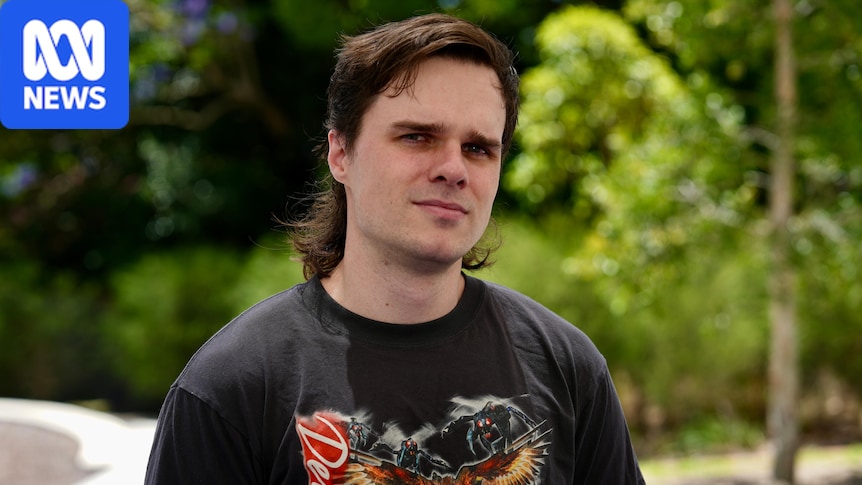
Players of James Turnbull's video game, Anticitizen: Red, are welcomed into a pixelated version of Sydney."It starts in Parramatta; when's the last time you played a game where you start in Parramatta?" he said.He has been working on the action game, which is set in "cyberpunk Sydney", for the past three years alongside two friends.But there is a phrase that is common among game developers in New South Wales."Stubbornly made in Sydney," Mr Turnbull said.To make a video game, developers need to find a way to cover costs like licensing, music, studio hire, voice acting and software.With publishing deals hard to come by, especially for young developers, people are left self-funding their games or relying on state funding.Most independent developers in NSW make games in their spare time, fitting it in on top of part-time or full-time work."I come home from doing eight to 10 hours at my day job, and then I lock into my second job," Mr Turnbull said.The government's funding body for film, TV and games, Screen NSW, offers up to $30,000 per video game in state funding.By comparison, developers can receive up to $500,000 per game in Victoria, $300,000 in Queensland, and $230,000 in South Australia.Screen NSW also offers a 10 per cent tax rebate for projects with a spend higher than $350,000.Australian-made games generated more than $600 million in revenue last year, according to the Interactive Games and Entertainment Association.Mr Turnbull's game was a recent recipient of Screen NSW funding. While grateful, he said it was not enough to finish the game."Like 30 grand is nothing, right?" he said."It's not enough for us to all to quit our jobs, and finish the game on, obviously, but it does really, really help us make ends meet."Rick Salter has been developing video games for the past 10 years. (ABC News: Floss Adams)Rick Salter has been a developer for more than a decade, building games like his upcoming release Bravecart from his home-studio in Sydney's south, while also working full-time.He had seen many colleagues leave the state in what he called an "exodus of talent"."If you want to make a game beyond the prototype level, there is nothing for you in New South Wales," he said.Mr Salter started advocacy group State of Play in 2025.In the group's annual report released last month, it estimated video games receive 3 per cent of total Screen NSW funding, with the majority going towards film and television."If it was about dollars and cents, they'd be funding games more than film and TV, but that's clearly not happening," Mr Salter said.Mr Salter created BraveCart from his home studio in Sydney's south. (ABC News: Floss Adams)Economic opportunityToday's release of Grand Theft Auto VI is expected to break the record for the highest revenue generated by an entertainment product in a 24-hour period.Australia's Fair Work Ombudsman even shared tips for how to take unpaid leave on launch day, following reports of spikes in leave requests.The award-winning game Cult of the Lamb topped global charts after its 2022 release and has become one of Australia's biggest success stories.The studio behind the game, Massive Monster, began in Sydney before moving to Victoria and receiving VicScreen funding.Recently the studio matched a $2 million investment from the Victorian government to open an affordable co-working space for emerging developers.Leaving Sydney for fundingBrisbane-based developer Pete Foley said funding enticed him to leave Sydney in 2024.Mr Foley started making video games with his partner in lockdown, and after releasing two games, the pair started working on their third."As the game kept going, and kept not being finished, the budget got tighter and tighter," he said.Both originally from Brisbane, they decided to move back to finish the game."We were fortunate enough to get Screen Queensland support, and so that has got us right to almost release now," he said.Pete Foley (right) and his partner are making video game Janet DeMornay Is A Slumlord. (Supplied: Liz Ham)He said the couple would have stayed in Sydney longer if better support was available."The primary was, 'Oh, we could actually afford to continue making the game'.'"He said Queensland had a healthy games "ecosystem" where successful games had bred a thriving and welcoming scene."Sydney does not have that, and that's sad."Mr Salter said Sydney's industry had become a "Hunger Games", with developers competing for the limited pool of funding.'Cultural judgement'Mr Foley said if game developers were not supported, the risk was that Australia would miss out on stories often left untold."The stories that I care about are largely marginalised groups like queers, people from low socio-economic upbringings," he said."They're the stories that we tell."Screen NSW staff, Mr Turnbull said, were "really nice", but did not know the "industry intimately"."As far as I'm aware, there's just no one that is interested in games as an art form or as an industry inside of Screen NSW, so we kind of fall by the wayside a little bit," he said.Mr Salter said he could not help but feel the lack of support was a "cultural judgement"."I think that the government's view of video games in general is that it's a niche thing, is that it's not a worthy art form," he said.In a statement, Screen NSW said the "digital games industries are a vital part of the arts", and it supported local developers to create "world-class games"."We are committed to empowering sustainable growth in the NSW digital games sector through priorities in the Screen & Digital Games Strategy," it said.It added that Screen NSW "continues to evolve support based on industry feedback".
'Exodus of talent': Video game developers leave NSW for better support
Full Article
Original Source
Read the full article at Abc →KhanList aggregates and links to publicly available news content. We do not host full articles from third-party sources. Always verify important information with original sources.