
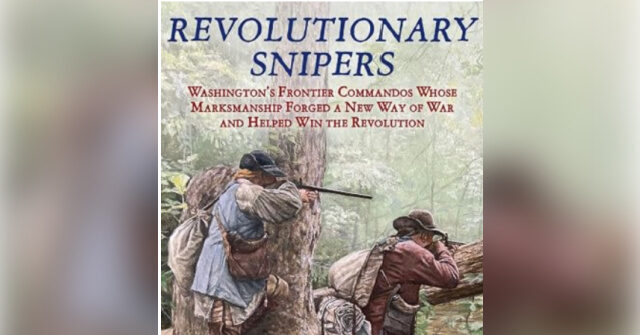
The American Revolutionary War was won by badasses. Nice guys don’t win wars. Don’t be fooled by old-fashioned-looking weapons or eighteenth-century uniforms. The Pennsylvania Long Rifles, “widow-makers” used by American frontiersmen in the Revolutionary War were cutting-edge, game-changing technology, and the men who wielded them had nerves of steel to rival any modern special operators. The same fierce, rugged individualism that drew settlers to the wild western frontier also made them excellent warriors when their liberty came under fire—like on Timothy Murphy’s wedding day in October 1780. Twenty-four-year-old Murphy was marrying his sweetheart, Margaret Feeck, when a messenger interrupted the ceremony with news that an invading British army threatened the fort in nearby Middleburgh, New York, located in the bucolic Schoharie Valley. Murphy and several other attendees, some of the best shots in Washington’s army, grabbed their rifles and immediately rode to defend the threatened Middle Fort, also known as Fort Defiance. Three years earlier, some credited Murphy with making the long-range rifle shot that felled British Brigadier General Simon Fraser at Saratoga. The Crown forces barreling down on the fort were led by Sir John Johnson and included British regulars, Loyalists, their Native American allies, and several companies of Butler’s Rangers (the riflemen’s Loyalist nemesis led by Colonel John Butler). Near the fort, a vastly outnumbered tiny force of frontier commandos led by Murphy and two other riflemen fought a desperate delaying action. The action was so intense that the men had bullet holes in their hunting shirts as they finally withdrew into the fort. At night, they continued the fight, sallying out of the fort and sniping at Johnson’s force. Unlike conventional 18th-century warfare, lines of soldiers firing volleys en masse with largely inaccurate muskets followed by bayonet charges, the riflemen fired from behind cover using Pennsylvania Long Rifles, which, in experienced hands, could hit targets a breathtaking three and four hundred yards away. Pennsylvania Long Rifle (Source: MET (public domain) The full story of these remarkable riflemen and the role of the Pennsylvania Long Rifle in helping win the Revolutionary War can be found in my newest bestselling book, Revolutionary Snipers: Washington’s Frontier Commandos Whose Marksmanship Forged A New Way of War and Helped Win the Revolution, the third book in a trilogy on the elite units of the war. This groundbreaking look at the Revolutionary War recounts the untold story of the Continental Army’s first soldiers in an immersive Band-of-Brothers-style narrative that puts the reader in the boots of these expert woodsmen, long hunters, and scouts—snipers who preceded today’s U.S. Army Special Operators. Revolutionary Snipers Book Jacket, Atlantic Monthly Press The next day, the British brought up light artillery to pelt the fortification. Suddenly, the firing ceased, and Johnson sent an officer wearing a green frock coat, a fifer playing “Yankee Doodle,” and an enlisted man carrying a white flag to discuss the terms of surrender. Major Melancthon Woolsey, the American commander in charge of Middle Fort, ordered the trio to be admitted. Murphy had other ideas. As the flag drew closer, the strong, steel-nerved crack shot used his widow-maker to fire a warning shot near the party. The frightened men halted, then ran back toward their lines. Murphy and his fellow snipers’ survival and marksmanship skills had been forged in the crucible of the frontier. They had a price on their heads and had a good idea what the Native Americans would do to them if they captured the fort. They would end up like their previously captured fellow comrades-in-arms, including “Grizzly Bear” Boyd. Boyd’s “nose was cut off, and one of his eyes was plucked out. His tongue was also cut out, and he was stabbed in various places. After amusing themselves sufficiently in this way, a small incision was made in his abdomen, and the end of one of his intestines was taken out and attached to the tree. The victim was then unbound and driven around the tree by brute force until his intestines had been literally drawn from his body and wound around its trunk.” The Indians decapitated another captured sniper and finally Boyd, then placed Boyd’s head on a pike and used his head in a kickball game. There was no way Murphy or his fellow riflemen would allow themselves to be captured alive. Murphy and the other riflemen determined that they would shoot the American commander Woolsey before they would allow the surrender flag to enter the fort. Upon hearing the shot fired on the flag bearer, Woolsey rushed out of his quarters, pistol in hand, demanding to know who dared disobey his orders. “I fired on the flag,” said Murphy. Threatened with instant death, the dark Irishman responded coolly to the American commander, “Sooner than see that flag enter this fort, will I send a bullet through your heart.” The flag trio advanced toward the fort again, and Murphy fired again. When they advanced a third and final time, Murphy aimed a bullet directly over their heads, causing them to flee. The siege continued, but the riflemen held the fort, and the British withdrew. Faint heart never won fair maiden, and the badasses win the wars. Patrick K. O’Donnell is a bestselling, critically acclaimed military historian and the leading authority on American elite and special operations units. The author of fourteen books, including Revolutionary Snipers: Washington’s Frontier Commandos Whose Marksmanship Forged a New Way of War and Helped Win the Revolution, The Indispensables, and Washington’s Immortals, a trilogy on the elite units of the Revolutionary War, along with The Unvanquished, which are all featured prominently at Barnes & Noble. He is a senior fellow at Mount Vernon, and his books have received numerous national awards. O’Donnell is a professional public speaker and will be on a national book for Revolutionary Snipers and for events he is keynoting related to the 250th Anniversary of the United States starting November 9. O’Donnell served as a combat historian with a Marine rifle platoon during the Battle of Fallujah. He is a director and the historian for The OSS Society and is a professional speaker who frequently lectures on America’s conflicts, espionage, special operations, and the Revolutionary War. He has provided historical consulting for DreamWorks’ award-winning miniseries Band of Brothers and for documentaries produced by the BBC, the History Channel, and Discovery. www.patrickkodonnell.com @combathistorian
Exclusive–O'Donnell: American Badass: Timothy Murphy 'Sooner than See that Flag Enter this Fort Will I Send a Bullet Through Your Heart'
Full Article
Original Source
Read the full article at Breitbart →KhanList aggregates and links to publicly available news content. We do not host full articles from third-party sources. Always verify important information with original sources.