
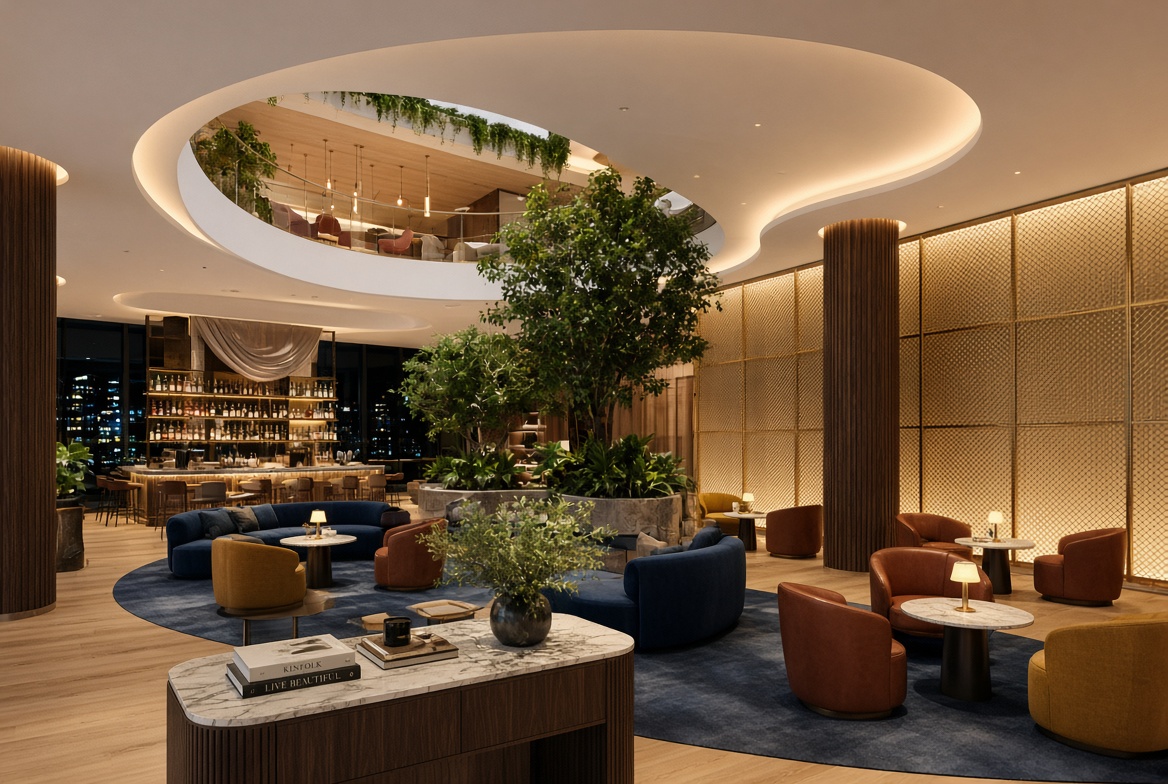
Chase will build a 16,000-square foot Sapphire Lounge in Seattle, right next to the Delta lounge complex, as part of a complicated game of lounge musical chairs. Last year I broke the news that United would move its Seattle club over to the B concourse along with moving operations there. Then last month I wrote that the new United Club construction was moving forward. They are taking over the original Centurion lounge space and expanding it by 60%, building a second story. At the time I speculated on what might happen to the old 6,096-square foot United Club space on the A concourse and noted, A 6,000 square foot expansion of The Club was cancelled at the end of 2025…I’ve been expecting a Chase lounge in the cancelled The Club expansion space because the airport said that Airport Dimensions – which partners with Chase on Sapphire lounges – declining to proceed with its own lounge expansion would provide an opportunity to negotiate an “alternate non-aeronautical tenant use.” That is, a bank tenant use. Wouldn’t it be interesting to see Chase go in right next to the Delta lounge… While I had other scenarios for the old United Club (like a small bank lounge) and thought it possible Delta could expand into The Club expansion space, the Priority Pass-accessible The Club at SEA will move into the old United Club, making room for Chase to take its current space and the cancelled expansion space. Port of Seattle commissioners are being asked to authorize a 15-year lease on Tuesday, September 22. Credit: Rendering via Port of Seattle Chase would invest $70 million across the initial build-out and a midterm refurbishment. Rent starts at $500 per square foot, generating approximately $7.9 million annually for the airport, with 10% increases in years six and eleven. So: United completes its new club and vacates the current one. The Club at SEA vacates its current club and moves into the old United Club space. Chase (in partnership with The Club’s sister company Airport Dimensions) develops its lounge in the old The Club space and the expansion space next door. Credit: Rendering via Port of Seattle Credit: Rendering via Port of Seattle Credit: Rendering via Port of Seattle Credit: Rendering via Port of Seattle Credit: Rendering via Port of Seattle The actual timing where The Club at SEA closes to surrender its current space for construction, and the time involved in any United Club refurbishment, isn’t clear other than there will likely be a period where there’s no Priority Pass lounge available. That has to happen for Chase to begin work, and the timeline for that hasn’t been laid out either. They’re already working with lounge space, rather than core and shell (and having to build in an elevator like in Dallas and Miami). Access To Chase Sapphire Lounges Standard Sapphire lounge policy is: Chase Sapphire Reserve personal and business cardmembers: cardmembers enter free, with up to two guests. Extra guests are $27 per person; kids 2 and under are free. (Employee cards on a small business Reserve account do not receive lounge access.) J.P. Morgan Reserve and Ritz-Carlton cardmembers receive access on the same terms as Sapphire Reserve. J.P. Morgan Reserve is basically a Sapphire Reserve card in a different design with free United Club access. It’s targeted at J.P. Morgan Private Bank clients (usually eight figures on deposit with Chase). It amazes me that they do not receive priority access, the way Amex offers Centurion cardmembers. The Chase Sapphire Lounge Network Current Chase Sapphire lounges now include Boston, Dallas – Fort Worth, Las Vegas, New York JFK, New York LaGuardia, Philadelphia, Phoenix, San Diego, and Washington Dulles. They’ll be opening Los Angeles soon, doubling the size of Phoenix, and adding one in Miami. These, along with Seattle, will bring Chase to a network of 12 lounges. Topics on this page
Exclusive: Chase Plans A 16,000-Square Foot Sapphire Lounge At Seattle Airport
Full Article
Original Source
Read the full article at Viewfromthewing →KhanList aggregates and links to publicly available news content. We do not host full articles from third-party sources. Always verify important information with original sources.