
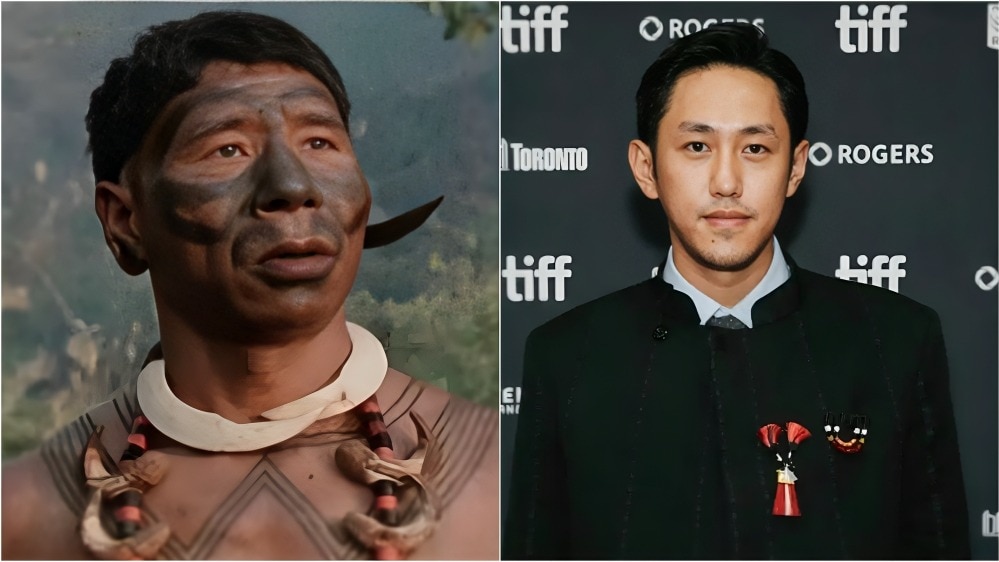
Angh is more than a feature debut for filmmaker Theja Rio. The Konyak-language drama is an expansion of his 2021 award-winning short film of the same name and marks an ambitious attempt to bring a story rooted in Nagaland to a global audience.Set in the early 1960s, Angh follows an ageing tribal village chief and his son as the arrival of an American missionary disrupts the rhythms of their community. Shot in Nagaland and deeply rooted in Konyak culture, the film went on to win the prestigious Platform Prize at the 2026 Toronto International Film Festival (TIFF), giving it a significant boost on the international awards circuit and a route to Oscar consideration.In an exclusive interview with India Today, Rio and co-producer Gaurav Dhingra spoke about the film’s journey from a short to a feature, the challenges of making a period film in an indigenous language, its reception at TIFF, and their plans for the Oscar campaign.Excerpts from the conversation: Q: Theja, congratulations to you and the entire team. Take us back to the moment when Angh was announced as the Platform Prize winner at TIFF, and you realised that the film had also qualified for Oscar consideration. What was going through your mind at that moment?Theja: I was overwhelmed. We’ve worked hard for a couple of years to bring this film to life, and simply arriving at a festival like the Toronto International Film Festival is already a big achievement. To then have the film win the competition and have a route to the Oscars is a dream come true. I’m still trying to comprehend and process the whole thing. Once I got on stage, it was a bit awkward because there was some confusion about whether I was going to be there. But I’ve been overwhelmed by the love and support we’ve received ever since, from Nagaland, from the rest of India and from around the world. It has been wonderful. Q: There are countless stories a filmmaker can choose to tell. Why was this particular story important for you, especially since it is set in the 1960s but deals with themes that remain relevant today?Theja: The film is very deeply rooted in the culture that I come from. Nagaland. For my debut feature, I wanted to do something that had the Naga essence and was true to my identity.This is an expanded version of a short film that I wrote a couple of years ago, so it has been living with me for quite some time. Even while making the short film, I felt that the story extended far beyond what could be contained within that format. The short served as a way of introducing the world, the characters and some of the ideas I wanted to explore. Thematically, aesthetically and in terms of its identity, this film is very much me. It always felt like the right debut film for me.Q: What were some of the biggest challenges you faced in mounting your first feature, particularly given its language, setting and period?Theja: Every day, it felt like I was shooting myself in the foot with every decision we made. Starting with the challenges of making a film in the Konyak language was one thing. Then we were making a film in an indigenous language rooted in a region and culture that remains largely unknown to the world. We knew it was going to be difficult to put the film out there.Logistically, we were shooting on film in the middle of nowhere, and the story was set in the 1960s. We had to build our villages, and we come from a region with very few actors. We knew that many of the people we cast had never set foot on a film set before.There were a lot of difficulties. For this to be my debut feature was a tall ask at times. But I had the best collaborators alongside me – people I trusted for their personality, composure and talent. I was fortunate to have so many people who were willing to fight the battle with me. Q: When you were pitching Angh and looking for collaborators, did you face pressure to make it in English or another language that might have had a wider commercial appeal? How did you respond to those suggestions?Theja: I think the best thing we could have done, and what we did, was have a short film that had already done very well on the festival circuit. We had a proof of concept, and we knew that it worked.Everyone we pitched the film to also knew that it worked. The short was essentially our lab rat, which we sent out into the world, and it came back with wonderful results.A lot of the funding we received also came after we had made the film and had a rough cut. So, in that sense, we wanted to make the film our own way and protect the process. Once we were done with the film, we knew what it was capable of and believed in it. That’s when we started sending it out to people. At that point, people can only give you limited feedback. People like Gaurav can joke about it, but ultimately, their feedback is restricted. So we wanted to shoot the film our way and protect that process.Q: The Oscar qualification is only the beginning. What are the next steps now? How are you planning to approach the campaign and introduce Angh to Academy members?Gaurav: There has to be a huge campaign. A lot of the Academy members who are on the jury for this are inundated with films that they need to watch. You have to reach their doorstep and show them the film.Then, exactly as Theja said, you have to explain why the film was made, why this voice exists, what its perspective is and what the film is trying to say. You also have to give context about Nagaland. Very few people know anything about Nagaland, so once you give them that context, they can really understand where the film is coming from and who the makers are.I think it’s important to do that with all the Academy members. That is a huge task because they are spread across the world. How do you show them the film? The second major task is to get a big distributor in the US. We’re talking to a few big ones at the moment, and that would be another important step. The third is that you need a lot of money to run a campaign. Hopefully, we’ll be able to arrange that. There are already a lot of offers for funding, so I don’t think money will be the issue.It will be a combination of all of this. We may have to spend some time in Los Angeles and New York, where most of the Academy members are, show them the film and let them decide. The hard task is reaching them. You have to reach thousands of people who are spread across different places and show them the film. It’s going to be hard for the next four or five months, but if we reach them, perhaps we can reach the next milestone as well.Q: When does that campaign officially begin? Have you already started putting the pieces in place?Gaurav: We’re already talking to distributors. We already have investment offers, and we’re talking to campaign PR teams. Everything is already underway. It’s already on. You’ll be hearing more about our plans soon, but I think we’ll take 15 to 20 days to get everything together and then have a clear plan for execution by March.Q: Theja, Angh is coming from Nagaland at a time when conversations around the under-representation of the Northeast in mainstream Indian cinema are becoming louder. Does representing the region on such a global platform bring a sense of pressure or responsibility for you?Theja: I made the film because I wanted to tell this story. When I was making it, I didn’t necessarily feel any pressure because it would also be a bit arrogant to feel that you’re representing an entire community or a whole region.That said, the film industry in the region we come from is very small, so there is an inherent sense of responsibility as well. We’re very happy that the film has been doing well and that it has received so much love and support from the community and the entire region. Hopefully, this opens doors for more cinemas from the Northeast and Nagaland. The Northeast already has many established directors who came before me, but Nagaland also has so much talent and potential. We have so many stories to tell the rest of the world.I think this is just the start of something beautiful. I’m sure that in the years to come, you’ll be hearing a lot more from directors in Nagaland.Q: Finally, India also has another film, Gondhal, in the Oscar race this year for nominations. What are your thoughts on seeing two Indian films making their presence felt on the international awards circuit, particularly with regional stories at the centre?Theja: Congratulations to them as well. It’s good that our country has two films. Statistically, that gives us a better chance, I suppose. I’m excited for this journey, and I’m sure they are as well. Good luck to them, and hopefully, we’ll see them at the Oscars too. You never know. Can two films from the same country get nominated at the same time?Gaurav: I haven’t seen the film, but of course, it’s great to know that two Indian films are there. So, statistically, our chances are slightly better. Usually, the films that the Film Federation of India has chosen are good films. But when you compete on the world stage, there is a certain kind of texture to the films that are presented there. I think, in our case, we haven’t always been able to match that.With Angh, I think it’s right there. It’s really international-quality filmmaking, and the aesthetic is very international. So, I think Angh has a strong chance. I haven’t seen the Marathi film, but from whatever trailer I saw, I’m hopeful about Angh. I’m also really happy that India has two films. That has never happened before. As an Indian, I feel super proud that we have two films.Angh will see an Indian release as well, confirmed the director-producer duo. However, the timeline for the same is yet to be known.- Ends
Exclusive: Angh director on its Oscar journey and taking Northeast stories global
Full Article
Original Source
Read the full article at Indiatoday →KhanList aggregates and links to publicly available news content. We do not host full articles from third-party sources. Always verify important information with original sources.