
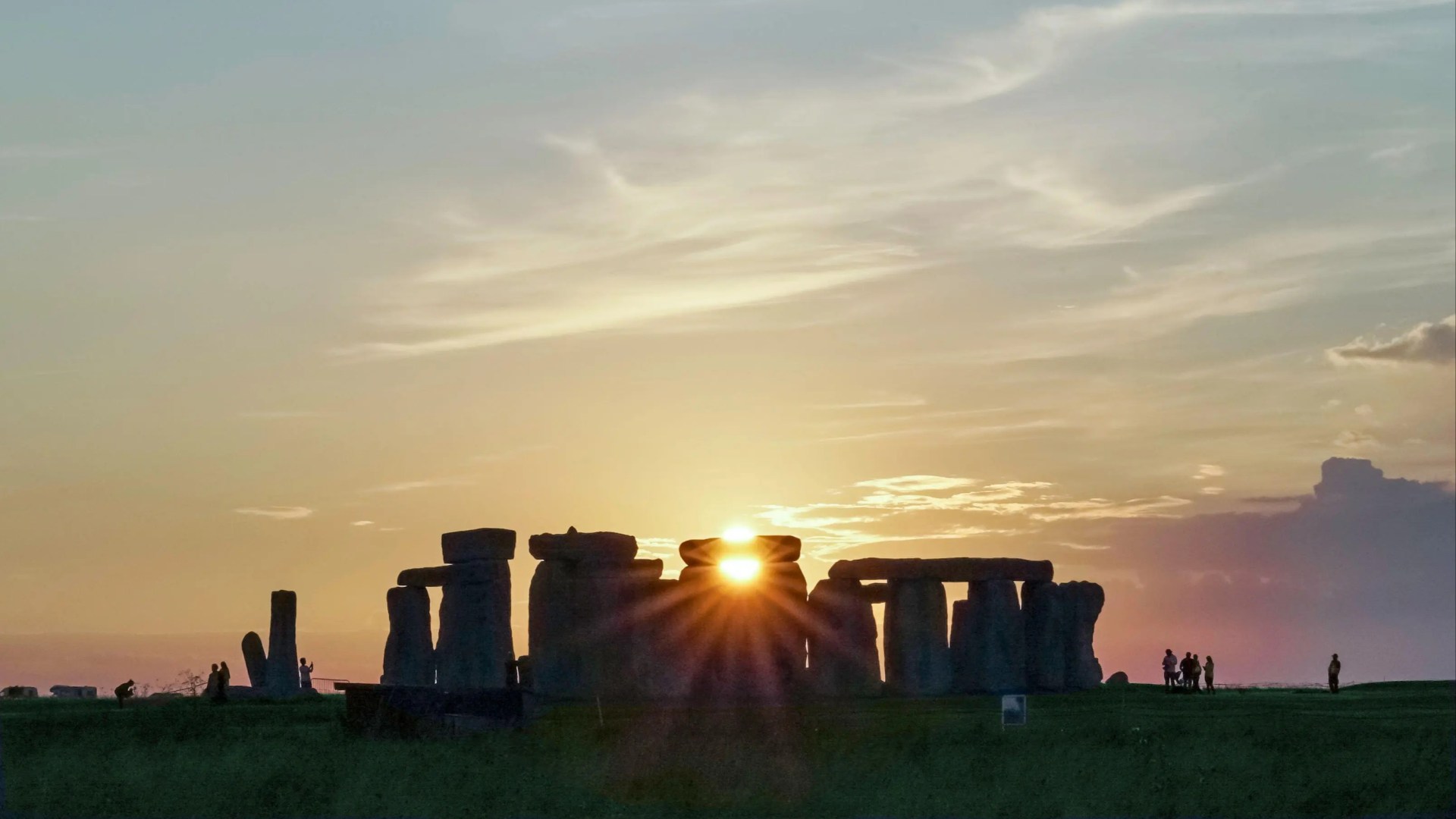
ASTRONOMICAL summer comes to an end tonight as the autumn equinox arrives in the UK. The annual event marks the point when the Sun crosses the celestial equator, signalling the start of autumn in the Northern Hemisphere. This year’s autumn equinox takes place in the early hours of Wednesday, September 23 Credit: Getty People gather to celebrate the annual astronomical event at Stonehenge What time is the autumn equinox 2026? The autumn equinox takes place at exactly 1.06am on Wednesday, September 23. That means the astronomical event falls during the night of Tuesday, September 22, into Wednesday morning. Sign up for The Sun newsletter Thank you! It comes just over three weeks after meteorological autumn began on Tuesday, September 1, with the two systems using different ways to divide up the seasons. From today, Britain loses roughly four minutes of daylight every day as we head towards winter. It also means the next big seasonal milestone isn’t far off, with the clocks going back an hour at 2am on Sunday, October 25, giving you an extra hour in bed but darker evenings. What does the autumn equinox mean? Instead of the Northern Hemisphere – where the UK sits – tilting towards the Sun as it does at the height of summer, Earth hits a tipping point today where the Sun sits directly over the equator. That leaves the Northern and Southern hemispheres getting a 50/50 split of sunlight for a brief moment before the UK starts tilting away from the Sun as we head into the winter months. The autumn equinox marks the beginning of astronomical autumn in the UK, which continues until the winter solstice on Monday, December 21. Most read in The Sun But its name can be slightly misleading. Although “equinox” comes from Latin words meaning “equal night”, day and night are not exactly the same length on September 23. The point when daylight and darkness are closest to equal is known as the equilux, which falls shortly after the equinox in the UK this year on September 25. This happens because Earth’s atmosphere acts like a giant lens, bending light over the horizon and giving us a sneaky extra few minutes of daylight even after the Sun has technically set. From around this point in the year, the nights continue getting longer and the days get shorter until the winter solstice. How can you follow the autumn equinox? There will be no sudden spectacle in the sky at exactly 1.06am, as an equinox is a precise astronomical moment rather than a visible event such as an eclipse. But people will gather at Stonehenge on Wednesday morning to watch the sunrise and mark the changing of the seasons. English Heritage is providing free Managed Open Access, with the car park opening at 5.15am and the monument field opening as soon as there is enough light. Sunrise is expected at approximately 6.54am, with open access ending at 8.30am. You can follow the changing sky above Stonehenge using English Heritage’s Stonehenge Skyscape. The website provides a live view from within the stone circle, allowing viewers around the world to watch the Sun, Moon and stars above the monument at any time of day or night. If you’re stepping outside to mark the seasonal shift yourself, look to the skies in the early evening. Sunsets will start creeping earlier each day, with darkness arriving before 7pm across most of the UK this week. Comment now
Exact time the Autumn Equinox falls tonight and how to follow
Full Article
Original Source
Read the full article at Thesun →KhanList aggregates and links to publicly available news content. We do not host full articles from third-party sources. Always verify important information with original sources.