
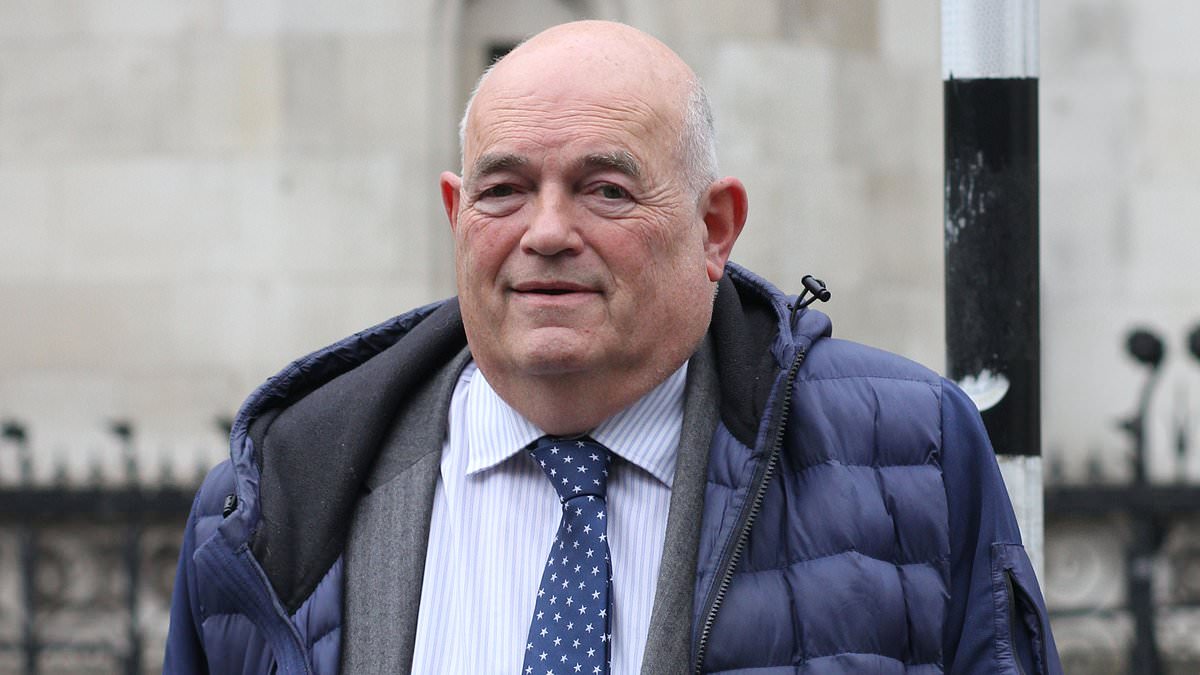
A former Burberry manager has taken his local council to court after he was banned from felling two large oak trees which caused £100,000 worth of damage to his £1million London home.Richard Martyn, who moved to Mill Hill in Barnet nearly 40 years ago, said he was forced to pay for extensive repairs on the luxury property amid symptoms of 'root damage'.It came after planning officials refused his plea to remove the trees – citing their 'special amenity value' to the neighbourhood.Branding the council's decision 'pure madness', Mr Martyn is now suing the London Borough of Barnet for £110,000 to compensate him for the damage done to his extension – plus interest.He says the oaks – one of which is over 80ft high – caused damage which cost over £104,000 to remedy through underpinning and other repairs after their roots worked under the foundations of an extension at the back of his house in The Reddings.However, the council is disputing liability and insists felling the oaks would not have prevented problems – as uprooting them would have caused destructive earth movement around the property through 'heave' damage.Mr Martyn, formerly a supplies manager for Burberry and a business consultant, said the first signs of subsidence at his property came in November 2017 when his young grandson drew back a curtain in the family living room to expose a worrying crack.By the following year he asked experts to assess symptoms of root damage to his extension, and in March 2018 a specialist diagnosed internal and external crack damage 'indicative of vegetation-related subsidence'. Richard Martyn, who moved to Mill Hill in Barnet nearly 40 years ago, said he was forced to pay for extensive repairs on the £1million property. The pensioner is pictured here at the Upper Tribunal Lands Chamber over oak trees in his garden Mr Martyn's £1million house in The Reddings, Mill Hill, north London, is pictured - which has undergone substantial repairsAn 'arboricultural report' carried out in April 2018 named the two oaks – one 45ft and the other over 80ft – as the 'dominant vegetation' causing the subsidence, and recommended their removal.However, the council refused Mr Martyn's application for consent to fell the oaks, which are subject to a tree preservation order, due to their 'special amenity value'.Mr Martyn's barrister, David Thomas, told specialist tribunal judge Mark Higgin: 'It seems beyond dispute that the oaks caused the damage to the property.'Equally, it does not appear to be in dispute that the risk of further damage to the property - and the need for sub-structure works at the property - were foreseeable if the tree preservation order application were refused.'The London Borough of Barnet elected not to allow consent for felling, given the oaks' perceived special amenity value. This is their right, but one that it's submitted triggers the claimant's entitlement to compensation.'Pruning the trees was an inadequate solution to stop the trees wreaking havoc on the foundations, Mr Thomas claimed, adding an engineer who examined the site in May 2019 found the property's movement was directly linked to the 'seasonal water demands of the nearby vegetation causing clay shrinking subsidence'.But defending the claim, the council's barrister James Neill argued it should not be liable to pay – as the trees' removal in itself could easily have caused major damage, had the council agreed to let them be felled. 'The evidence of both engineering experts indicates that there was a risk, should the trees have been felled and removed in their entirety, of heave once the trees had been removed, i.e. that ground movement would have been caused by the removal of the trees,' he said. An 'arboricultural report' carried out in April 2018 named the two oaks - one 45ft and the other over 80ft - as the 'dominant vegetation' causing the subsidence'Given that heave risk, the council submits that underpinning would have been necessary in any event, even if the consent had been granted and the trees removed.'Mr Martyn's barrister told the judge the extension foundations were excavated to a depth of 1.3 metres, which was deeper than the minimum depth generally recommended on 'shrinkable soils'.Nor would Mr Martyn have been expecting any potential root damage from the oak trees – the smallest of which is 45ft from the house – since the two trees were not 'particularly close' to the building and his extension foundations were deeper than normal.Although aware of 'historic subsidence' in the area, Mr Martyn had done what he could to prevent the risk of any potential root damage by 'paying extra for deeper foundations to the extension'.Responding to the question of what caused the subsidence, Mr Thomas claimed the 'arboricultural' experts agree that the oaks caused the upheaval, and that 'removal of the oaks would have allowed the property to stabilise'.Other factors such as soil 'heave' were insufficient to have caused major subsidence problems, he argued, adding: 'There is no evidence that the extension would have required underpinning even if the oaks had been felled.'The judge will review the evidence in the case and make a decision at a later date.
Ex-Burberry manager sues council after they banned him from felling two massive oak trees which caused £100,000 worth of damage at his £1million London home
Full Article
Original Source
Read the full article at Dailymail →KhanList aggregates and links to publicly available news content. We do not host full articles from third-party sources. Always verify important information with original sources.