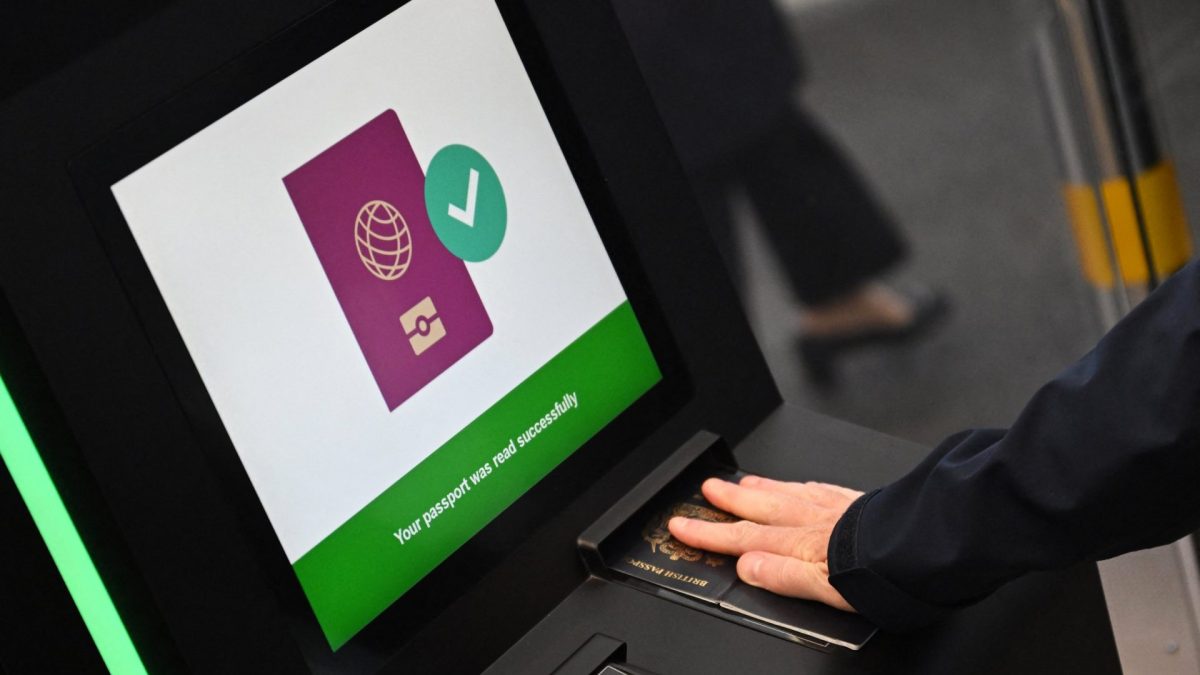
New border rules are in place across Europe. British passport holders and other third-country travellers are subject to the Entry/Exit System (EES) when travelling to countries within the EU or Schengen area. The system does not apply for travel to Ireland or Cyprus. EES replaced passport stamping with digital records of third-country passport holders’ visits to the Schengen area. It includes taking fingerprints and facial images from travellers. The system was phased in from October 2025 and came into full effect in April. Some travellers have experienced problems when providing their biometrics. Most recently, The Telegraph has spoken to older travellers who found that their fingerprints were too “faded” and that they were being rejected by the EU’s biometric kiosks. Politico has reported on a case in which EES was confused by identical twins. The introduction of EES initially led to long queues. In July, trade body Airports Council International published an open letter to Ursula von der Leyen, the President of the European Commission, in which it said: “Since the full rollout of the EES in April, waiting times at border control have increased significantly, now reaching up to 5 hours during peak traffic periods.” However, the European Commission has allowed the 29 countries using EES to suspend biometric checks during busy periods and some industry figures have suggested that the long queues feared during the peak of summer travel have not occured. Here’s how the system works and what it means for your holidays. What is the Entry/Exit System? When in full operation, EES involves border force officers or self-service scanners recording fingerprints and facial images of each third-country traveller (travellers with passports from outside the EU and outside Schengen) visiting the area. This data is taken when a traveller is first registered for EES, after which fingerprints and photographs should be verified upon entry and exit. EES applies to adults and children aged 12 and over; under-12s will not have their fingerprints taken It records when third-country passport-holders enter and exit the Schengen area, and holds data including fingerprints, photographs, details listed in passports, date and place of entry and exit and refusals of entry. An EES biometric record will be valid for three years. It is used by 25 of the 27 EU countries, plus the four non-EU countries in Schengen – Iceland, Liechtenstein, Norway and Switzerland. It is not used for visits to Ireland or Cyprus, as neither country is in the Schengen Area. It applies to third-country nationals with a short-stay visa and third-country nationals who do not need a visa for visits to the Schengen area of up to 90 days in any 180-day period. This includes most UK passport holders. It has been introduced to increase border security and make border checks more efficient. What does it mean for my holiday? Travellers do not need to prepare anything, but could face queues and varying levels of checks. Airports Countries can temporarily and partially suspend EES operations during busy times, until September. Partial suspension means that the system will still be running, but that biometric data doesn’t need to be captured. Eurotunnel, ferries and Eurostar There are juxtaposed French border controls at UK ports, including Calais and Folkestone for Eurotunnel, Dover for ferries and St Pancras International for Eurostar. EES checks take place in the UK by police aux frontières (PAF). But EES is not yet fully operational at these ports. Foot passengers, coach passengers, lorry drivers and car passengers at Dover must go through EES registration, but their biometrics are not being taken. Registration of digital EES files is also in operation at Eurotunnel teriminals, but biometrics are not being taken. Enrolments are being completed manually by border officers for Eurostar passengers departing from St Pancras International. Cruises Cruise passengers who sail from the UK are not subject to EES checks. They will be subject to EES checks if they fly to the Schengen area to board their cruise and/or fly back from a Schengen area country to the UK. What are the problems with biometrics? Fingerprints Passengers for whom giving fingerprints is physically impossible are exempt from the requirement, according to EES regulation. However, it is not clear if faded fingerprints would be included in this or if it could be added as an official observation on an EES record. The i Paper contacted the European Commission for comment. Twins Politico reported on a case in which identical twins confused EES. Romanian authorities accused a British woman who was flying back to the UK from Cluj-Napoca of being in the Schengen area illegally as her departure hadn’t been properly recorded after a visit to Amsterdam earlier in the year. However, the visit to Amsterdam had been made by her identical twin. The identical twin was back in the UK and had never been to Romania. Niovi Vavoula, chair in cyber policy at the University of Luxembourg, suggested to Politico that the EES system had been implemented incorrectly both in Amsterdam and at Cluj-Napoca in Romania. Vavoula had advised lawmakers on the technicalities of EES. Can I register for EES before travel? There is a “travel to Europe” mobile app for passengers to pre-register passport data and photos before travelling and on which they can complete an entry conditions questionnaire. Travellers can register their data within 72 hours prior to entering or leaving a European country with EES. However, only Sweden is using the app fully. Portugal is using it for the entry questionnaire. Frontex, the agency overseeing the app, has said that pilots of the app are “on the horizon” for other countries. What questions might border officials ask? Since the end of the Brexit transition period, EU border security officers can ask UK passport holders for details about their trip – such as why they are travelling, proof of insurance, a return ticket and that they have enough money to cover their trip – as was already the case for other non-EU nationals. However, it is not a legal requirement for passengers to show their return ticket and, in practice, UK passengers have not been asked to prove their funds. What is Etias? The European Travel Information and Authorisation System (Etias) is effectively a visa waiver. Travellers from non-EU, visa-exempt countries, including the UK, will need to have an Etias to visit any of 30 European countries for a short stay. It is expected to be introduced in 2027. Etias will cost €20 (£17.40), although travellers under 18 or over 70 will be exempt from the payment. Applications will be made online, with most processed in minutes. An Etias will be valid for three years or until the passport used in an application expires – whichever comes first.
Everything you need to know about Europe’s EES border checks
Full Article
Original Source
Read the full article at Inews →KhanList aggregates and links to publicly available news content. We do not host full articles from third-party sources. Always verify important information with original sources.