
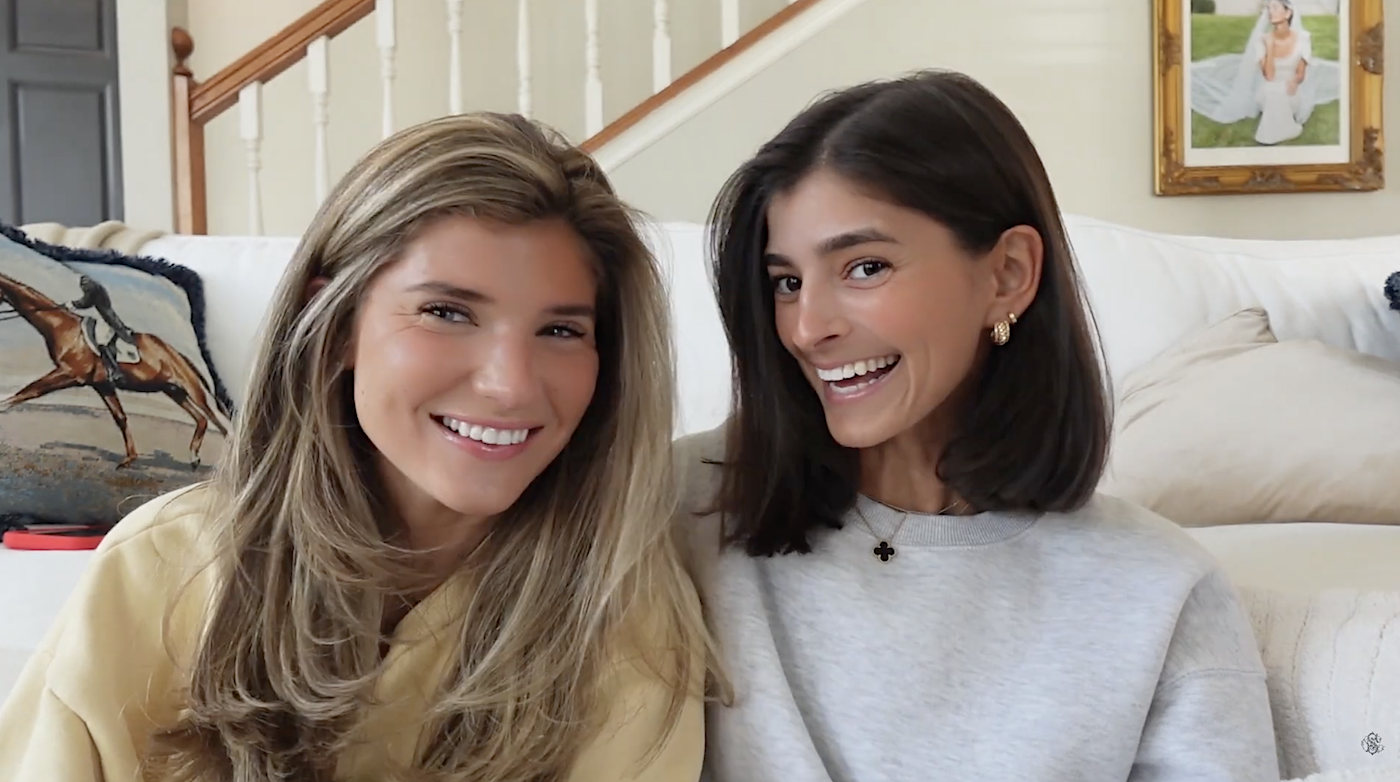
A photo shoot recently came across my Instagram feed when Southern Living introduced its readers to lesbian couple Lunden and Olivia Stallings, influencers who have, in the magazine’s words, “captivated millions” with their classic Southern style. The reason for the post was the arrival of a baby girl, with photos of the two women in pastel dresses holding a sonogram beside a wicker bassinet. The whole shoot was a psy-op attempting to normalize what everyone typically recognizes as a horrible thing for a child: the loss of her father. But here it was glossy, edited, and branded for a magazine. I was under the impression that fatherlessness was something Americans still condemned unanimously. Barack Obama made it a signature theme, standing in a Chicago pulpit on Father’s Day 2008 to declare: “Of all the rocks upon which we build our lives, we are reminded today that family is the most important. And we are called to recognize and honor how critical every father is to that foundation.” He carried this message of “every father” into his presidency with White House fatherhood initiatives. So why, when two women manufacture fatherlessness on purpose, do they avoid scrutiny? Gay men, posing in hospital beds and acquiring unrelated children, have begun drawing appropriate scorn as of late. Thankfully, some people are waking up to the unnatural and unjust marketplace — buying and selling children like commodities while outsourcing gestation as a service, renting women’s bodies to facilitate the transaction. But why is it that when the sexes flip they seem to get a pass? Last weekend revealed just how unrelenting adult self-interest can be, especially when coming from the female side of the LGBT community. I posted a screenshot of the photo shoot and called the image what it is: designer fatherlessness. I asked whether we are ready to hold women accountable for doing this to a child, or whether it’s only wrong when it’s two men shirtless in a hospital bed. The post drew several thousand comments across several platforms, mainly confirming what I feared: We are not ready. The pushback revolved around five pro-adult themes, and each one deserves a pro-child response. 1. ‘Why Don’t You Go After Deadbeat Dads?’ I do. Why can’t we do both? A father abandoning his child is always wrong. But follow the logic of the objection: Because some men abandon their kids, and we all agree it’s bad and harms the child, we should now encourage it and celebrate when it happens on purpose in a glossy photo shoot? Absolutely not. Abandonment is wrong not only because the family is missing Dad’s paycheck. It’s wrong because of what a father means to his child. And if that’s true, it doesn’t stop being true when two women premeditate and finance the abandonment before conception. The dad who walks out, and the dad who was never allowed in, leave the same hole in the same kid regardless of whether the fatherless child has a trust fund or cute clothes to wear. We should condemn both using the same standard. 2. ‘But It’s a Loving Home. The Baby Is So Wanted.’ No one needs to argue about whether two women can love or want a child. The core of the argument is that no amount of loving women can replace a father’s love. Further, an adult wanting and loving a baby doesn’t make you that baby’s “second” mother, and it doesn’t replace that baby’s only father. These are talking points adults use to justify depriving a child of someone she is owed. 3. ‘There’s a Difference Between Losing a Father and Never Having One.’ The claim here is that abandonment wounds a child, but a father missing from day one leaves nothing to grieve — you can’t lose what you never had. But it’s impossible not to have a father. He was needed for the creation part. He may have abandoned you, but you still have one father. The donor-conceived child in the photo shoot has a father; she just isn’t permitted to know him. And the people who have actually lived this arrangement say that the absence functions as loss. In the largest study of donor-conceived adults, 65 percent agreed that “my sperm donor is half of who I am.” Ellie, who was donor-conceived, describes what that half feels like when it’s gone: “There isn’t a handbook on how to rebuild your sense of self when you discover that your non-identifiable father sold you.” Nearly half of these adults think about their conception at least a few times a week. Seventy percent wonder what their donor’s family is like, and 69 percent wonder whether the donor’s parents would want to know them. Forty-five percent say the circumstances of their conception bother them. Just as many are bothered that money was exchanged to conceive them. The study’s most telling comparison answers this objection directly. Forty-eight percent of donor-conceived adults feel sad when they see friends with their biological fathers and mothers, compared to 19 percent of adults who were adopted. Fifty-three percent hurt when other people talk about their genealogical background, versus 29 percent of adopted adults.In both cases, donor-conceived and adopted, children lost something. In one of those cases, the adults the child is living with planned and financed the tragedy. To the child, the distinction between losing a father and never being allowed one collapses. It is the same absence. The only difference is who caused it. 4. ‘I Grew Up Fatherless and Turned Out Fine.’ Some version of “the kid will be fine” or “it could be worse” is what the adults say when the harm they’re inflicting isn’t bad enough to make them stop. When a father leaves, everyone calls it a tragedy, and rightly so. It’s another thing entirely when two women plan his absence, pay him to walk away, and all of society tells the child she’s lost nothing, celebrating her pain as progress. 5. ‘You’re a Bigot.’ The classic. Turns out it is homophobic to say every child has a father. Why? Because to make such a claim discriminates against all those adults who cannot create a child with their same-sex partner. But this isn’t fundamentally about same-sex relationships. It’s about any adult acquiring a child and depriving her of her father on purpose. It’s wrong whether it’s a straight couple, two men, or three women. Every child ever created came from one man and one woman, and no child should be intentionally deprived of those people so adults can get what they want. The Bottom Line Lunden and Olivia Stallings are getting a pass, and it is a double standard. When two men do this, we’ve started calling it what it is. When two women do it, we call it a “family,” even though the child loses the same thing in both cases. The antidote is pro-child consistency. Defend a child’s right to her mother and father, regardless of the sex of the adults. Josh Wood, @j_k_wood, is the executive director of Them Before Us and contributing author of Pro-Child Politics. He writes on Substack at Everyday Interpreter: everydayinterpreter.com. children's rightsfatherlessnessGay MarriagelesbianLGBTparentingSame-sex marriagesouthern living
Everyone Knows Father Absence Is Bad, So Why Does Designer Fatherlessness Get A Pass?
Full Article
Original Source
Read the full article at Thefederalist →KhanList aggregates and links to publicly available news content. We do not host full articles from third-party sources. Always verify important information with original sources.