
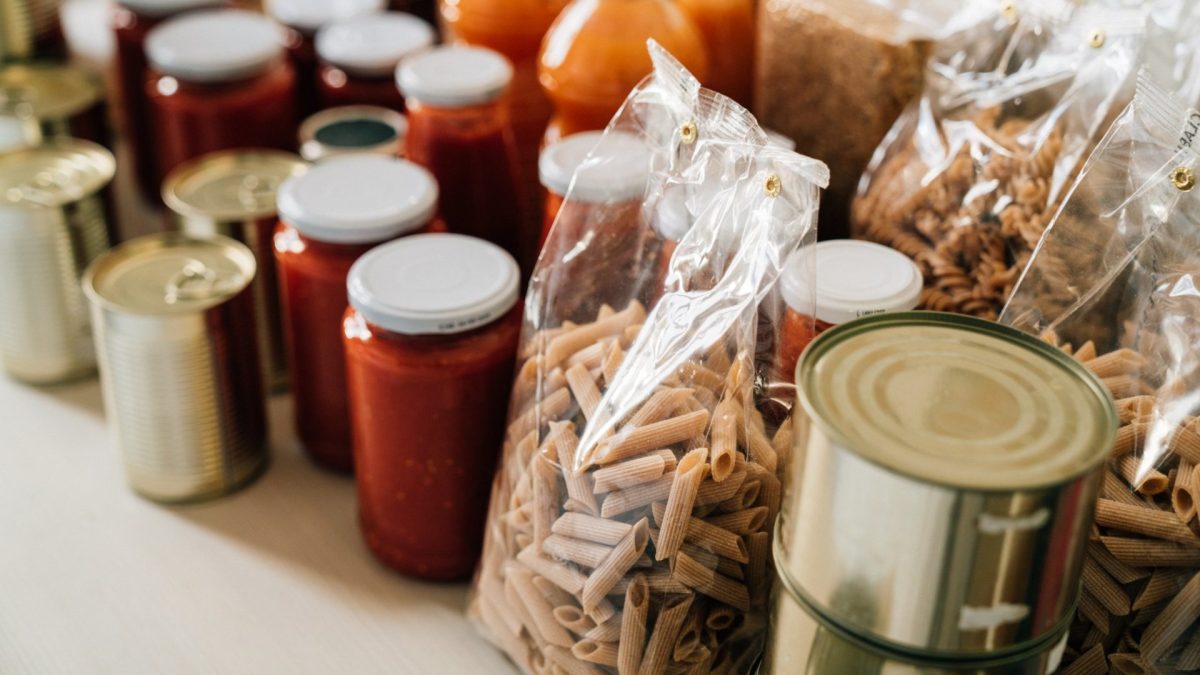
With the strongest planet-heating El Niño weather pattern in living memory expected to devastate harvests this winter – pushing sky-high food prices even higher next year – I’m preparing to go on a tin buying spree. The Food and Drink Federation has warned that droughts and floods caused by El Niño could drive UK food price inflation as high as 6.4 per cent by next summer. And that will be on the back of sharp price rises between now and then, as England has just suffered its worst cereals and oilseed harvest since detailed records began 42 years ago. As I see it, there are three benefits to building a can mountain, if you have the cash to do so. First, it will provide food and drink in the event of shortages. Second, if enough people do it, it will reduce the risk of a stampede on the supermarkets if we do end up in a crisis. And third, even if there aren’t any significant shortages, bulk-buying cans will save you money – as the food you bought, say, six months or a year ago will almost certainly have shot up in price by the time you eat it. I suspect millions of other cash-strapped households are also looking to save money in the same way – especially after the Government put canned food firmly on the agenda last month, warning households to stockpile emergency items, including “tinned meat, fruit or vegetables that do not need cooking” in the face of multiple threats to stocks, from climate change to cyber attacks.The myths about tinned food Tinned food has traditionally been regarded by many – and I’m guilty of this – of being of inferior quality to fresh food. But while canned foods are technically classed as “processed foods”, in many cases this is simply because they include preservatives, which have no adverse effect on our health (although plenty do also have added salt, sugar or saturated fat). It’s true that some nutrients may be lost during the canning process, when foods are sealed in an airtight container and heated to a high temperature to destroy any bacteria. But, once canned, nutrients are locked in. This can be a considerable asset, given that fruit and veg, for example, lose nutrients as soon as they’re picked – shedding up to half of some nutrients within a couple of days of being harvested. So while some nutrients can be lost in the canning process, preserving the food when it is at its freshest means that in many cases the foods retain more of the important nutrients than they would do if they had been picked just before peak ripeness and shipped to their destination supermarkets, according to Gunter Kuhnle, professor of nutrition and food science at Reading University. One study published in the journal Nutrients found that people who ate six or more canned foods a week had a higher intake of 17 essential nutrients in their diet, including calcium, potassium and fibre, than those who ate two cans or less a week. Increasingly, punters are starting to recognise the benefits too. Tesco reported that sales of tinned tuna have jumped by 18 per cent in two years, driven by its popularity with social media influencers promoting tinned fish as a cheap way of boosting protein intake. “You’d probably need to go back nearly 100 years to find the last time that tinned fish was such an exciting commodity,” according to Tesco tinned fish buyer Lee Bannerman. Beans and pulses are on the up During the first half of this year British households bought 7.3 per cent more beans, pulses and soya bean derivatives – in tins, packets and jars – than they had a year earlier to save money and improve their diet, according to an analysis of data from the market research firm NielsenIQ by the climate advocacy group Madre Brava. Sales of cheap dried lentils surged by 23 per cent while sales of canned and jarred butter beans jumped by 30.3 per cent. Meanwhile, research from the Green Alliance think-tank in August found that swapping just two pork sausages a week (the equivalent of around 100g of red or processed meat) with beans, lentils or peas, would save the average family of four £95 a year. This swap also results in a 17 per cent reduction in weekly red meat consumption, which is the amount needed for the average person to meet NHS recommendations on red and processed meat intake. What I’m stockpiling – and why I’ll probably start with tea, chocolate, olive oil, rice and coffee (the latter should probably be frozen for best results, if you intend to drink it a month or more from now) as these ingredients are largely produced in areas that are particularly vulnerable to El Niño and are expected to see sharp price rises. Can-wise, I think I’ll take my lead from the British Heart Foundation, which has come up with a list of six surprisingly healthy canned foods. The first two – baked beans and canned fish – I already buy. But the others I need to get stocking up on. They are canned fruits like tinned pineapples, peaches and pears; veg such as carrots, peas, sweetcorn or mushrooms, as well as tomatoes and potatoes. I’m bracing for some very heavy shopping bags over the next few weeks.
Everyone is talking about El Niño stockpiling. This is what I’m actually buying
Full Article
Original Source
Read the full article at Inews →KhanList aggregates and links to publicly available news content. We do not host full articles from third-party sources. Always verify important information with original sources.