
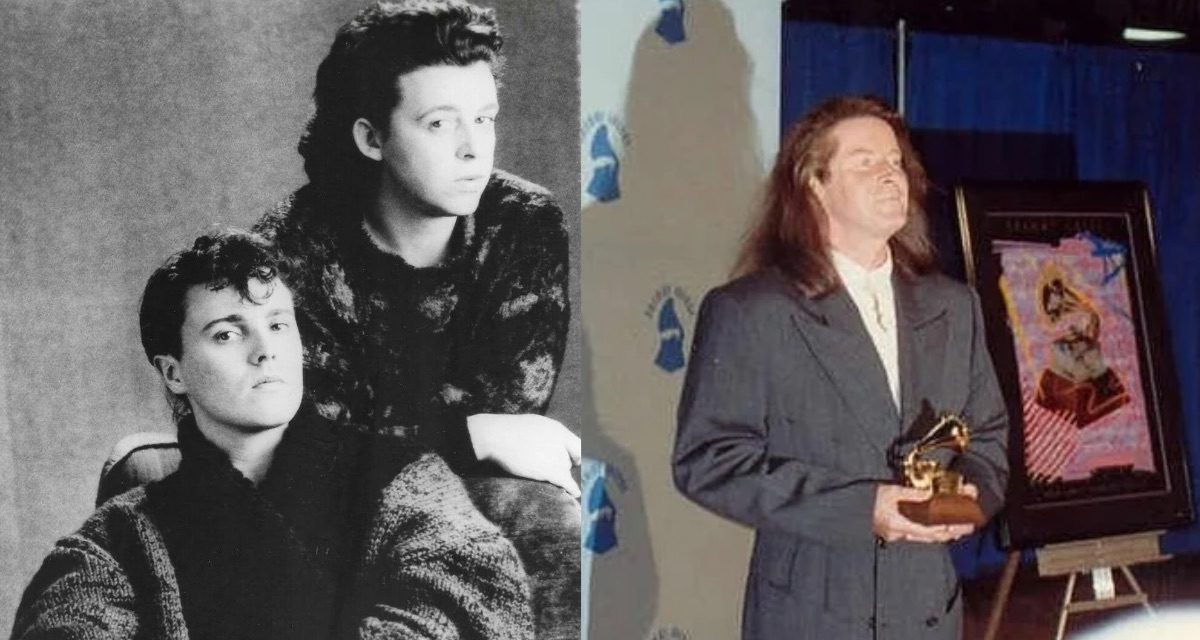
Some decades are just bigger than others, but the 1980s might have outdone them all, especially when it comes to music. From the ascendance of hip hop to the dominance of hair metal, the era is filled with pop perfection. The early half of the decade was defined by the massive “New Wave” invasion. Brilliant British bands crossed the Atlantic with clever synthesizers, angular rhythms, and stylish haircuts. Groups like Duran Duran, Depeche Mode, and the Eurythmics totally reshaped the music charts. Among these electronic pioneers stood Tears for Fears. Formed in England by Kent natives Roland Orzabal and Curt Smith, the duo released their critically acclaimed debut album, The Hurting, in 1983. They established themselves as masters of moody, introspective synth-pop, climbing to the Top 5 of the U.K. charts with three singles from the album, including the enduring “Mad World.” When it came time to record their second album, 1985’s Songs from the Big Chair, the pressure on the pair of musicians was immense. Every single track took an agonizingly long time to put together. The band labored over every drumbeat, chord progression, and lyric. Some took an entire year to produce. Just as finishing up the record finally seemed within reach, their record label stepped in with a directive: add a catchy new track to boost crossover appeal in the United States. The surprising spark for what would become one of their most enduring hits came from an unlikely musical source: former Eagles drummer Don Henley. The Don Henley groove that changed everything Scouring American radio for inspiration, Smith and Orzabal analyzed what made U.S. pop hits click. “Driving songs are American,” Smith noted, pointing to the unstoppable momentum of classic stateside road trip anthems. This observation is what led the pair to Don Henley’s massive 1984 hit, “The Boys of Summer.” The track’s infectious, driving rhythm inspired Orzabal to rethink some simple guitar and keyboard riffs he had been messing around with. Like “Boys of Summer,” their song has a “driving with the windows-down” momentum. It also channels Henley’s sarcastic melancholy about the decade. The lyrics in the track evoke the nuclear arms race between the U.S. and the USSR at the time. Originally, the song was titled “Everyone Wants to Go to War.” Orzabal tunes his guitar down, building a shimmering, shuffling groove around a simple chord progression. The song was completed in just over a week, a far cry from the tracks they’d been laboring over for more than a year. Today, we know it as the bright, upbeat masterpiece titled “Everybody Wants to Rule the World.” A record label gamble and enduring legacy Despite the song’s undeniable sunshine feel, the lyrics carry a serious message about power, greed, and political control. This made the band’s American distributor’s enthusiasm for the tune even more surprising. They wanted “Everybody…” to be the lead single in the U.S. Orzabal and Smith immediately objected. They preferred the more synth-focused “Mother’s Talk,” which peaked at #14 in the U.K. Today it remains an immortal ’80s anthem born from an unlikely cross-Atlantic musical influence. So if you find yourself taking a drive this week, don’t forget to crank up a little Tears for Fears and sing along. After all, “Nothing ever lasts forever. Everybody wants to rule the world.”
‘Everybody Wants to Rule the World’ sounds nothing like the Don Henley song that inspired it
Full Article
Original Source
Read the full article at Upworthy →KhanList aggregates and links to publicly available news content. We do not host full articles from third-party sources. Always verify important information with original sources.