
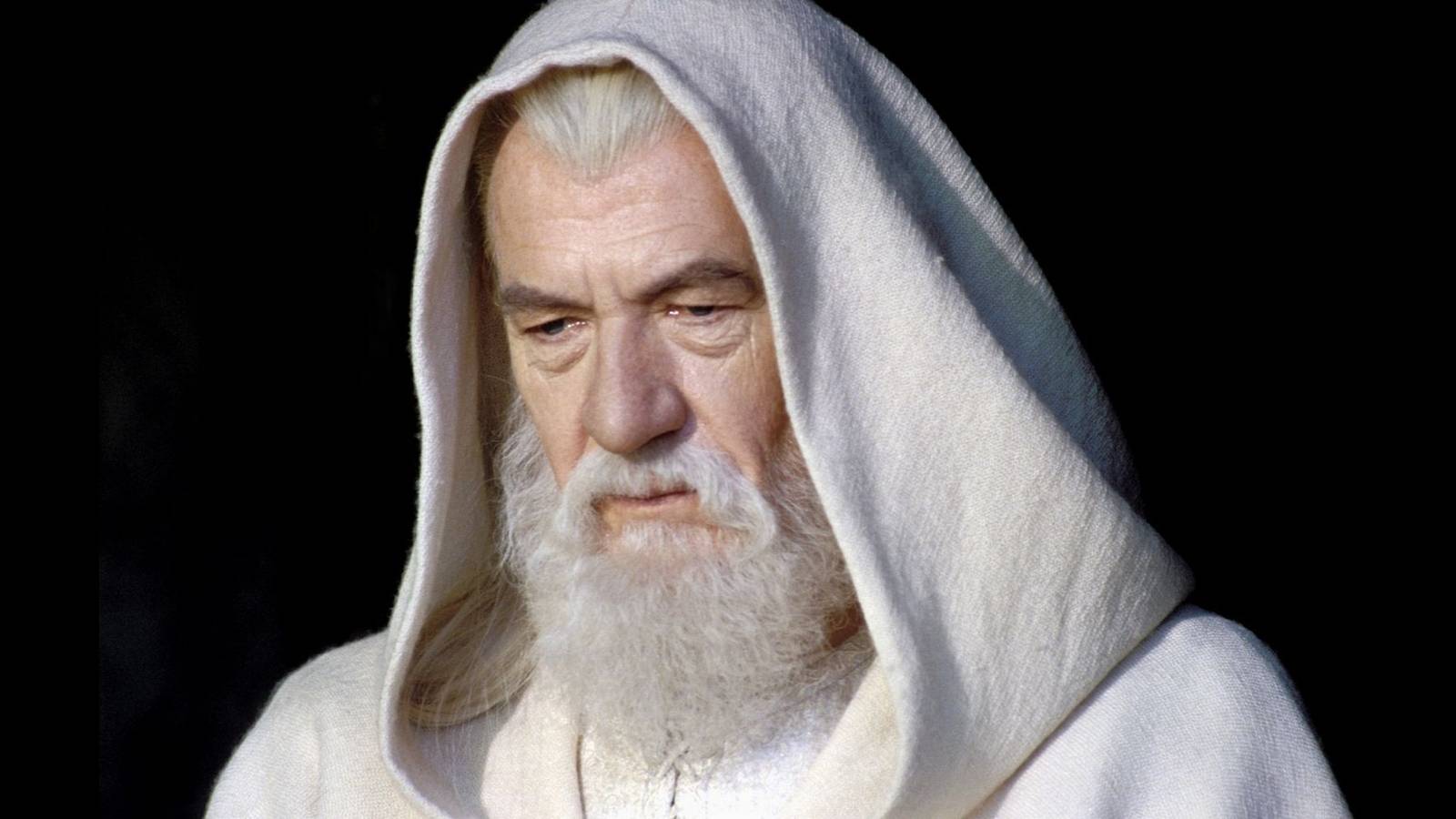
Image via New Line/courtesy Everett Collection Published Oct 12, 2026, 7:31 AM EDT Born with Autism (formerly classified as Asperger syndrome), Tyler B. Searle has been obsessed with storytelling since he was old enough to speak. He gravitated towards fairy tales, mythology, the fantasy genre, and animated movies and shows aimed at family audiences. When not writing, Tyler enjoys watching more cartoons and reading fantasy books in his home in Ontario, Canada. Sign in to your Collider account J. R. R. Tolkien's legendarium has become one of the cornerstones of the modern fantasy genre. Drawing inspiration from ancient Greek, Norse, and Germanic mythology, and his Christian faith, he crafted the world of Arda and chronicled everything from its creation to the various conflicts between its inhabitants and the forces of evil, led originally by the Dark Lord Morgoth and later by his lieutenant Sauron. Though Tolkien was quite meticulous when it came to the history of his world, there was much about Arda that he purposefully left unanswered, which just helped to make it and the people within it feel all the more real. Some of the most fascinating of Tolkien's characters are the five wizards that appeared during the Third Age. Though they appeared like old men, each one was a powerful angelic being called a Maia, tasked with guiding and instructing the people of Middle-earth in their battles against Sauron, a fellow Maia. While forbidden from unleashing their full strength, the wizards were still beings of incredible power and had magic at their disposal that could do everything from break curses to rousing the spirits of the very land against their enemies. 4 Alatar and Pallando the Blue Image via Ted Nasmith The huntsman Valar, Oromë, sent two of his Maiar to Middle-earth: Alatar, one of the two who willingly volunteered, and his friend Pallando. Dressed in blue robes, the two did not remain in Middle-earth for long. They departed for the far east, inhabited by the Easterlings, a massive group of humans who worshiped Sauron as a god. Sadly, they never returned to Middle-earth, leaving much to be speculated about who they were and the full extent of their power. What we know for certain is that only one of the five Istari remained loyal to the task given to them by the Valar, and given that Sauron gathered enough of an army to invade the West during the War of the Ring, we know they were among those who failed. As for the exact nature of their failure, Tolkien went back and forth on this. Initially, he said that they had deviated from their task and began founding magical cults among the Easterlings. However, later in life, he revisited the wizards and clarified that, while they did not directly stop Sauron's return to power, they had a vital role to play in the War of the Ring by aiding the Easterling populations that tried to rebel against Sauron. So while we might never know how skilled they were at using magic, the blue wizards were skilled infiltrators who proved to be a thorn in the Dark Lord's side that cost him a fair bit of his military strength. But alas, it is all we have to work with, so they must be placed at the bottom in terms of power. 3 Radagast the Brown Image via New Lines Cinema The Maiar known as Aiwendil was a servant of the Valar Yavanna, Queen of the Earth, in charge of all things that grew, and thus had a natural closeness to nature. Yavanna tasked him with journeying to Middle-earth to look after the animals and plants. He took the form of a wizard clad in brown robes, and was later given the name Radagast. He set up a home called Rhosgobel on the borders of Mirkwood Forest, where he could keep watch on Sauron's fortress Dol Guldur, and keep in contact with the animals and plants of the region. Radagast was noted as being less powerful than his fellow wizards, but this doesn't mean he was weak. He was said to be a master of shapes and hues, which implies that he might have been able to take on animal form, and was very knowledgeable when it came to herbal remedies. However, his love for nature meant that he rarely interacted with men, elves, or dwarves, and rarely played a role in any of the major events of the Third Age. He was also a bit too trusting for his own good, which meant that he could be manipulated by the likes of Saruman, who had him provide birds and beasts in his search for the One Ring, and later lure Gandalf to Orthanc so he could be captured. Still, he had a special connection to nature that the other wizards lacked, which allowed him to gain information through them and help in indirect ways, such as sending an eagle to Orthanc for Gandalf to escape and help the rest of Middle-earth against Sauron's evil. Sadly, we never do learn what happens to him after the defeat of Sauron, but given that magic slowly began to fade from the world, it's unlikely he rejoined his fellow Maiar in Valinor. Collider Exclusive · Middle-earth Quiz Which Lord of the RingsCharacter Are You? One Quiz · Ten Questions · Your Fate Revealed The road goes ever on. From the green hills of the Shire to the fires of Mount Doom, every soul in Middle-earth carries a destiny. Ten questions stand between you and the truth of who you are. Answer honestly — the One Ring has a way of revealing what we most want to hide. 💍Frodo 🌿Samwise 👑Aragorn 🔥Gandalf 🏹Legolas ⚒️Gimli 👁️Sauron 🪨Gollum BEGIN YOUR QUEST → 01 You are handed a responsibility that could destroy you. What do you do? The weight of the world falls on unlikely shoulders. AAccept it. Someone has to, and running changes nothing. BStay by the side of whoever carries it. They shouldn't go alone. CStep forward and lead. This is exactly what I was made for. DIt's mine now. I won't let anyone else have it. NEXT QUESTION → 02 Your closest companion is heading into terrible danger. You: True loyalty is revealed not in comfort, but in crisis. AFollow them without hesitation. I'd rather die beside them than live without them. BRally others and forge a plan to help — strength in numbers. COffer wisdom and guidance. My counsel may save them where swords cannot. DLet them go. Only the strong survive, and sentiment is a weakness. NEXT QUESTION → 03 Enormous power is within your reach. Your instinct is: Power corrupts — but only those who reach for it. ADestroy it. Nothing good comes from power this absolute. BUse it to protect those I love — just this once. CWield it wisely. I have the will and the knowledge to do good with it. DSeize it. I have waited long enough. It belongs to me. NEXT QUESTION → 04 What does "home" mean to you? Where we long to return reveals who we truly are. AA simple, peaceful place — green hills, good food, no adventure required. BWherever the people I love are. Home is a feeling, not a place. CA kingdom I must earn before I can truly claim it as mine. DI lost it long ago. That loss is what drives everything I do. NEXT QUESTION → 05 When a battle is upon you, your approach is: War reveals what we are made of — whether we like it or not. ASurvive by any means. I'm not a fighter — but I'll do what I must. BFight for the person beside me, not for glory or honour. CLead the charge. Nothing inspires an army like a king at the front. DStrike from range, fast and precise — never let them get close. NEXT QUESTION → 06 Someone comes to you for advice in their darkest hour. You: Wisdom is not knowing all the answers — it's knowing which questions to ask. AListen, then offer honest encouragement. Sometimes people just need belief. BGive them practical help — words are fine, but action is better. CSpeak carefully. I have seen much, and I know what counsel can cost. DTell them what they want to hear. Trust is a tool like any other. NEXT QUESTION → 07 How do you see yourself, honestly? Self-knowledge is the most dangerous kind. ASmall and ordinary — but perhaps that's exactly why I was chosen. BDefined entirely by who I serve and love. I am nothing without them. CForged by hardship into something the world has not yet fully seen. DDiminished from what I once was — and consumed by the need to reclaim it. NEXT QUESTION → 08 Which of these best describes your relationship with the natural world? Middle-earth speaks to those who know how to listen. AI find peace in it — forests, rivers, open skies. Nature restores me. BI prefer the earth underfoot — stone, mines, solid and real things. CI have watched the world change for longer than most can comprehend. DNature offers hiding places, cold water, raw fish. That's enough for me. NEXT QUESTION → 09 You encounter a wretched, pitiable creature who has done terrible things. You: How we treat the fallen reveals the height of our character. AShow mercy. Even the most broken souls deserve a chance at redemption. BPity them — but never trust them. They made their choices. CSee them as a tool. Their knowledge or skills may still serve a purpose. DDestroy them before they can cause more harm. Mercy is a luxury we cannot afford. NEXT QUESTION → 10 When the quest is over and the songs are sung, what do you hope they say about you? In the end, we are all just stories. AThat an ordinary person did an extraordinary thing — and came home. BThat I never abandoned the person who needed me most. CThat I was worthy of the crown — and everything it demanded. DNothing. I don't need songs. I needed it, and now it's gone. REVEAL MY FATE → The Fellowship Has Spoken Your Place in Middle-earthThe scores below reveal your true character. Your highest number is your match. Even a tie tells a story — the Fellowship was never made of simple people. 💍 Frodo 🌿 Samwise 👑 Aragorn 🔥 Gandalf 🏹 Legolas ⚒️ Gimli 👁️ Sauron 🪨 Gollum You carry something heavy — and you carry it alone, even when you don't have to. You were not born for greatness, and that is precisely why greatness chose you. Your courage is not the roaring, sword-swinging kind; it is quiet, stubborn, and terrifying in its refusal to quit. The Ring weighs on you more than anyone can see, and still you walk toward the fire. That is not weakness. That is the rarest kind of strength there is. You are, without question, the best of them. Not the most powerful, not the most celebrated — but the most essential. Your loyalty is not a trait; it is a force of nature. You would carry the person you love up the slopes of Mount Doom if it came to that, and we both know you'd do it without being asked. The world needs more people like you, and the world is lucky it has even one. You were born to lead, and you have spent years running from it. The crown is yours by right, but you know better than anyone that right means nothing without the will and the worthiness to back it up. You are tempered by loss, shaped by long roads, and defined by a code of honour you hold to even when no one is watching. When you finally step forward, the world shifts. Because it was always waiting for you. You have seen more than you let on, and you say less than you know — which is exactly as it should be. You are a catalyst: you do not fight the battles yourself, you ignite the people who can. Your wisdom comes not from books but from an age of watching what happens when it is ignored. You arrive precisely when you mean to, and your presence alone changes what is possible. A wizard is never late. Graceful, perceptive, and almost preternaturally calm under pressure — you see things others miss and act before others react. You do not need to make a scene to be remarkable; your presence speaks for itself. You are loyal to those you choose to stand beside, and that choice is not made lightly. You have lived long enough to know that the most beautiful things in this world are also the most fragile, and that is why you fight to protect them. You are loud, proud, and absolutely formidable — and beneath all of that is one of the most fiercely loyal hearts in Middle-earth. You don't do anything by half measures. Your friendships are forged like iron, your grudges run as deep as mines, and your courage in battle is the kind that makes legends. You came into this fellowship suspicious of everyone and ended it willing to die for an elf. That is not a small thing. That is everything. You think in centuries and act in absolutes. Order, dominion, control — not because you are cruel by nature, but because you have decided that the world left to itself always falls apart, and you are the only one with the vision and the will to hold it together. You were not always this. Something was lost, or taken, or betrayed, and the version of you that stands now is the answer to that wound. The tragedy is that you're not entirely wrong — just entirely too far gone to course-correct. You are a study in contradiction — pitiable and dangerous, cunning and broken, capable of both cruelty and something that once resembled love. You are defined by loss: of innocence, of self, of the one thing that gave your existence meaning. Two voices war inside you constantly, and the tragedy is that the better one sometimes wins, just not often enough, and never at the right moment. You are a warning, yes — but also a mirror. We are all a little Gollum, given the right ring and enough time. ↻ RETAKE THE QUIZ 2 Saruman the White/of Many Colours Image via New Line Cinema While Aiwendil was a faithful servant of Yavanna, Curumo served her husband, Aulë, Valar of the forge and the creator of the dwarves. This gave him an appreciation of the acts of crafting and creation, something he shared with Sauron, who also began in the service of Aulë before his fall to Morgoth. Thus, when it was decided that the Istari would travel to Middle-earth, Curumo was the first to volunteer and was made the leader of the order, gifted with white robes. Under the name Saruman, he accompanied the two blue wizards into the east but returned alone to the west and eventually received the tower Orthanc at Isengard as a base of operations. In time, his admiration for Sauron's powers led to him falling the furthest of all the Istari, first by trying to claim the One Ring for himself and then by openly joining Sauron to attack the men of Rohan in a bid to share in his power. Saruman believed that great power was needed to oppose Sauron and spent most of his time delving into ancient lore, especially regarding ancient magic and ring craft. Saruman was a master inventor who built complex machines that turned the pits of Isengard into vast factories of war, allowed him to delve into the palantír seeing stones, and even build a lesser ring of power. His greatest power, however, was his voice. Saruman's natural charisma and mastery over words allowed him to easily manipulate others and captivate even those who knew he could not be trusted. However, his belief in raw power was his greatest weakness, as it meant he underestimated those who cared about "lesser" things, such as Radagast's love of nature and Gandalf's fondness for hobbits. 1 Gandalf the Grey/White As the Valar were selecting which Maiar would travel to Middle-earth, Manwë, King of the Valar and lord of the wind, sky, and birds, commanded Olórin, wisest of the Maiar, to join them. Though Olórin had great love for the people of Middle-earth, he feared the idea of facing Sauron, but agreed to go when Manwë said that was precisely why he was the right choice. He was garbed in gray robes and gained many names during his travels, the most common of which was Gandalf. Upon arriving, he met with Cirdan the Shipwright, perhaps the oldest elf in Middle-earth, who foresaw Gandalf's importance and gifted him Narya, the elven ring of fire. Gandalf used the ring's powers to ignite hope in the hearts of men, elves, and dwarves, all while making subtle moves that saw the people of Middle-earth score many small victories over Sauron that would pay off in the end. The Hobbit cemented Gandalf as the archetypal wizard, with most of his spells being themed around fire, from the manipulation of smoke to the ability to kindle sparks and flames. He was always careful with magic, as, unlike Saruman, he believed in a more subtle approach to combating evil than grand displays of power. The only time he unleashed his full strength was when he faced off with Durin's Bane, a Balrog that confronted the Fellowship of the Ring within the Mines of Moria. Though he perished after defeating the fallen Maia, he was sent back as Gandalf the White, given access to slightly more use of his powers as he was given the position Saruman had proven unworthy to hold. As the White, Gandalf took the fight more directly to Sauron through aiding the human nations of Rohan and Gondor. By the end of the Third Age, he was the only wizard to remain true to the mission, and became a beacon of wisdom, compassion, and courage who could inspire people to find hope even in the darkest of moments.
Every Wizard in Middle-earth, Ranked by Power
Full Article
Original Source
Read the full article at Collider →KhanList aggregates and links to publicly available news content. We do not host full articles from third-party sources. Always verify important information with original sources.