
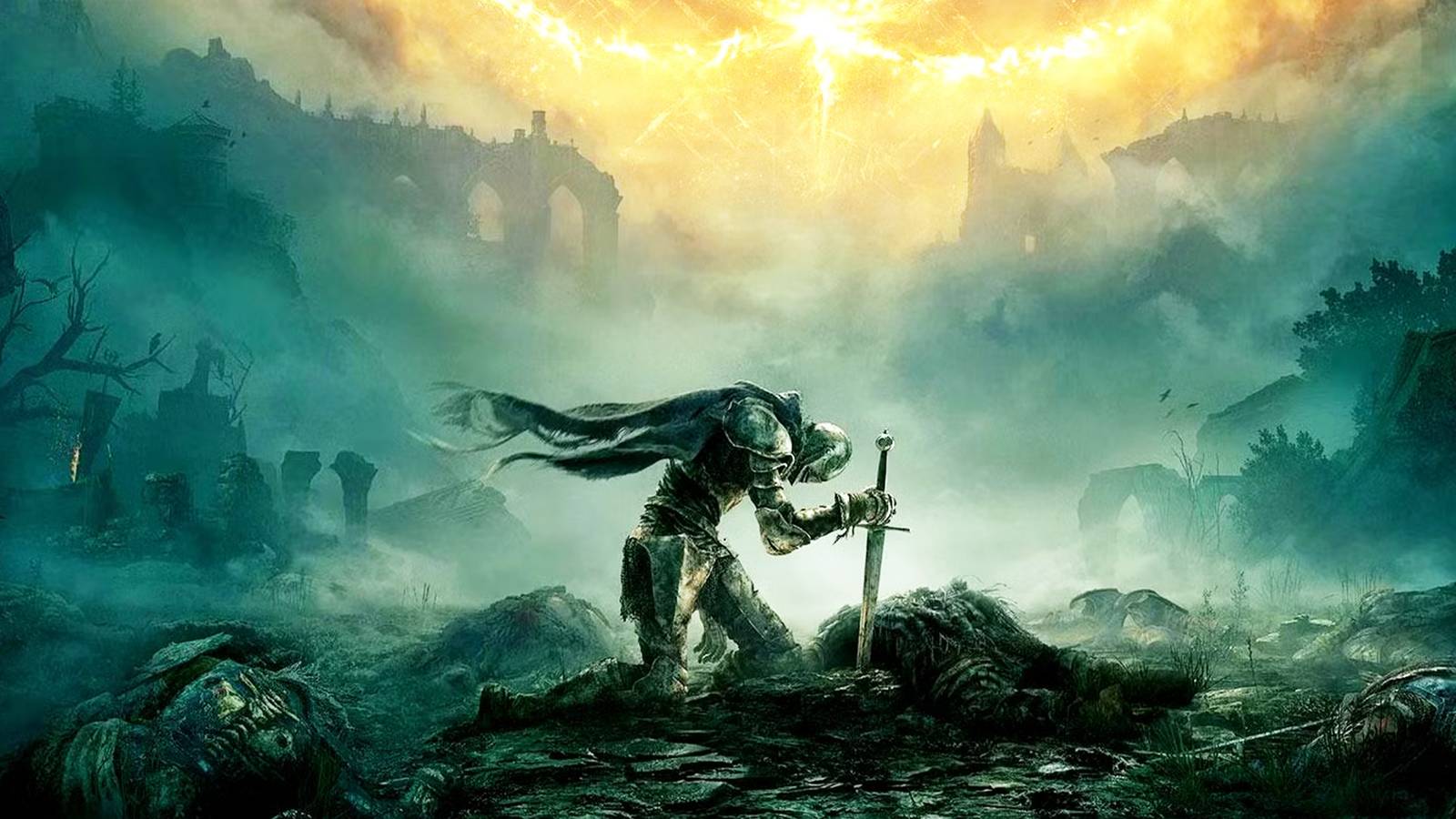
Image via FromSoftware Published Aug 13, 2026, 6:36 AM EDT Writing from the Chicagoland area in Illinois, Robert is an avid movie watcher and will take just about any excuse to find time to go to his local movie theaters. Robert graduated from Bradley University with degrees in Journalism and Game Design with a minor in Film Studies. Robert tries his best to keep up with all the latest movie releases, from those released in theaters to those released on streaming. While he doesn't always keep up with the latest TV shows, he makes it a goal to watch nearly every major new release possible. He has been honing his craft and following any and all movie news all his life, leading up to now, where he has a vast knowledge of film and film history. He also logs every movie that he watches on his Letterboxd page, and has hosted a weekly online movie night with his closest friends for over 6 years. Sign in to your Collider account In a medium as old as video games are now, most of the time you can say you’ve seen it all. However, when Demon’s Souls was originally released back in 2009, it unleashed upon the world a new type of game that, to this day, remains one of the most influential of the past decade. Beyond the memes of “git gud," the core gameplay, environmental design, and storytelling techniques behind the Soulsborne games keep fans coming back time and time again. With FromSoftware continuing to expand its catalog beyond the traditional Souls formula, it seems like a good time to revisit and rank the games in the Soulsborne series, while also taking a look at the closely connected titles such as Bloodborne and Sekiro: Shadows Die Twice. The games are ranked based on the strength of their combat, world and level design, bosses, atmosphere, innovation, and overall influence on the Soulsborne formula. 8 'Dark Souls II' (2014) Image via Bandai Namco Games This shouldn’t come as that big of a surprise to anyone who’s played through all of the Soulsborne series. Though it has its fair share of fans, Dark Souls II is still far and away the worst game in the series. While the game would tighten up some areas that it was otherwise lacking in the original release with the remaster Scholar of the First Sin, the end result is still a slog to get through at times. But with all the negatives that do surround the game, the worst Soulsborne game is still much better than a lot of other titles in the genre. There are a number of truly memorable environments included, as well as some great music (the Majula theme is arguably the best hub theme in the entire series). However, you can really tell that with series creator Hidetaka Miyazaki working primarily on Bloodborne, Dark Souls II was definitely missing something. 7 'Demon's Souls' (2009) Image via Sony Computer Entertainment Unlike the games that will follow on this list, the quality gap between Dark Souls II and Demon’s Souls is a rather large one. When playing Demon’s Souls, it’s clear from the outset that this is the first attempt at something that will no doubt be refined as it continues. Because of that, there are a lot of small speed bumps that might leave you scratching your head if you’re playing it for the first time after already playing other entries in the series. There’s a great case to be made that, with the Bluepoint Games remake available on the PS5, it’s actually a perfect place to jump into the series for newcomers. You’ll often hear Souls veterans state that the first game you play in the series will be the one that you’ll think is the hardest, but even by that standard, Demon’s Souls is still one of the easier games in the franchise. You’ll see certain gameplay mechanics present, like consumable healing items that don’t refill, that were partially implemented into Dark Souls II but would primarily make their return in Bloodborne. Because of that, you might be finding yourself farming some grass to make things easier on yourself. One of the biggest draws of these games is also the boss fights, and much like other aspects, you can see the idea present here in its infancy, fully realized in later games. There are your typical FromSoftware boss battles, such as the brute Flamelurker, and also traces of more abstract boss designs, like the Dragon God. There's also the expertly presented Maiden Astraea fight, which remains one of the most effective thematically presented boss battles in the entire Souls series. Though it's not near the #1 spot on this list, Demon's Souls is still worth playing, and a great blueprint of what the series would later become. 6 'Sekiro: Shadows Die Twice' (2019) Image via Activision Picking up with the fast combat nature that Bloodborne succeeded with, Sekiro: Shadows Die Twice was an interesting departure from the typical Souls-like format. Though the unorthodox approach to storytelling in FromSoftware’s games is one of its most intriguing aspects, Sekiro decided to look at it from a more familiar narrative-driven angle. The end result is more welcoming to those that might have otherwise been put off by the often cryptic nature of their previous titles, which would often leave players sorting through lore in the game's menus as part of item descriptions. A lot of the problems that people have with Sekiro stem from its more restricted nature. Though Sekiro himself has various tools that he can utilize in and out of combat, you’re restricted to one weapon. For many people, much of the fun of the Soulsborne games is the experimentation with the various weapon types, and in Sekiro that’s completely absent. With that being said, this is some of the finest combat in any FromSoftware title. When Nioh was released two years before, it left some people yearning for that type of refined, quick-paced style of combat, and Sekiro delivers heavily on that front. The fast-paced, oftentimes multiple-phased boss battles are thrilling to take part in. It's a game that rewards patience as well as aggressiveness, as mechanics like parrying act as your key to survival. 5 'Elden Ring Nightreign' (2025) Image via FromSoftware Elden Ring Nightreign is easily the most unique entry in the franchise, acting as a complementary experience as opposed to a true continuation of the previous release. This Elden Ring spinoff instead implements a roguelike style of gameplay, with an emphasis on repeating a cycle of runs and using gained knowledge to make it farther on each attempt. This is further complemented by Nightreign being the only Soulsborne game that is envisioned as a co-op experience, built and designed for a group of three players to traverse Limveld and prepare themselves for Heolstor, the Nightlord. Because of the inherent facets of the roguelike genre and the implementation of multiplayer, Nightreign finds itself to be arguably the most infinitely replayable experience in the entire Soulsborne franchise. It seamlessly acts as an entertaining and fulfilling companion piece to the world and overall experience of Elden Ring, creating something incredibly fulfilling without taking away any of the strengths of the original game. There will always be an inherent fun in playing through the game with friends and fighting against giant, difficult bosses together, as sharing the glory of Soulsborne gameplay in co-op is a must for any fans of the series. Collider Exclusive · Sci-Fi Survival Quiz Which Sci-Fi World Would You Survive? The Matrix · Mad Max · Blade Runner · Dune · Star Wars Five universes. Five completely different ways the future went wrong — or sideways, or up in flames. Only one of them is the world your instincts were built for. Eight questions will figure out which dystopia, galaxy, or desert wasteland you'd actually make it out of alive. 💊The Matrix 🔥Mad Max 🌧️Blade Runner 🏜️Dune 🚀Star Wars TEST YOUR SURVIVAL → 01 You sense something is deeply wrong with the world around you. What do you do? The first instinct is often the truest one. APull on every thread until I understand the system — then figure out how to break it. BStop asking questions and start stockpiling — food, fuel, weapons. Questions don't keep you alive. CKeep my head down, observe carefully, and trust no one until I know who's pulling the strings. DStudy the patterns. Every system has a rhythm — learn it, and you learn how to survive it. EFind the people fighting back and join them. You can't fix a broken galaxy alone. NEXT QUESTION → 02 In a world of scarcity, what resource do you guard most fiercely? What we protect reveals what we believe survival actually requires. AKnowledge. If you understand the system, you don't need resources — you can generate them. BFuel. Everything else — movement, power, escape — runs on it. CTrust. In a world of fakes and informants, a truly reliable ally is rarer than any commodity. DWater. And after water, information — the two things empires are truly built on. EShips and credits. The galaxy is big — you survive it by being able to move through it freely. NEXT QUESTION → 03 What kind of threat keeps you up at night? Fear is useful data — if you're honest about what you're actually afraid of. AThat reality itself is a lie — that everything I experience has been constructed to keep me compliant. BA raid. No warning, no mercy — just the roar of engines and then nothing left. CBeing identified. Once someone with power decides you're a problem, you're already out of time. DBeing outmanoeuvred — losing a political game I didn't even know I was playing. EThe Empire tightening its grip until there's nowhere left to run. NEXT QUESTION → 04 How do you deal with authority you don't trust? Every dystopia has a power structure. Your approach to it determines everything. ASubvert it from the inside — learn its rules well enough to weaponise them against it. BIgnore it and stay out of its reach. The further from any power structure, the better. CAppear to comply while doing exactly what I need to do. Visibility is the enemy. DManoeuvre within it carefully. You can't beat a system you refuse to understand. EResist openly when I have to. Some things are worth the risk of being seen. NEXT QUESTION → 05 Which environment could you actually endure long-term? Survival isn't just tactical — it's physical, psychological, and very much about where you are. AUnderground bunkers and server rooms — cramped, artificial, but with access to everything that matters. BOpen wasteland — brutal sun, no shelter, constant movement. At least the threat is honest. CA dense, rain-soaked city where you can disappear into the crowd and nobody asks questions. DMerciless desert — extreme heat, no water, and something enormous living beneath the sand. EThe fringe — backwater planets and busy spaceports where the Empire's attention rarely reaches. NEXT QUESTION → 06 Who do you want in your corner when things fall apart? The company you keep is the clearest signal of who you actually are. AA tight crew of believers who've seen behind the curtain and have nothing left to lose. BOne or two people I'd trust with my life. Any more than that and someone talks. CNobody, ideally. Alliances are liabilities. I work alone unless I have no choice. DA community bound by shared hardship and mutual survival — people who need each other to last. EA ragtag team with wildly different skills and total commitment when it counts. NEXT QUESTION → 07 Where do you draw the line — if you draw one at all? Every survivor eventually faces a moment that tests what they're actually made of. AI won't harm the innocent — even the ones who'd report me without hesitation. BI do what I have to to protect the people I've chosen. Everything else is negotiable. CThe line shifts depending on who's asking and what's at stake. DI draw a long-term line — nothing that compromises my people's future, even if it'd help now. ESome lines, once crossed, can't be uncrossed. I know which ones they are. NEXT QUESTION → 08 What would actually make survival worth it? Staying alive is one thing. Having a reason to is another. AWaking others up — dismantling the illusion so no one else has to live inside it. BFinding somewhere — or someone — worth protecting. A reason to keep moving. CAnswers. Understanding what I am, what any of this means, before time runs out. DLegacy — shaping the future in a way that outlasts me by generations. EFreedom — for myself, for others, for every world still living under someone else's boot. REVEAL MY WORLD → Your Fate Has Been Calculated You'd Survive In…Your answers point to the world your instincts were built for. This is the universe your temperament, your survival instincts, and your particular brand of stubbornness were made for. The MatrixYou took the red pill a long time ago — probably before anyone offered it to you. You're a systems thinker who can't help but notice the seams in things. You're drawn to understanding how the system works before figuring out how to break it. You'd find the Resistance, or it would find you — your instinct for spotting constructed realities is the machines' worst nightmare. You function best when you have access to information and the freedom to act on it. The Matrix built an airtight prison. You'd be the one probing the walls for the door. Mad MaxThe wasteland doesn't reward the clever or the well-connected — it rewards those who are hard to kill and harder to break. That's you. You don't need comfort, community, or a cause larger than the next horizon. You need a vehicle, a clear threat, and enough fuel to outrun it — and you're good at all three. You are unsentimental enough to survive that world, and decent enough — just barely — to be something more than another raider. In the wasteland, that distinction is everything. Blade RunnerYou'd survive here because you know how to exist in moral grey areas without losing yourself completely. You read people accurately, keep your circle small, and ask the questions others prefer not to answer. In a city where humanity is a legal designation rather than a feeling, you hold onto something that keeps you functional. You're not a hero. But you're not lost, either. In Blade Runner's world, that distinction is everything. DuneArrakis is the most hostile environment in the known universe — and you are precisely the kind of person it rewards. Patience, discipline, and political awareness are your core strengths — and on Arrakis, they're survival tools. You understand that the long game matters more than any single victory. Others come to Dune and are consumed by it. You'd learn its logic and earn its respect. In time, you wouldn't just survive Arrakis — you'd begin to reshape it. Star WarsThe galaxy far, far away is vast, loud, and in a constant state of violent political upheaval — and you wouldn't have it any other way. You find meaning in being part of something larger than yourself — a cause, a crew, a rebellion. You'd gravitate toward the Rebellion, or the fringes, or whatever pocket of the galaxy still believes the Empire's grip can be broken. You fight — not because you have to, but because standing aside isn't something you're capable of. In Star Wars, that willingness is what makes all the difference. ↻ RETAKE THE QUIZ 4 'Dark Souls III' (2016) Image via Namco Bandai Games Dark Souls III is an interesting game in that you can definitely see the knowledge carried over from the team’s previous experience on Bloodborne. Rather than the “slower” nature that the original Dark Souls incorporated, the third entry in the franchise ramps up the speed quite a bit. While many of the other games in the series up until this point would allow newcomers to also jump in with ease, Dark Souls III is a game that actually rewards players who have played the original Dark Souls. You’ll notice many references as you find yourself making your way through the world, enhancing the overall experience. It could be argued that Dark Souls III is also the most difficult game in the franchise; of course, this is often a subjective thing, especially for one’s familiarity with these types of games. Even so, if you’ve played multiple titles in the series, there’s a chance you’ll still find yourself having a difficult time. The DLC especially ramps this up, as bosses like Darkeater Midir and Sister Friede will push your combat knowledge to the limits. The dark fantasy video game is truly a great send-off to the Dark Souls series proper. 3 'Dark Souls' (2011) Image via Namco Bandai Games Though Demon’s Souls was the starting point in this long journey, many will look to Dark Souls as the one that kickstarted the FromSoftware reign that we have been in for the past 10 years. A compelling story acts as the backdrop for some of the most enthralling combat in the entire series. Unlike later entries, there’s just something about the combat that could be seen as simple to learn but difficult to master, and its openness to experimentation supports the inclusion of New Game+ even further. Moving away from Demon's Souls' level-orientated design, Dark Souls instead opts for an interconnecting map. It’s hard to overstate just how effective this is to the overall game, and how its inclusion and implementation enhance the overall experience. There’s nothing quite like traversing and spending countless hours attempting to make it through one area, only to later see that it connects back to a place you had previously already passed through. Many people believe that Dark Souls is still at the top of the pack when it comes to level design, and it’s difficult to argue against that. Now, after fast combat games like Bloodborne and Sekiro, it could be seen as difficult to go back to the slowness of Dark Souls, but the journey that you undertake is more than worth it even if you don't click with the combat. 2 'Bloodborne' (2015) Image via Sony Computer Entertainment The first game in the series to step away from the Souls name and mythos, Bloodborne, originally revealed as "Project Beast," continues to shine to this day. Moving away from the more methodical and somewhat slower-paced combat that the first two Dark Souls games and Demon's Souls employ, Bloodborne is like a shot of adrenaline in comparison. Removed is the reliance on shields; instead, you’re rewarded for playing aggressively. Due to that dramatic shift, the game’s style of play is completely thrown on its head. For example, there’s the introduction of the rally mechanic, which allows players to gain back lost health if they attack the enemy that hurt them within a few seconds of initially being attacked. It’s this gameplay change that’s arguably the best mechanic that FromSoftware has implemented into any of their titles since the original Demon’s Souls. We’d see this faster gameplay later implemented into the following titles, such as Dark Souls III and Sekiro, and honestly, FromSoftware’s games are better off for it. There are also a lot of great things to be said about The Old Hunters DLC, which features some of the finest boss fights the entire series has cooked up, such as Ludwig and Lady Maria. The Lovecraftian cosmic horror that the game swerves toward in later portions is the perfect detour from the typical fantasy setting that the earlier Souls games excelled in. Vast interconnecting environments are the bread and butter of the Souls series, and Bloodborne continues that tradition, as you’ll find yourself stumbling upon areas that are familiar yet unexpected. It’s no wonder that fans continue to beat the drum for a remastered Bloodborne, as in its current state of 30fps with bad frame pacing, it can be difficult to return to at times. Even though it has those drawbacks, it's still an incredibly engaging game, and was once the apex of the entire Soulsborne franchise. 1 'Elden Ring' (2022) Image via Bandai Namco Entertainment It's impossible to overstate just how much hype and excitement had been built up for Elden Ring over the years, following two years of silence on the game's development and all of the potential of a collaboration between FromSoftware and George R. R. Martin. However, by the time that the game finally did release, it managed to meet even the highest of expectations placed upon it, becoming the glorious magnum opus of the Soulsborne franchise and forever changing the landscape of adventure RPGs in the wake of its success. There are a lot of different elements and distinct polishing flairs that make playing Elden Ring one of the most enthralling and compelling Soulsborne experiences, but a lot of the continuous strengths of the game come from the magnitude and brilliance of its vast open world. While nearly every other Soulsborne game is largely linear in its structure, Elden Ring invites a sense of choice and massive exploration from the player, giving them the limitless prospects of its open world and allowing them to approach it in any which way they so desire. It makes the game a wholly singular and personal experience, as no two playthroughs of the game will feel the same, as each individual player will go about the game in a different way. While these inherent strengths already made the game one of the greatest Soulslike games, what truly pushes the game over the edge as the absolute best Soulsborne game is the legendary DLC expansion, Elden Ring: Shadow of the Erdtree. This massive DLC can easily be perceived as another full-game experience added onto Elden Ring, with a new story, a new map, and an overwhelming amount of new content making for one of the hardest Soulsborne experiences out there. It's the only DLC expansion to actually be nominated for Game of the Year, and, when combined with the already massive qualities of the base game, easily makes Elden Ring the undeniable height of the franchise.
Every Soulsborne Game, Ranked From Worst to Best
Full Article
Original Source
Read the full article at Collider →KhanList aggregates and links to publicly available news content. We do not host full articles from third-party sources. Always verify important information with original sources.