
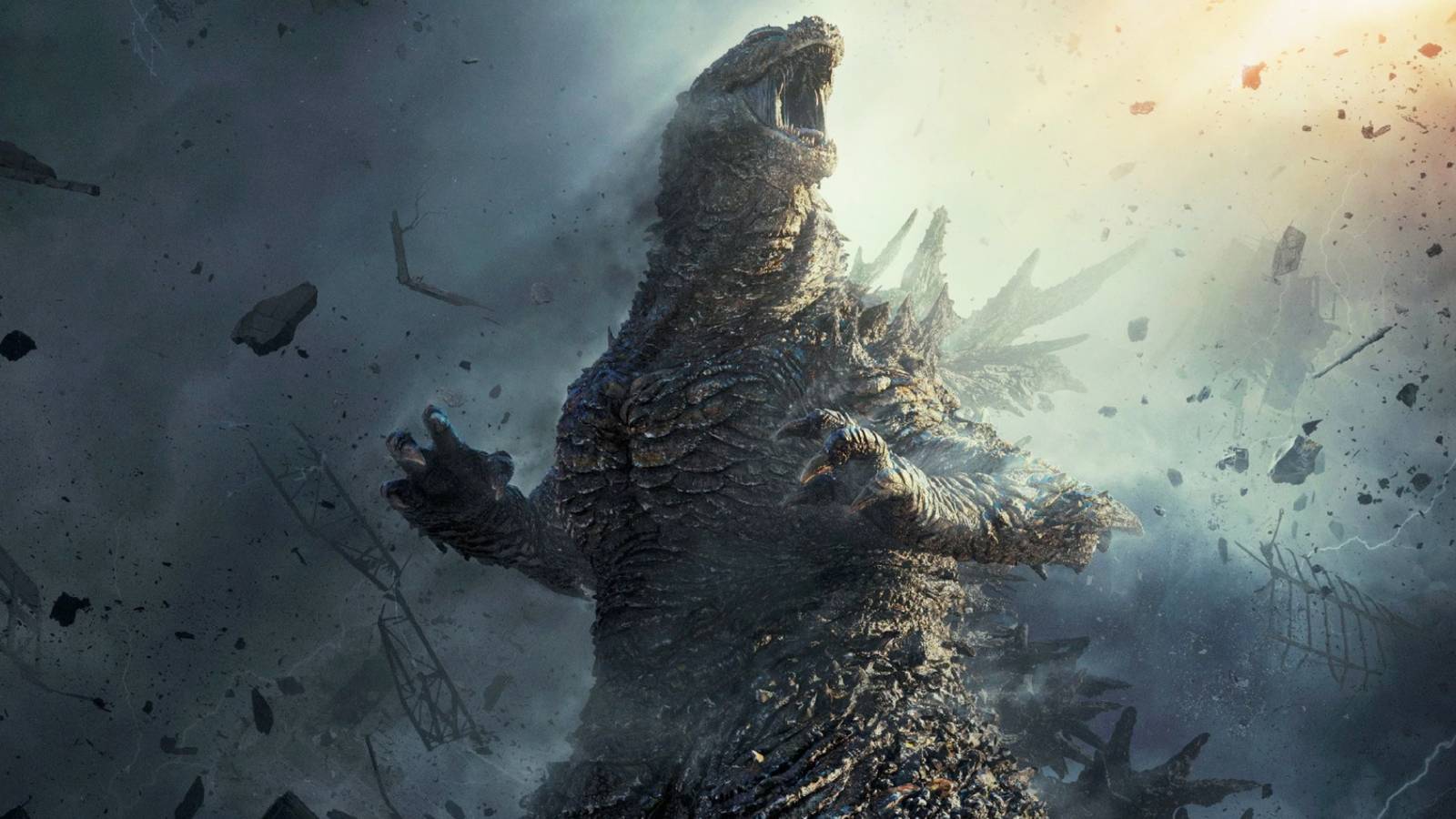
Image via Toho Published Nov 25, 2026, 12:49 PM EST Jeremy has more than 2900 published articles on Collider to his name, and has been writing for the site since February 2022. He's an omnivore when it comes to his movie-watching diet, so will gladly watch and write about almost anything, from old Godzilla films to gangster flicks to samurai movies to classic musicals to the French New Wave to the MCU... well, maybe not the Disney+ shows. His favorite directors include Martin Scorsese, Sergio Leone, Akira Kurosawa, Quentin Tarantino, Werner Herzog, John Woo, Bob Fosse, Fritz Lang, Guillermo del Toro, and Yoji Yamada. He's also very proud of the fact that he's seen every single Nicolas Cage movie released before 2022, even though doing so often felt like a tremendous waste of time. He's plagued by the question of whether or not The Room is genuinely terrible or some kind of accidental masterpiece, and has been for more than 12 years (and a similar number of viewings). When he's not writing lists - and the occasional feature article - for Collider, he also likes to upload film reviews to his Letterboxd profile (username: Jeremy Urquhart) and Instagram account. He has achieved his 2025 goal of reading all 13,467 novels written by Stephen King, and plans to spend the next year or two getting through the author's 82,756 short stories and 105,433 novellas. Sign in to your Collider account You know the deal with Godzilla, as both a series and a character, right? Basics: he’s a big monster. He stomps around. He usually destroys a lot of property. There are different iterations of the character. There are lots of Japanese movies featuring Godzilla and a few American ones, too. He has different moral values depending on the movie, sometimes being a hero, sometimes being more of a living natural disaster that’s kind of neutral and/or indifferent, and sometimes being malicious and genuinely villainous. Also, there are different eras of Godzilla. The Showa era was the first and longest, lasting from 1954 until the mid-1970s. Then there was the Heisei era, which spanned from 1984 to 1995. The Millennium era lasted from 1999 to 2004. There’s the MonsterVerse, which is separate and American-produced, and then currently, in Japan, there’s the Reiwa era. So far, it encompasses six films made since 2016, and below, all those Reiwa era Godzilla movies are ranked (and it’s an era with one of the worst Godzilla movies to date, and also one of the undeniable best ones so far). 6 'Godzilla: The Planet Eater' (2018) Image via Toho Between 2017 and 2018, there were three anime movies featuring Godzilla and, to be perfectly blunt, each one was a little worse than the last. That inevitably means talking about them in reverse order, for present purposes, which is admittedly a bit messy, but then again, this whole trilogy is a mess, so maybe it’s kind of fitting. No film in this bunch is particularly well-thought-out, coherent, or entirely satisfying, after all. But anyway, rambling aside, Godzilla: The Planet Eater is the third in the trilogy and also quite comfortably the worst of the fairly cursed trilogy. Godzilla: The Planet Eater even has the guts to squander King Ghidorah, a monster who Godzilla fans will be well aware is usually awesome, and Godzilla’s main nemesis. It's a shame, because a title like Godzilla: The Planet Eater sounds pretty awesome, and the version of Godzilla seen here is very large (maybe not large enough to literally eat planets, but a famously big monster at his biggest should still be something). All these movies are set in the distant future, and you'd think that would allow the filmmakers to go wild and really make the most of a somewhat gonzo beyond post-apocalyptic setting, but everything’s very tepid, especially in this movie. Godzilla: The Planet Eater even has the guts to squander King Ghidorah, a monster who Godzilla fans will be well aware is usually awesome, and Godzilla’s main nemesis. The two barely fight here, the boring characters from the last two movies are even more boring here, and the film flounders around doing next to nothing for 91 minutes before the whole thing mercifully finishes. It’s bad. It should be, at the very least, dopey fun, but it’s so much worse, and feels like a genuinely unfinished film. 5 'Godzilla: City on the Edge of Battle' (2018) Image via Netflix Well, some small amount of credit where it’s due, Godzilla: City on the Edge of Battle’s is indeed a little better overall than Godzilla: The Planet Eater, but not by much. In the end, it still qualifies as a pretty bad giant monster movie, and one that even the most forgiving appreciators of the genre might struggle to find redeeming qualities within. The distant future is once more as boring as the human characters featured throughout this anime film, and the monsters don’t even fare that much better as far as interesting things go… and that’s even with Mechagodzilla being here. Yes, Mechagodzilla is messed up here, much as an unusual take on Ghidorah was squandered in Godzilla: The Planet Eater? In most movies featuring Mechagodzilla, he’s like Godzilla, but mechanized, kind of obviously. It’s all in the name and stuff. Here, even more enticingly, Mechagodzilla is technically a new version of the character dubbed Mechagodzilla City. Godzilla fighting a version of Mechagodzilla thousands of years in the future, and that version of Mechagodzilla is somehow also a city? Like, seriously, how do you even make that dull? You can technically watch Godzilla: City on the Edge of Battle to find out, but in all seriousness, you shouldn’t actually watch Godzilla: City on the Edge of Battle, because time is pretty finite just generally speaking, and certainly too finite for a movie as underwhelming as this one. 4 'Godzilla: Planet of the Monsters' (2017) Image via Toho The only Godzilla anime movie that’s somewhat watchable, to the point where you could almost and rather charitably call it underrated if you really wanted to, Godzilla: Planet of the Monsters has some things to offer and is, admittedly, a film that shows potential. It sets things up that should’ve been explored and expanded more in two extra films (you know, because they had about three hours of runtime to continue the story that was started here), but, as mentioned before, those two 2018 movies didn’t do much of anything. So, in hindsight, Godzilla: Planet of the Monsters could be a bit harder to defend. It’s disappointing when you look at what it all builds (or doesn’t build) to. But for what it is, and like, as a single movie, Godzilla: Planet of the Monsters kind of works. The animation is a little stronger here than in the other two movies, and the premise – which sees humans trying to recolonize a world overtaken by monsters thousands of years in the future – is intriguing, and there is even a bit by way of slightly engaging content and drama here. Nothing came of it, but as its own thing, and one piece of a larger story, this film does kind of do its job in an almost decent way. Potential was squandered the following year, but hey, faint praise is still technically praise, and there are some brief parts of Godzilla: Planet of the Monsters that are mildly fun, for what that might be worth. 3 'Godzilla Minus Zero' (2026) Image via Toho Right now, Godzilla Minus Zero is incredibly recent, but it’s also not going to be the most recent Godzilla movie for a whole lot longer, thanks to the upcoming release of 2027’s Godzilla x Kong: Supernova. So, there is a concern about talking too many details about this movie and trying to not ruin it, since much of the plot here was hidden from the marketing (or maybe just hinted at). Also, maybe praising it will sound like recency bias taking effect, but like, Godzilla Minus Zero is just pretty great. It’s the immediate sequel to another great Godzilla movie from the Reiwa era that'll be discussed shortly, and it follows many of the same human characters from that movie, which is great, since that movie did the human drama side of Godzilla incredibly well. As for what happens, it’s harder to talk about, beyond alluding to there being another threat that isn't Godzilla, though elaborating on what this does to Godzilla and his place in the story wouldn’t feel right to do. And the trailers don’t even reveal what that other threat might be, so if you're reviewing this, not saying anything feels like the right thing to do. It means there’s a nice surprise here if you can go into Godzilla Minus Zero unspoiled, but if not, then fear not, since there are things done with that core premise that prove incredibly engaging and thrilling… perhaps not to the same extent as its predecessor, but it is thankfully a more than worthy sequel. 2 'Shin Godzilla' (2016) There's a sense of tragedy and eeriness to Shin Godzilla that makes it one of the scariest Godzilla movies made so far, perhaps even rivaling the sense of dread found in the 1954 original. Perhaps that's to be expected, given Shin Godzilla was co-directed by Hideaki Anno, who created Neon Genesis Evangelion and is therefore responsible for giving plenty of anime fans nightmares, owing to that franchise's disturbing and sometimes even terrifying elements. With Shin Godzilla, it’s a movie that shows a particularly disturbing-looking and seemingly tortured version of Godzilla causing havoc in modern-day Japan. It’s in line with the first movie from way back in 1954 if you're looking at the narrative, but the drastically different time period makes it feel like an evolution and far from repetitive. Speaking of evolution, it’s also memorable how much this version of Godzilla changes and evolves over the course of the film, with that contributing to a good deal of the movie’s horror, too. Shin Godzilla also unpacks how much a modern-day government might struggle to deal with the issue of a giant monster causing destruction out of nowhere, and it plays that whole outlandish situation quite realistically. It's got an element of social commentary/satire to it, thanks to looking at the pitfalls of bureaucracy and constant red tape, and also satisfies when it comes to the monster-related stuff. It's a striking and impressive entry in the series, without a doubt. 1 'Godzilla Minus One' (2023) Image via Toho Godzilla Minus One didn’t come out all too long ago, yet already feels worthy of being considered one of the very best movies in the whole Godzilla series, making it a pretty easy pick for the best of the Reiwa era movies to date. It had that kind of well-deserved impressive reputation almost straight away, just because it’s very no-nonsense and broadly approachable in a way few kaiju movies have ever been. Things feeling goofy, or the humans being boring? Those things can plague some giant monster movies, but neither’s an issue with Godzilla Minus One. You understand the stakes here straight away, and feel the desperation of everyone in Japan – trying to recover from the end of World War II – having to go right into dealing with the emergence of Godzilla. The first movie also took place not long after the end of World War II, but not as close as the period Godzilla Minus One ended up being set in. It goes a long way toward making the scenes without anything by way of monsters feel particularly engrossing, as Godzilla Minus One is a good character-driven drama alongside being an exciting giant monster movie with all the thrills and action that often come with such a genre. It’s the best of both worlds, and such a well-balanced film overall. If you're new to Godzilla, or are only familiar with the American movies and want to get a handle on the Japanese side of the series, the best place to start is either at the start, or with Godzilla Minus One. It really is that good, and genuinely does feel that essential. Godzilla Minus One Release Date November 3, 2023 Runtime 124 minutes Cast Ryunosuke Kamiki Koichi Shikishima Minami Hamabe Noriko Oishi
Every Reiwa Era Godzilla Movie, Ranked
Full Article
Original Source
Read the full article at Collider →KhanList aggregates and links to publicly available news content. We do not host full articles from third-party sources. Always verify important information with original sources.