
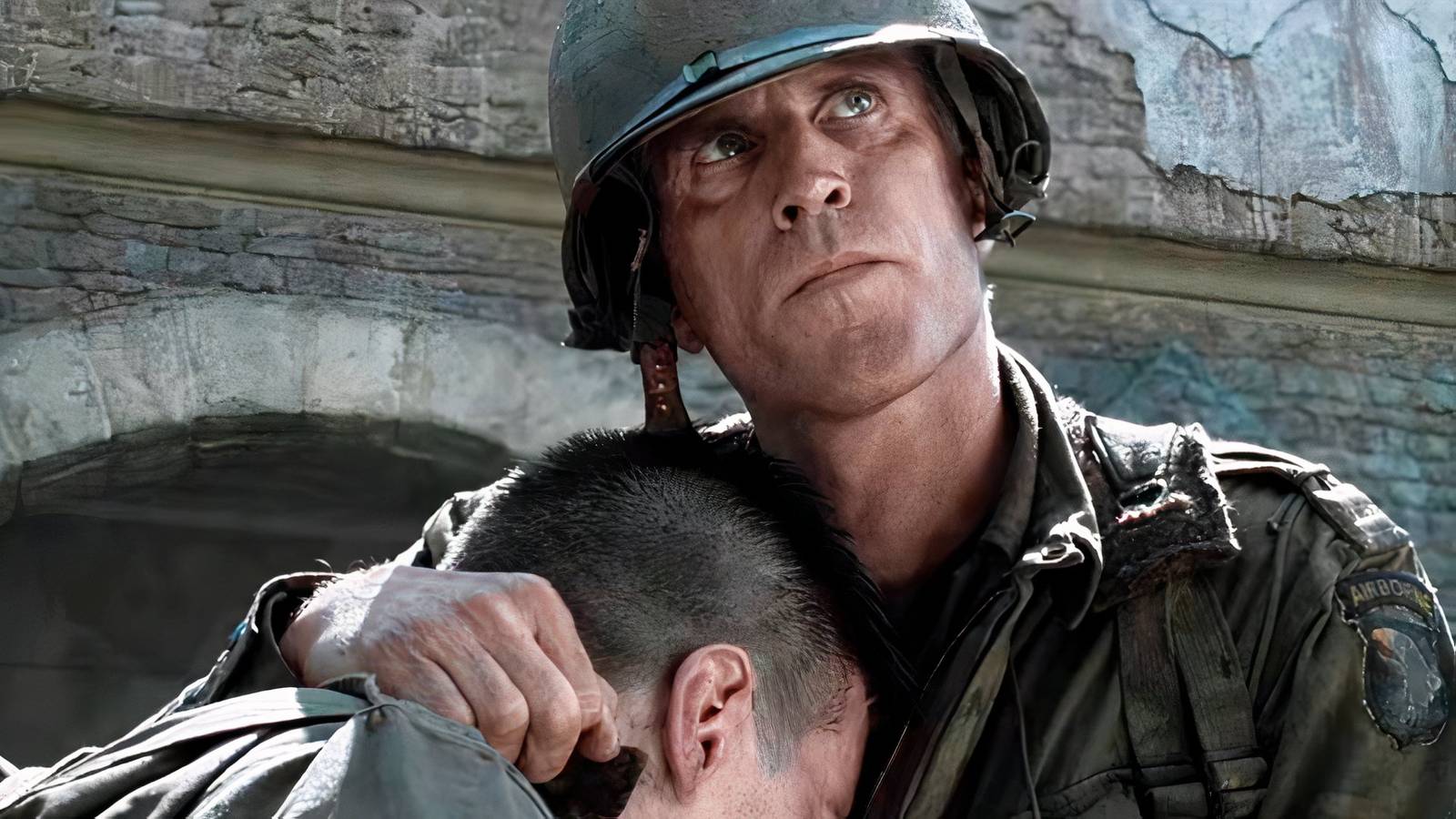
Published Nov 29, 2026, 1:45 PM EST Padraig is a Senior Features Writer and has been part of Screen Rant since 2017. Padraig is a writer, editor and retired Game of Thrones extra who has been writing about movies and TV online for over a decade. He has also written for The Irish Times, Den Of Geek, Little White Lies and many more. It's pronounced Paw-rick, BTW. Steven Spielberg has directed only four R-rated movies in his whole career, but how do they rank beside each other? Steven Spielberg's movies like Jurassic Park, E.T., and the Indiana Jones saga are usually formative parts of any movie lover's childhood. Spielberg is one of the greatest mainstream filmmakers of all time, having an innate gift for crowd-pleasing blockbusters filled with memorable visuals, thrilling action and great performances. That said, Spielberg has proven many times that he can make serious, thought-provoking dramas that have little of the warmth and zippy energy of his biggest movies. It should be noted that Steven Spielberg was key to the creation of the PG-13 rating during the 1980s, as he felt his movies sat more comfortably between PG and R ratings. It's telling then that out of the 35 movies he has directed, only four are straight-up R-rated, and notably, they are all historical dramas. 4 Amistad (1997) One of the first movies produced under the DreamWorks banner (a studio co-founded by Spielberg himself) Amistad depicts the charged legal battle that follows a violent uprising on a slave ship in 1839. This film emerged from an interesting period in Spielberg's career, where he was coming off the back of a four-year break from directing. He made up for lost time in 1997 with both The Lost World and Amistad, a move seemingly inspired by 1993's winning combination of blockbuster thrills (Jurassic Park) and weighty historical drama with Schindler's List. Sadly, neither movie lived up to Spielberg's 1993 run, though Amistad did signal that its director was moving in a more serious direction. While Amistad isn't in the top ten best movies directed by Steven Spielberg, it is an extremely well-crafted and moving piece. He amassed a great ensemble consisting of Morgan Freeman, Anthony Hopkins (who received a Best Supporting Actor Oscar nod) and Matthew McConaughey, but its real legacy is casting Djimon Hounsou. The power and quiet dignity he conveys as the revolt leader Cinqué is the heart of the story, and he steals every scene, even with limited dialogue. Amistad's R-rating is well-earned too, thanks to its bloody violence - including a whipping sequence - and nudity. Of course, within the context of the period in which it's set, Spielberg was right not to flinch away from these moments. 3 Munich (2005) The final R-rated movie Spielberg has directed to date, this historical thriller revolves around a revenge campaign waged by Mossad following the devastating Munich massacre at the 1972 Olympics. On the surface, Munich could be mistaken for a retro spy movie, where a team of experts (which includes a pre-James Bond Daniel Craig) is assembled and travels the globe. Instead, Spielberg is more interested in the way vengeance - even if it's "righteous" - corrodes the soul. There is nothing idealized about the way the movie frames the assassinations, which almost feel like horror sequences. More than anything, Munich explores how the cycle of violence is just that, and how all it ever leaves in its wake is grief and pain. It's one of Spielberg's most introspective works, and while not as devastating as Schindler's List, it's not a breezy watch either. The story itself is told through the eyes of Eric Bana's somewhat naive Mossad agent Avner, who fully believes in the mission at the outset - only for the ugliness of it to hit home as more lives are lost. It's a gripping performance by Bana, who is backed by a cast that includes Ciarán Hinds, Mehdi Nebbou and Geoffrey Rush. While Munich is a really solid thriller, it is so relentlessly dour and draining, and it's a tough film to experience more than once. Munich was also heavily criticized for its climactic sex scene, which is intercut with the Munich massacre. It's a jarring sequence, and one made all the more uncomfortable for being the filmmaker's only real attempt at such an intimate scene. While the undercurrent of this sequence is clear - with Avner remaining haunted by his experiences, even at home - the symbolism is far too overwrought to work. 2 Saving Private Ryan (1998) Credit: MovieStillsDB Hard as it is to imagine, Spielberg once envisioned his harrowing World War II drama Saving Private Ryan as an adventure film in the vein of Kelly's Heroes. Researching the project persuaded him to go in the opposite direction and present the war with zero gloss. This mission statement is set out in the opening Omaha Beach landing. This sees waves of young soldiers cut to pieces by relentless machine gun fire and bombs as they attempt to advance, and survival becomes sheer luck. It's one of the most bravura sequences of Spielberg's career, and its desaturated color scheme and shaky cam-style would, unfortunately, soon be hijacked for cheap thrills by the action genre. Putting aside the film's unflinching depiction of warfare, it's a captivating drama where a group of soldiers (led by Tom Hanks' weathered Captain) question the logic of their lives being risked to find Matt Damon's titular soldier. It's the quiet, bonding scenes between this cast (including newcomers like Vin Diesel, Giovanni Ribisi and Barry Pepper) that form the heart of Spielberg's movie - even if some of the speeches they give feel flowery and overwritten. While the Omaha Beach scene takes all the attention, its final battle is just as intense. In particular, the stabbing of Adam Goldberg's Jewish soldier Mellish is about as haunting a death as Spielberg has ever filmed, and highlights how the director doesn't want audiences to become numb to the horrors of the conflict. Saving Private Ryan is guilty of some of Steven Spielberg's worst impulses too. It can be intensely sentimental and melodramatic, but these are minor issues. It's a movie made by a filmmaker with a big heart, who wants audiences to understand and consider the horrors of that conflict, and that the soldiers who fought it were all human beings. 1 Schindler's List (1993) Arguably the most powerful film Steven Spielberg has ever helmed, Schindler's List tells the story of a German industrialist who saved 1,100 Polish-Jewish refugees during World War II. It was one of the first mainstream Hollywood productions to focus on the Holocaust, and by its very nature, Schindler's List is a heavy watch. That said, Spielberg's deftness of touch ensures it doesn't become too overwhelming. Indeed, there is a lot of warmth contained within the film, even amidst the more disturbing sequences. Liam Neeson has rarely been better as Oskar Schindler, with the story charting his gradual turn from opportunist to humanitarian. The most powerful turn, however, is Ralph Fiennes as Amon Göth, where the star brings the despicable SS Officer to life with his chilling, understated performance. The stark black-and-white photography perfectly suits Schindler's List, which gives it the feel of a retro, wartime documentary. Spielberg uses color to especially devastating effect in the Kraków Ghetto sequence too, where Schindler watches the raid from afar and follows the journey of a little girl in a bright red coat as she walks along, witnessing the violence. Schindler's List certainly has its moments of classic Steven Spielberg sentimentality, but it remains one of his most well-judged and balanced historical dramas. He clearly felt the weight of bringing such an important story to life, and it's meaningful that it marked his first R-rating. It can be a harrowing journey, but it's very much one worth undertaking.
Every R-Rated Steven Spielberg Movie, Ranked
Full Article
Original Source
Read the full article at Screenrant →KhanList aggregates and links to publicly available news content. We do not host full articles from third-party sources. Always verify important information with original sources.