
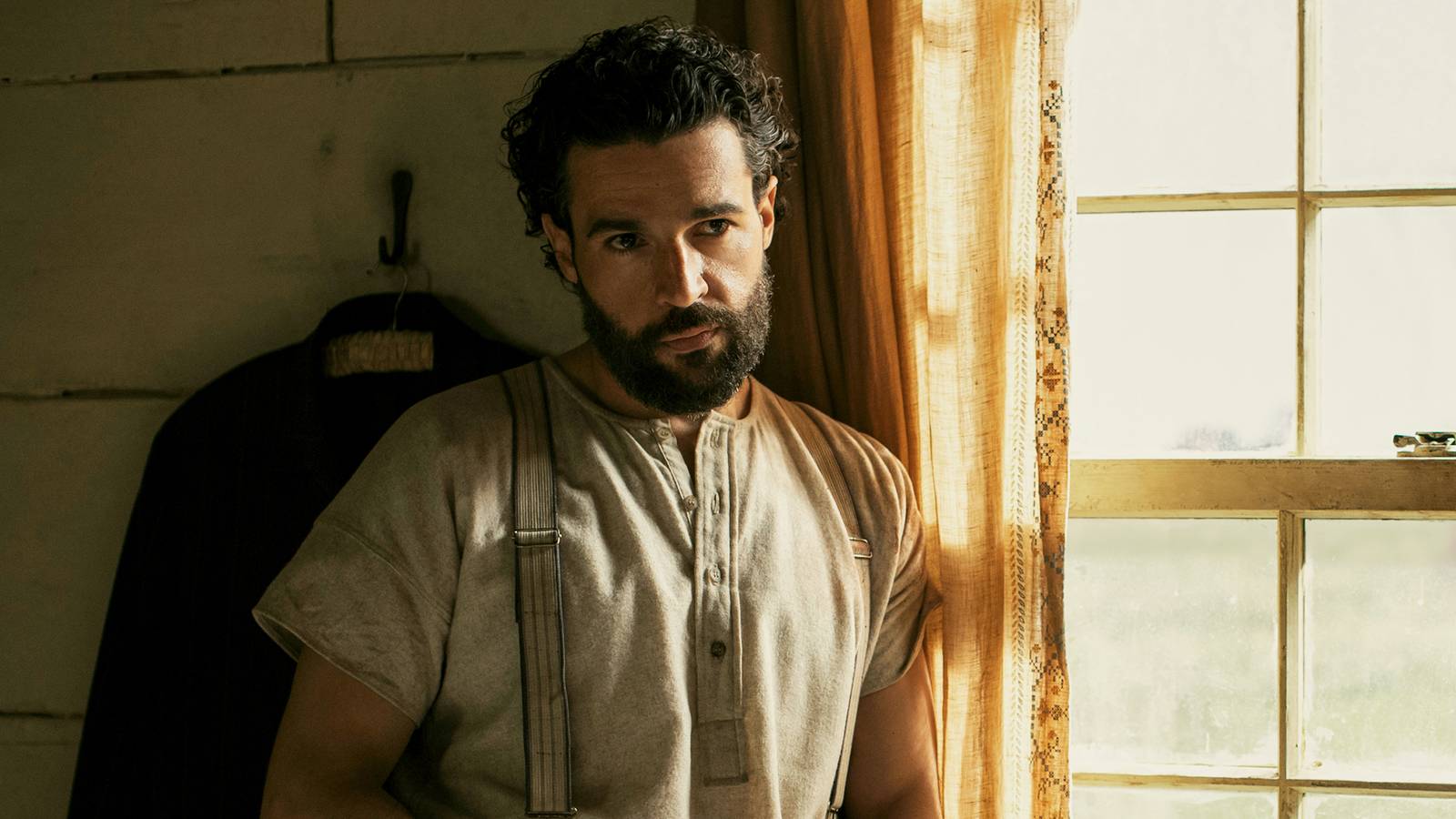
Image via Netflix Published Oct 13, 2026, 8:11 PM EDT At any given moment, Scott Simone has at least three books jockeying for his attention. He’ll never turn down a campus novel with a literary bent, nor will he hesitate to add yet another mystery to his Leaning Tower of Pisa-inspired to-be-read pile — which is built upon the bedrocks of too many short story collections, how-are-these-real true crime books, and classics waiting to be cracked open again. Topics that have him ripping through pages the fastest include closed-circle murders, unhappy professors, life-questioning philosophical deep dives, so long as they feature sharp sentences, a dark sense of humor, and at least a little malice. He’s spent so much time in book shops over the years he is, to his wife’s chagrin, continuing to build a library that doesn’t quite respect the dimensions of the apartment meant to contain it. Sign in to your Collider account John Steinbeck is a literary rarity. He's a writer who's been lodged in readers' minds for nearly a century — but whose reputation has transformed repeatedly since he debuted in the 1920s. He was a commercial and critical success during his lifetime; he saw The Grapes of Wrath become the bestselling novel of 1939, and the political outrage and book burnings it sparked. The Pulitzer and Nobel Prize chiseled his name into the literary canon. Then he became homework, Of Mice and Men assigned to every schoolchild, and the fun and magic of reading him dissipated with each book report. He then broke from the encasement of boredom when East of Eden took over BookTok, where readers continue to expound upon the novel's characters and philosophies. And that was before Netflix released its new adaptation starring Florence Pugh. In short: Steinbeck has been in (and seems poised to stick in) the literary id in a way few other writers have matched. And it's easy to see why: His novels simultaneously ooze ferocity and hilarity, sentimentality and eagerness, sometimes on the very same page. His best novels show how he was uniquely able to harness the inequalities, ambitions, and contradictions he witnessed in daily life to power a light that has shone upon the same issues affecting every subsequent generation. 10 'Cup of Gold' (1929) Image via Penguin Classics Cup of Gold is by no means the deepest of Steinbeck's novels. But it is a window through which the reader is able to watch Steinbeck struggle to become Steinbeck. The ingredients — from the corrupting nature of ambition to the disappointment that follows getting exactly what you want — are there. But he doesn't yet know how to cook with them. The ideas and the everyday characters that come to define the taste of his later works are buried beneath too much mythology, symbolism, and philosophical declarations. The story couldn't be much further removed from the California landscapes with which he’d one day become synonymous. Steinbeck follows Henry Morgan, a Welsh teenager-turned-pirate seduced by tales of adventure. The more Morgan conquers, though, the less satisfying his victories become. It's a premise that foreshadows Steinbeck's later infatuation with greed and disillusionment. The problem is that he spends so much time explaining the meaning behind Morgan's ambitions that he rarely allows the reader to discover it. So while Cup of Gold contains plenty of the ideas that would make Steinbeck great, the storytelling that would bring them to life was still far off. 9 'Sweet Thursday' (1954) Image via Penguin Classics Sweet Thursday is the weakest of Steinbeck's Monterey novels. It’s Steinbeck’s attempt at recreating the magic he found with Cannery Row that became evidence that he never quite knew how he pulled off the trick in the first place. Whereas Cannery Row meandered from character to character, their insignificant encounters slowly building into something much grander, Sweet Thursday takes those same eccentrics and forces them into a more conventional story. The canneries have closed, the war has ended, and Doc returns to Monterey lonely and adrift. His friends conspire to solve both by pairing him with Suzy, a newcomer to the neighborhood. There's plenty of the usual Steinbeck charm in the resulting matchmaking schemes. But the spontaneity that made the early novels feel true-to-life is gone. The characters who once existed independently of any plot, instead, are the vehicles pushing one forward; the sadness lingering beneath Cannery Row's humor was replaced by something closer to a romantic comedy. Steinbeck has all the ingredients for something richer: A neighborhood hollowed out by war and economic change, its residents growing older and struggling to find their place in it. Instead, he gives them a problem to solve. 8 'To a God Unknown' (1933) Image via Penguin Classics To a God Unknown is Steinbeck at his strangest, a novel that pushes the ordinary natural world a bit too far into the supernatural realm. There's a dead man's spirit inhabiting a tree; a mysterious clearing in the forest becomes a site of worship. Rainfall becomes divine approval and drought spiritual punishment; Steinbeck writes of the changing of seasons in a way that only his protagonist seems to be able to decipher. Steinbeck intertwines pagan mythology and biblical imagery throughout the novel. It's his attempt to show humanity's need to find meaning in nature despite the fact the natural world never provides evidence that meaning exists in the first place. But the novel — in which almost every object holds some greater significance — never quite holds up, that tension buckling under the extraordinary weight of all the symbolism. Steinbeck reaches for the philosophical grandeur he'd eventually grasp with East of Eden, but here the mythology puts it just outside his fingertips. 7 'The Wayward Bus' (1947) Image via Penguin Classics The Wayward Bus finds Steinbeck in a particularly cynical mood. America has emerged from World War II with promises of prosperity and a better future, but Steinbeck doesn't seem entirely convinced. And that cynicism travels through the novel alongside the strewn-together cast composed of a businessman, traveling salesman, and a burlesque dancer, among others. They each have their own idea of success, and a rising resentment towards those who have what they don't. The businessman, for one, flaunts his wealth despite a crumbling marriage. Then there's the dancer who, despite carrying the scarlet letter of her profession, understands her worth more than those judging her. The novel is perhaps the strongest bite of Steinbeck's career. He chews at the notion that money and social standing have much to do with decency. And there's plenty of sharp humor in watching their carefully maintained appearances fall apart. But Steinbeck takes the allegory a little too far. The characters increasingly become representations of their social classes and shortcomings, their every interaction seemingly designed to drive home another moral lesson. Steinbeck gives postwar America a good dressing-down, but occasionally gets so caught up in the sermon that the storytelling suffers. Collider Exclusive · The Sorting Hat Awaits Which Hogwarts House Are You? Gryffindor · Slytherin · Hufflepuff · Ravenclaw Four houses. One destiny. The Sorting Hat has considered thousands of students — now it's your turn. Answer honestly and discover where you truly belong at Hogwarts School of Witchcraft and Wizardry. 🦁Gryffindor 🐍Slytherin 🦡Hufflepuff 🦅Ravenclaw PLACE THE HAT → 01 What quality do you value most in yourself? Answer as honestly as you can — the Hat always knows. ACourage — I act even when I'm afraid, because what's right matters more than what's safe. BAmbition — I know what I want and I have the drive and cunning to get there. CLoyalty — I show up for the people I love, no matter what it costs me. DWisdom — I think before I act and I'm always hungry to understand more. NEXT QUESTION → 02 A friend is being treated unfairly. What do you do? How you protect others says everything about who you are. AStep in immediately and confront whoever is responsible — I won't stand by. BWork out the best strategy to address it — a smart move beats a rash one. CBe by their side, support them, and help them through it however they need. DAnalyse what's actually happening and find the most reasoned, fair solution. NEXT QUESTION → 03 What does success look like to you? What you're working toward defines who you're becoming. ABeing remembered as someone who fought for what was right, whatever the odds. BAchieving the goals I set for myself — influence, status, and earned respect. CA life where the people I care about know I was there for them, always. DMastering my field, contributing something meaningful, and never stopping learning. NEXT QUESTION → 04 What is your greatest fear? Fear is the most honest thing about a person. ABeing a coward when it mattered — looking back and knowing I did nothing. BMediocrity — fading into obscurity without making my mark on the world. CLosing the people I love or letting them down when they needed me most. DIgnorance — being wrong and not knowing it, or never reaching my potential. NEXT QUESTION → 05 The rules say no. Your gut says go. What do you do? Every institution has rules. What you do with them is a choice. ABreak the rules — if it's the right thing to do, no rule should stop me. BFind a way to get what I want without getting caught. Rules are guidelines. CProbably follow the rules — but I'd find a way to help within them if I could. DThink it through carefully — is the rule unjust, or is my gut just impatient? NEXT QUESTION → 06 What kind of friend are you? Who you are to the people you love is who you really are. AThe protector — I will go to the ends of the earth for the people I care about. BThe strategist — I give sharp advice and I'm the one who figures out how to fix things. CThe constant — I'm always there, always reliable, and I never make it about me. DThe guide — I help people think things through and see perspectives they've missed. NEXT QUESTION → 07 You look into the Mirror of Erised. What do you see? The mirror shows the deepest desire of your heart. AYourself standing victorious, having faced the greatest challenge and won. BYourself at the height of your power — respected, successful, and in control. CYourself surrounded by everyone you love, whole and happy and together. DYourself with all the answers — every book read, every mystery solved. NEXT QUESTION → 08 The Sorting Hat pauses. It whispers: "You could do well in any house. But what matters most to you — truly?" This is your tiebreaker. The Hat always listens. ABravery. I want to be the kind of person who acts when others won't. BGreatness. I want to leave my mark and be more than ordinary. CBelonging. I want to be part of something good and never let my people down. DUnderstanding. I want to know the truth of things and keep growing forever. REVEAL MY HOUSE → The Sorting Hat Speaks Your House Has Been ChosenAfter careful deliberation, the Sorting Hat has made its decision. This is the house your values, your instincts, and your particular way of being in the world were made for. 🦁 GryffindorYou have nerve. Not the reckless kind, but the deep, quiet courage that shows up even when you're terrified — especially then. Gryffindors don't act because they're fearless — they act because they understand that some things are worth being afraid for. You stand up for people when it would be easier to look away. You charge toward what's right even when the odds are terrible. Harry, Hermione, Ron — the heroes of Hogwarts's greatest chapter — all called the tower with the scarlet and gold home. And now, so do you. 🐍 SlytherinYou are driven, sharp, and utterly clear-eyed about what you want and how to get there. Slytherin has long been misunderstood — painted as the house of villains when it is, at its best, the house of those who refuse to accept limits placed on them by others. You are resourceful, strategic, and you play the long game. You know your worth. You protect your own fiercely. The dungeon common room with its view of the Black Lake is yours — and the ambitions that will take you further than anyone expects are yours too. 🦡 HufflepuffYou are the kind of person that makes the world genuinely better just by being in it. Hufflepuff is not the "safe" house or the "leftover" house — it is the house of those with the greatest heart and the most unwavering integrity. You show up. You work hard. You don't need glory or recognition — you do what's right because it's right. Your loyalty never wavers, even when tested. Nymphadora Tonks, Cedric Diggory, Newt Scamander — some of the wizarding world's finest. And now you join them. 🦅 RavenclawYour mind is your greatest gift, and you've always known it. Ravenclaws are the thinkers, the questioners, the ones who find a puzzle irresistible and a good book better company than most people. Ravenclaw is not merely about intelligence — it's about the love of learning, the pursuit of truth, and the rare courage to admit you don't know something yet. You see the world with unusual clarity and depth. Luna Lovegood, Filius Flitwick, Rowena Ravenclaw herself — all extraordinary, all original. And so are you. ↻ RETAKE THE QUIZ 6 'In Dubious Battle' (1936) Image via Penguin Classics In Dubious Battle strips the romance out of fighting for a good cause. It's a study of how doing the right things can sometimes require doing something wrong. Steinbeck focuses on a strike among California apple pickers. The workers are being exploited, sure. But the men leading them aren't above exploitation themselves. So an injury becomes an opportunity to gather support; a confrontation a chance to keep the anger boiling. Steinbeck never pretends the growers and organizers are equally guilty, though. One side has created the misery the other is trying to end. But he's more interested in what happens when the people fighting injustice start borrowing the tactics of those responsible for it. It's a fascinating contradiction, and one that makes In Dubious Battle among Steinbeck's more uncomfortable novels. But the workers themselves fade too far behind the arguments being made on their behalf. All the anger that would eventually fuel The Grapes of Wrath is here. Steinbeck just hadn't yet figured out how to make it hurt quite so much. 5 'The Winter of Our Discontent' (1961) Image via Penguin Classics The Winter of Our Discontent chips away at one of American life's oldest ideals — that honesty and hard work will eventually be rewarded — until it crumbles completely. Steinbeck's final novel centers on Ethan Allen Hawley, who's spent his life following the rules. Meanwhile, the people who don't bother playing by the rules keep getting ahead. So he starts finding loopholes in his own morality. Once he finds a way to justify one bad decision, it becomes that much easier to justify the next. It's an unusually intimate attack on American greed. Steinbeck spent much of his career examining the systems that exploited ordinary people; here, he explores how those systems teach ordinary people to exploit one another. And he makes Ethan's justifications so reasonable that it's occasionally difficult to see where ambition ends and corruption begins. Steinbeck can be heavy-handed with moralizing, particularly when Ethan spends too long examining his own motives. But that's also what makes the novel so uncomfortable: Corruption doesn't always look like someone knowingly doing something terrible. 4 'Tortilla Flat' (1935) Image via Penguin Classics Steinbeck gives the Knights of the Round Table quite the makeover in Tortilla Flat. The castles are replaced by two ramshackle houses in Monterey; the quests involve acquiring wine, stealing food, and avoiding anything resembling honest work. At the center is Danny, who inherits the houses and finds himself surrounded by friends eager to take advantage of his good fortune. Steinbeck recounts their petty schemes with the grandeur usually reserved for Arthurian legend. So much so that he turns a collection of drunks and freeloaders into unlikely heroes. It's frequently hilarious, but the longer the novel goes on, the less ridiculous the comparison seems. That's because Steinbeck finds genuine nobility beneath all the selfishness. The men lie, steal, and swindle one another, but their loyalty runs surprisingly deep. They're rich in the things that don't cost anything, even if they're perpetually scheming to acquire the things that do. Steinbeck does have a slight tendency to romanticize their poverty. But he also allows the comedy to slowly give way to tragedy. Tortilla Flat starts as a story about men who have almost nothing, then gradually reveals just how much they stand to lose. 3 'Cannery Row' (1945) Image via Penguin Classics Novels tend never to wander too far off the plot's path. Cannery Row, by contrast, is lost in the woods. The novel centers on Monterey's waterfront, a small stretch of shops, brothels, and boardinghouses. Its various characters take turns commandeering the story. It's supposedly about Mack and his friends planning a party. But Steinbeck keeps wandering off, honing in on some quirky character or happenstance. Any one of them could be cut without hurting the plot. And that's what makes Cannery Row such an extraordinary achievement. Steinbeck allows the characters to be contradictory without forcing them into some larger moral lesson. Mack and the boys are freeloaders who'll spend an entire day figuring out how to avoid an hour of work. They're also capable of a generosity that puts the neighborhood's more respectable citizens to shame. There's a sentimental streak, sure, but Steinbeck earns it. He treats the lives that society has largely written off as worthy of extraordinary attention and builds a novel in which the apparent distractions become the entire point. 2 'East of Eden' (1952) Image via Penguin Classics There's a depressing pattern running through East of Eden: Every generation seems destined to make the same mistakes as the one before it. Steinbeck cloaks the Trask family in the biblical story of Cain and Abel. The names change, but the jealousy, resentment, and desperate need for a father's approval keep coming back. It's a sprawling family saga, one in which the sins of the fathers have a nasty habit of finding their way into the lives of their children. But Steinbeck spends hundreds of pages establishing that pattern only to suggest there's a way out of it. It gives the characters a choice: They can repeat the mistakes of their parents, but they don't have to. Steinbeck isn't exactly subtle about any of this. Cathy Ames is so evil she sometimes seems more like the devil than an actual person. And the biblical parallels are impossible to miss, but unlike his earlier attempts to marry mythology and human nature, the philosophy never quite buries the people. 1 'The Grapes of Wrath' (1939) Image via Penguin Classics The Grapes of Wrath is Steinbeck at his angriest, and he gives the reader plenty of reasons to share in it. There are farmers being thrown off land their families have worked on for generations for no other reason than the bank is simply the bank. There are oranges drenched in kerosene while people nearby go hungry. Then there are the Joads. The family uproots from Oklahoma to plant themselves in California, all in the hopes of tapping into more work. But they discover they're in a forest, surrounded by thousands of other families competing for the same promised resources. But what makes The Grapes of Wrath so extraordinary is how Steinbeck manages to tell two stories at once. He keeps leaving the Joads to show the larger forces bearing down on them, then returns to the family just as those forces do their damage. The chapters about banks, crops, and wages could've made the whole thing unbearably preachy. Instead, each return to Ma Joad's attempts to hold her family together makes those arguments harder to dismiss. It's the balance Steinbeck had been working toward for years — writing furiously about the country without forgetting the people being crushed beneath it. And it's why The Grapes of Wrath remains his greatest achievement.
Every John Steinbeck Book, Ranked
Full Article
Original Source
Read the full article at Collider →KhanList aggregates and links to publicly available news content. We do not host full articles from third-party sources. Always verify important information with original sources.