
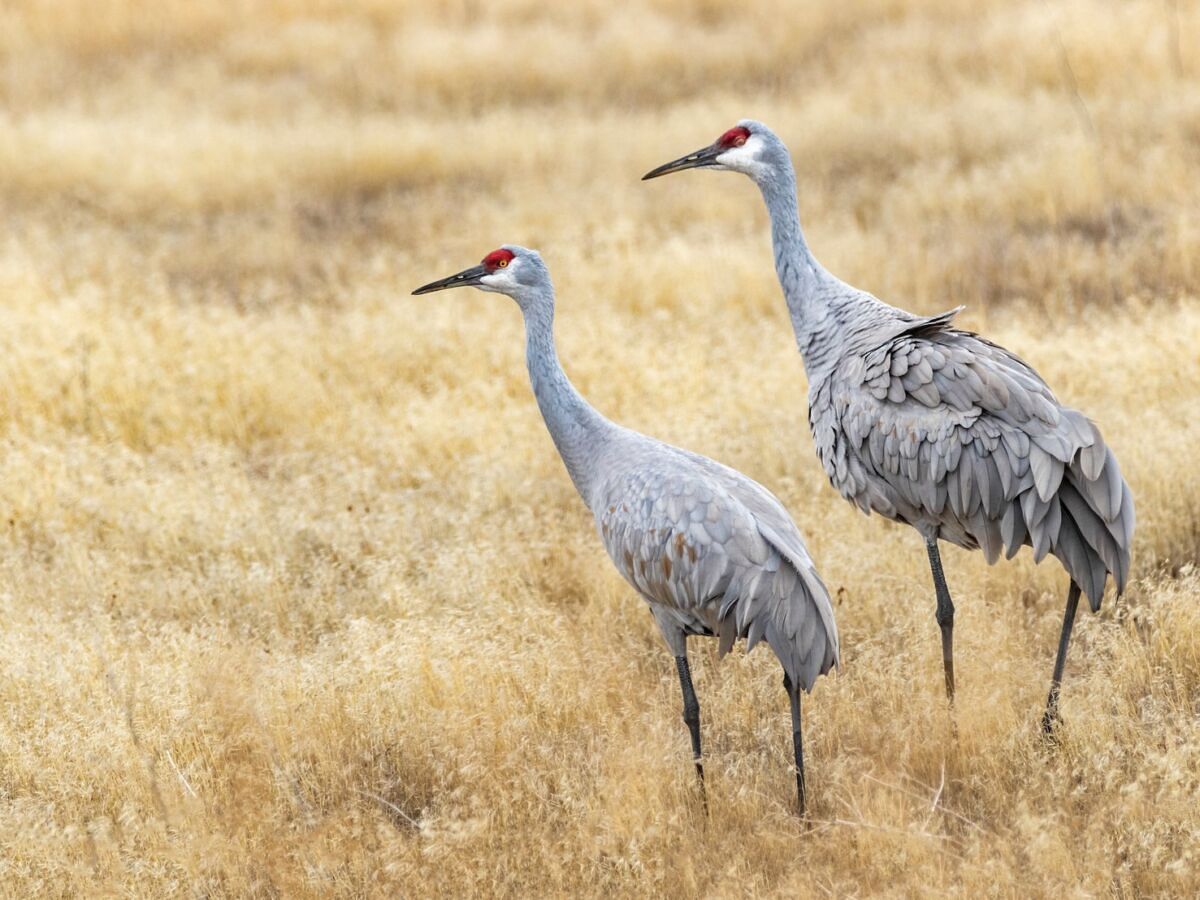
Sandhill cranes stand roughly four feet tall, with long necks, enormous wings, and a patch of red skin on their heads that makes it easy to spot them from far away (if their size didn’t give them away). But you may hear them before you see them, as they’re loud. Like prehistoric creatures, their windpipes are oversized, making them able to produce a sound that can resonate for miles. They also have a very distinctive mating dance, and can often be seen “dancing” — bowing, spreading their wings, and jumping into the air. Around Lodi in late fall, cranes can arrive around dusk in groups ranging from hundreds to several thousand. The Woodbridge Ecological Reserve is a popular place to watch them, with one US Geological Survey study reporting up to 27,000 cranes at once in the broader Sacramento area in the peak of winter. During the festival, sunset “Crane Fly-In” tours on the Staten Island reserve and the “Cranes and Agriculture” walk along the normally closed Mokelumne River levee allow participants to travel into crane habitat with naturalists and wildlife experts, accessing areas otherwise off-limits to the public. The full festival tour and event schedule is usually released in early September, and in 2026, tickets are set to go on sale on September 8. Excursions change from year to year, but they go far beyond your standard birdwatching walk. Recent offerings have included sunset tours, early morning photo tours to capture birds in fog and low light, wetland adventures, and guided walks through bird habitats. There are even wildlife cruises on Lodi Lake. The actual celebration part in downtown is a bit of a wildlife conference and bird-specific art fair. Activities throughout the weekend usually include biologist talks, live animal displays, an art and photography show, plenty of family programming, and an exhibit hall filled with artists, conservation groups, and vendors. There are even bird-drawing classes, wood carving clinics, and bird origami tutorials. Visitors planning to attend should book their spots on guided outings and clinics in advance as they do tend to fill; many are inexpensive or, in some cases, free. However, the festival isn’t the only opportunity to spot the birds. They begin arriving in this part of California in late September and stay through winter. The California Department of Fish and Wildlife runs its own guided public tours at Woodbridge Ecological Reserve from October through February, with registration beginning in September. You can also visit the South Site of the reserve independently, though the North Site and viewing shelter are accessible only on guided tours. Bringing your own binoculars is a good idea. How to get to Lodi Lodi is also an easy weekend trip from much of Northern California. It’s about 40 miles south of Sacramento and roughly 90 miles east of the San Francisco Bay Area, with Sacramento International Airport about a 45-minute drive away. Amtrak’s “Gold Runner” trains also stop in the middle of downtown Lodi, though having a car is useful for reaching wineries and wildlife areas outside town. There’s plenty to fill the hours between crane outings. The Lodi wine region has more than 85 wineries and is particularly known for zinfandel. If you don’t want to venture out to wineries, downtown Lodi is walkable with tasting rooms, restaurants, boutiques, and coffee shops. For something outdoors that doesn’t involve cranes or wine, Lodi Lake has nature trails and kayak access on the Mokelumne River, making it easy to turn the festival into a full wine-and-wildlife weekend rather than just a birding trip. More like this
Every Fall, Thousands of Four-Foot Cranes Take Over This California Wine Town
Full Article
Original Source
Read the full article at Matadornetwork →KhanList aggregates and links to publicly available news content. We do not host full articles from third-party sources. Always verify important information with original sources.