
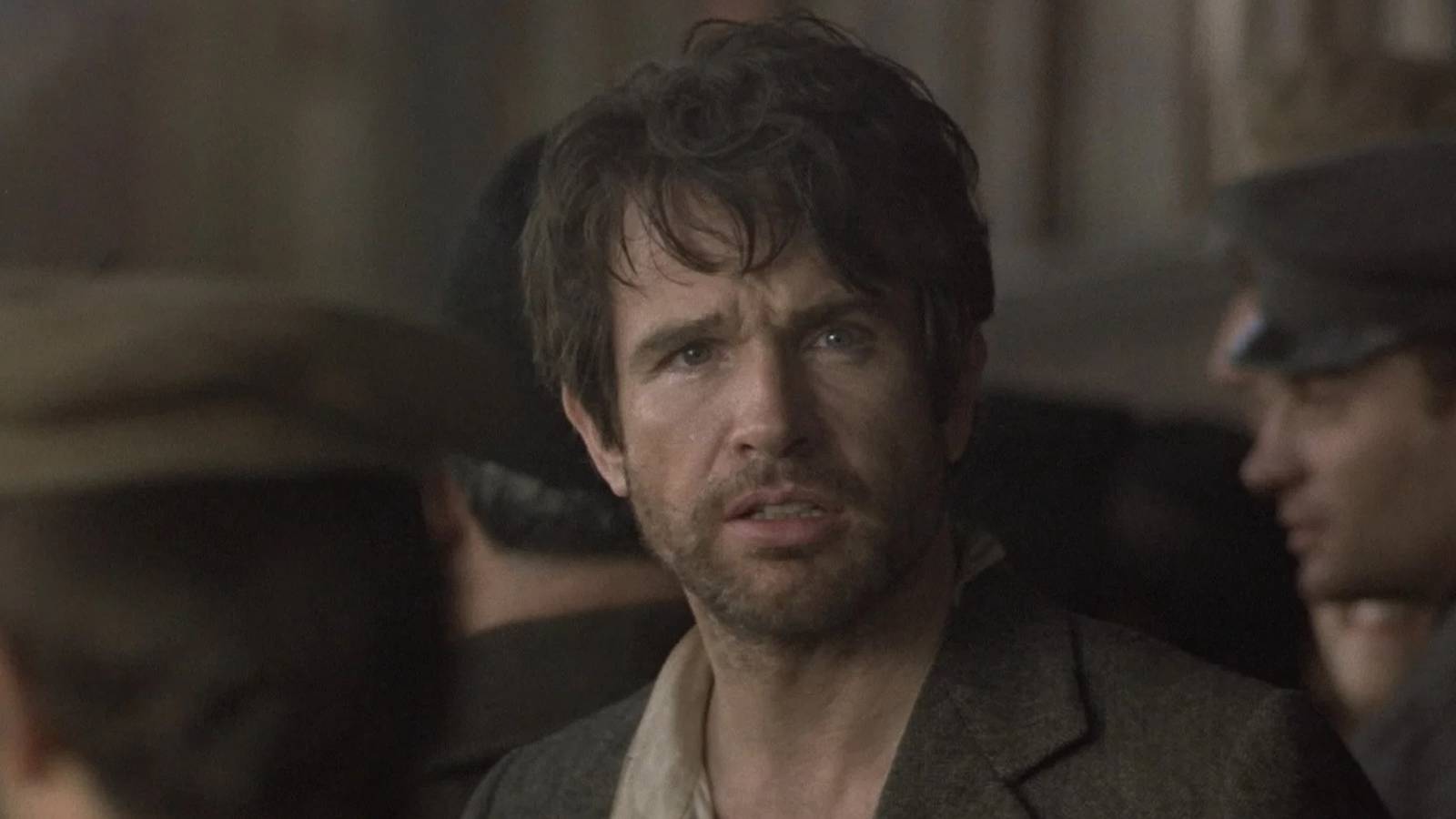
Image via Paramount Pictures Published Aug 13, 2026, 12:21 PM EDT Diego Pineda has been a devout storyteller his whole life. He has self-published a fantasy novel and a book of short stories, and is actively working on publishing his second novel. A lifelong fan of watching movies and talking about them endlessly, he writes reviews and analyses on his Instagram page dedicated to cinema, and occasionally on his blog. His favorite filmmakers are Andrei Tarkovsky and Charlie Chaplin. He loves modern Mexican cinema and thinks it's tragically underappreciated. Other interests of Diego's include reading, gaming, roller coasters, writing reviews on his Letterboxd account (username: DPP_reviews), and going down rabbit holes of whatever topic he's interested in at any given point. Sign in to your Collider account The New Hollywood film movement was already coming to a halt by the time the 1980s rolled in; and by the earlier part of the decade, those days of the American film industry were left in the past. As such, this was a decade that was altogether transformative for cinema—even outside of Hollywood. This resulted in some absolutely exceptional movies, a precious few of which led their directors to the honor most highly coveted by film directors: a Best Directing Academy Award victory. Throughout the '80s, there was a wide variety of Best Director winners. Some inspired choices, others not so much; some awards given for absolutely masterful and legendary films, others for movies that have failed to leave much of a mark as the decades have passed. In any case, though the '80s didn't see a single Best Director winner that was downright bad, some were undoubtedly better than others. 10 Sydney Pollack — 'Out of Africa' (1985) Image via Universal Pictures Loosely based on the autobiographical book by Danish author Karen Blixen, Out of Africa is a nearly three-hour-long epic directed by Sydney Pollack. The director was one of the most prominent faces of '70s Hollywood cinema, helping re-define the thriller genre with films of the caliber of Three Days of the Condor. It was this romantic drama, however, that earned him his first and only Best Picture and Best Director victories. Alas, the awfully dull and overlong Out of Africa is generally regarded as one of the worst Best Picture winners of all time, and that's in no small due to Pollack's direction. He plays it far too safe with Out of Africa, directing it with the flattest energy and least powerfully melodramatic style imaginable. Subtle in every wrong way possible, his direction was arguably not nearly as strong as that of other nominees that year, most prominently Witness' Peter Weir and Ran's Akira Kurosawa. 9 James L. Brooks — 'Terms of Endearment' (1983) Image via Paramount Pictures James L. Brooks was a monumental figure mostly in the history of American television—sitcoms in particular—, but he was also a perfectly capable movie director. Case in point: Terms of Endearment, based on Larry McMurtry's novel, one of three Jack Nicholson movies that won Best Picture. It's one of the greatest tragicomedies of the '80s, a masterful melodrama infused with an irresistible sense of humor. Brooks' directing work here is far superior to Sydney Pollack's in Out of Africa, but Terms of Endearment is nonetheless too understated of a film for his direction to stand out above the rest of the '80s' winners. You get a lot of Brooks' TV sitcom and melodrama sensibilities in his direction here, and though that results in an undeniably compelling film, it's not exactly the best direction of the decade. 8 Barry Levinson — 'Rain Man' (1988) Image via MGM/UA Communications Co. Though Rain Man is one of the quintessential American classics of the 1980s, it's not nearly as flashy as other similar dramas from its time. Even still, this road trip dramedy has so much vibrant personality that it made its way to a whopping eight Academy Award nominations, of which it won four. Unfortunately, though it's one of the movies Tom Cruise should've won an Oscar for, that wasn't one of its victories. Even still, Best Picture for Mark Johnson and Best Director for Barry Levinson aren't all too shabby. The strength of Levinson's direction here is that it's perfectly quiet. The director took over the project with just two weeks' notice, stripping the script from the melodramatic clichés that he was handed and instead choosing to approach Rain Man as an emotionally and psychologically realistic character study. It's effective direction, but it's typically flashier pieces of work that end up being more memorable Oscar winners. 7 Robert Redford — 'Ordinary People' (1980) Image via Paramount Pictures Needless to say, Robert Redford is best known as an actor—and one of the most important and groundbreaking of his generation, at that. But like the immensely ambitious artist that he was, he craved the authorship of the director's chair. So, he specifically sought out Judith Guest's 1976 novel Ordinary People to develop it into his feature film directorial debut. The result is one of Pope Leo XIV's favorite movies of all time. It's a remarkably bold and mature debut. Ordinary People is an inherently small project, one wholly reliant on conversations, silent moments, exchanged glances, and pure emotions, a complicated concept that Redford handles flawlessly. It's yet another instance of direction that isn't quite flashy enough to compare to some of the '80s' far bigger Best Director-winning films, but it's udeniably strong nonetheless. 6 Warren Beatty — 'Reds' (1981) Image via Paramount Pictures The nearly 200-minute-long historical epic Reds is one of those forgotten epic movies that have aged like fine wine, a biopic about John Reed, the journalist who chronicled the October Revolution in Russia. It was directed, written, and produced by Warren Beatty, who also stars as Reed. If there ever was a multi-hyphenate perfectly capable of taking on so many roles in such an ambitious movie, it was Beatty. In every department, Beatty does an absolutely phenomenal job. Reds is as great as the sum of its equally incredible parts: the exceptional cast, the meticulous historical research, the enormous production, and the nearly-flawless script. Through it all, Beatty remains perfectly in control, finding ways to never let the film's ridiculous ambition overpower its story and themes. Collider Exclusive · Oscar Best Picture Quiz Which Oscar Best PictureIs Your Perfect Movie? Parasite · Everything Everywhere · Oppenheimer · Birdman · No Country Five Oscar Best Picture winners. Five completely different visions of what cinema can be — and what it can do to you. One of them is the film that was made for the way your mind works. Ten questions will figure out which one. 🪜Parasite 🌀Everything Everywhere ☢️Oppenheimer 🐦Birdman 🪙No Country for Old Men FIND YOUR FILM → 01 What kind of film experience do you actually want? The best movies don't just entertain — they leave something behind. ASomething that pulls the rug out — that makes me think I'm watching one kind of film and then reveals I'm watching another entirely. BSomething overwhelming — funny, sad, absurd, and genuinely moving, all at once. CSomething grand and weighty — a film that makes me feel the full scale of what I'm watching. DSomething formally daring — a film that pushes what cinema can even do. ESomething lean and relentless — pure tension with no wasted frame. NEXT QUESTION → 02 Which idea grabs you most in a film? Great films are driven by a central obsession. What's yours? AClass, inequality, and what people are willing to do when desperation meets opportunity. BIdentity, family, and the chaos of trying to hold your life together when everything is falling apart. CGenius, moral responsibility, and the catastrophic weight of a decision you can never take back. DEgo, legacy, and the terror of becoming irrelevant while you're still alive to watch it happen. EEvil, chance, and whether moral order actually exists or if we just tell ourselves it does. NEXT QUESTION → 03 How do you like your story told? Form is content. The way a story is shaped changes what it means. AGenre-twisting — I want it to start in one lane and migrate into something completely different. BMaximalist and genre-blending — comedy, action, drama, sci-fi, all in one ride. CEpic and non-linear — cutting between timelines, building a mosaic of cause and consequence. DA single unbroken flow — I want to feel like I'm living it in real time, no cuts to safety. ESpare and precise — every scene doing exactly what it needs to do and nothing more. NEXT QUESTION → 04 What makes a truly great antagonist? The opposition defines the protagonist. What kind of opposition fascinates you? AA system — invisible, structural, and almost impossible to fight because it has no single face. BThe self — the ways we sabotage, abandon, and fail the people we love most. CHistory — the unstoppable momentum of events that no single person can stop or redirect. DThe industry — the machinery of culture that chews up talent and spits out irrelevance. EPure, implacable evil — a force so certain of itself it becomes almost philosophical. NEXT QUESTION → 05 What do you want from a film's ending? The final note is the one that lingers. What do you want it to sound like? AShock and inevitability — a conclusion that recontextualises everything that came before it. BEarned emotion — I want to cry, laugh, and feel genuinely hopeful, even if the world is a mess. CDevastation and grandeur — an ending that makes me sit in silence for a few minutes after. DAmbiguity — something that leaves enough open that I'm still thinking about it days later. EBleakness — an honest refusal to pretend the world is tidier than it actually is. NEXT QUESTION → 06 Which setting pulls you in most? Where a film takes place shapes everything — mood, stakes, what's even possible. AA gleaming modern city with a hidden underside — beauty masking rot, wealth masking desperation. BA collapsing suburban life that opens onto something infinite — the multiverse of a single ordinary person. CThe corridors of power and science at a world-historical turning point — where decisions echo for decades. DThe grimy, alive chaos of New York and Hollywood — fame as both destination and trap. EVast, indifferent landscape — desert and highway where violence arrives without warning or reason. NEXT QUESTION → 07 What cinematic craft impresses you most? Every great film has a signature — a technical or artistic element that makes it unmistakable. AProduction design and mise-en-scène — every frame composed to carry meaning beneath the surface. BEditing and tonal control — the ability to move between registers without losing the audience. CScore and sound design — music that becomes inseparable from the dread and awe of what you're watching. DCinematography as performance — the camera not recording events but participating in them. ESilence and restraint — what's left unsaid and unshown doing more work than any dialogue could. NEXT QUESTION → 08 What kind of main character do you root for? The protagonist is the lens. Who you choose to follow says something about you. ASomeone smart and resourceful who makes increasingly dangerous decisions under pressure. BSomeone overwhelmed and ordinary who turns out to be capable of something extraordinary. CA brilliant, tortured figure whose gifts and flaws are inseparable from each other. DA self-destructive artist whose ego is both their superpower and their undoing. EA quiet, principled person trying to make sense of a world that has stopped making sense. NEXT QUESTION → 09 How do you feel about a film that takes its time? Pace is a choice. Some films sprint; others let tension accumulate slowly, deliberately. AI love a slow build when I know the payoff is going to be seismic — patience for a devastating reveal. BGive me relentless momentum — I want to feel breathless and emotionally spent by the end. CEpic runtime doesn't scare me — if the material demands three hours, give me three hours. DI want it to feel propulsive even when nothing is technically happening — restless energy throughout. EDeliberate and unhurried — I want dread to accumulate in the spaces between the action. NEXT QUESTION → 10 What do you want to feel walking out of the cinema? The best films leave a mark. What kind of mark do you want? AUnsettled — like I've just seen something I can't fully explain but can't stop thinking about. BMoved and energised — like the film reminded me what actually matters and gave me something to hold onto. CHumbled — like I've been in the presence of something genuinely important and overwhelming. DExhilarated — like I've just seen cinema doing something it's never quite done before. EHaunted — like a cold, quiet dread that stays with me for days. REVEAL MY FILM → The Academy Has Decided Your Perfect Film Is…Your answers have pointed to one Oscar Best Picture winner above all others. This is the film that was made for the way your mind works. ParasiteYou are drawn to films that operate on multiple levels simultaneously — that begin in one genre and quietly, brilliantly migrate into another. Bong Joon-ho's Parasite is a film about class, desire, and the architecture of inequality that manages to be darkly funny, deeply suspenseful, and genuinely shocking across a single extraordinary running time. Your instinct is for cinema that hides its true intentions until the moment it's ready to reveal them. Parasite is exactly that — a film that rewards close attention and punishes assumptions, right up to its devastating final image. Everything Everywhere All at OnceYou want it all — and this film gives you all of it. The Daniels' Everything Everywhere All at Once is one of the most maximalist films ever made: action comedy, multiverse sci-fi, family drama, existential crisis, and a genuinely earned emotional core that sneaks up on you amid the chaos. You are someone who responds to ambition, who doesn't want cinema to choose between being entertaining and being meaningful. This film refuses that choice entirely. It is overwhelming by design, and its overwhelming nature is precisely the point — because the feeling of being crushed by infinite possibility is exactly what it's about. OppenheimerYou are drawn to cinema on a grand scale — films that understand history not as a backdrop but as a force, and that place their characters inside that force and watch what happens. Christopher Nolan's Oppenheimer is a film about the terrifying gap between what we can do and what we should do, told with the full weight of one of the most consequential moments in human history behind it. You want your films to feel important without feeling self-important — to earn their ambition through sheer craft and the gravity of their subject. Oppenheimer does exactly that. It is enormous, complicated, and refuses easy comfort. BirdmanYou are drawn to films that foreground their own construction — that make the how of the filmmaking part of the what it's about. Alejandro González Iñárritu's Birdman, shot to appear as a single continuous take, is cinema examining itself through the cracked mirror of a fading actor's ego. You respond to formal daring, to the feeling that a film is doing something that probably shouldn't be possible. Michael Keaton's performance and Emmanuel Lubezki's restless camera create something genuinely unlike anything else — a film that is simultaneously about creativity, relevance, self-destruction, and the impossibility of ever truly knowing if your work means anything at all. No Country for Old MenYou are drawn to cinema that trusts silence, that refuses to explain itself, and that treats dread as a form of meaning. The Coen Brothers' No Country for Old Men is a film about the arrival of a new kind of evil — implacable, arbitrary, and utterly indifferent to the moral frameworks we use to make sense of the world. It is one of the most formally controlled films ever made, and its controlled restraint is what makes it so terrifying. You want your films to haunt you, not comfort you. You are not interested in resolution if resolution would be dishonest. No Country for Old Men is honest in a way that most cinema never dares to be. ↻ RETAKE THE QUIZ 5 Richard Attenborough — 'Gandhi' (1982) Image via Columbia Pictures Gandhi isn't a perfect film, but it sure is one of the most impressively gargantuan Best Picture Oscar winners in history. It's one of those biopics that are still a must-watch today, because even though it's a bit too long and a bit too impersonal, it's also a historical epic of a size and caliber that's unlike anything English-language cinema is producing nowadays. It's so undoubtedly massive and impressive a display that it's worthy of nothing if not the utmost admiration. Richard Attenborough's direction is a bit too straightforward in both its emotional potency and visual grammar for it to stand out as one of the '80s' best directing efforts, but it's so undoubtedly massive and impressive a display that it's worthy of nothing if not the utmost admiration. The sheer scale of the film and many of its bigger scenes is extraordinary, but it's Attenborough's wise decision to let Ben Kingsley's Oscar-winning performance be the core of the movie at all times that stands out as his strongest directing decision. 4 Oliver Stone — 'Born on the Fourth of July' (1989) Image via Universal Pictures Oliver Stone was one of the most powerful and important voices of 1980s Hollywood, arguably one of the most sharply political mainstream directors in town throughout the decade. There can be much debate on what his most political movie is, but there's one answer that's bound to come up more than most, and that's Born on the Fourth of July. One of the best Vietnam War epics of all time, Born on the Fourth of July is yet another instance of an Oscar-worthy Tom Cruise performance, but Stone's performance is arguably the real star of the show here. Powerfully surreal and at times even hallucinatory or nightmarish, his work is the perfect example of an Oscar-winning directing effort that's showy enough to be unforgettable but not so much that it overpowers the story. 3 Bernardo Bertolucci — 'The Last Emperor' (1987) Image via TAO Film Bernardo Bertolucci was a true giant of international cinema, effectively bridging the gap between the arthouse style of European filmmaking and the lavish, high-budget style of Hollywood cinema. Case in point: the international production The Last Emperor, an epic biopic retelling the life of Puyi, the titular last emperor of China. It's one of the most perfectly-directed epic movies ever made, a masterpiece that won every single last one of the nine Academy Awards it received a nomination for, including Best Director for Bertolucci. The film is visually and technically astonishing, but Bertolucci's true achievement is how he leverages those production values purely and fully to elevate the story's psychological exploration of its characters. 2 Oliver Stone — 'Platoon' (1986) Image via Orion Pictures Oliver Stone belongs to many elite groups of master filmmakers, one of them being the group of directors who have won two Best Director Oscars for movies made in the same decade. Three years before Born on the Fourth of July, Stone directed what many would still confidently call his magnum opus: Platoon, one of those R-rated war movies that can be called masterpieces. It's one of the greatest ensemble films of the '80s, and that's largely—if not perhaps even mostly—thanks to Stone's exceptional direction. Elevated by the powerfully surreal visual language that characterized Stone's oeuvre throughout the '80s, Platoon makes the audience feel every last bit of the terror, anxiety, grit, and violence of the Vietnam War. Technically perfect and narratively hard-hitting, Platoon is the masterpiece that it is largely because it's so impeccably directed. 1 Miloš Forman — 'Amadeus' (1984) Image via Orion Pictures Does a biopic need to be strictly faithful to the facts in order to be great? There's a very strong argument to be made that it doesn't, because there are plenty of historically inaccurate movies that are still masterpieces, including Miloš Forman's masterful Amadeus. This biopic about Wolfgang Amadeus Mozart may somewhat exaggerate the extent of his rivalry with Antonio Salieri, but the result is one of the most powerful dramas about artistic obsession ever made. Bold, ambitious, and flawless in how it balances its epic scale with its intimate character-driven scope, Amadeus may well be one of the best movies of the '80s as a whole. He pulls extraordinary performances out of F. Murray Abraham and Tom Hulce while keeping the focus on the story's balance between tragedy, emotion, and even razor-sharp moments of humor. It's a monumental achievement unlike anything else any other Best Director Oscar winner of the '80s achieved throughout the decade. Amadeus Release Date September 19, 1984 Runtime 160 minutes Cast Tom Hulce Wolfgang Amadeus Mozart
Every Best Director Oscar Winner of the 1980s, Ranked
Full Article
Original Source
Read the full article at Collider →KhanList aggregates and links to publicly available news content. We do not host full articles from third-party sources. Always verify important information with original sources.