
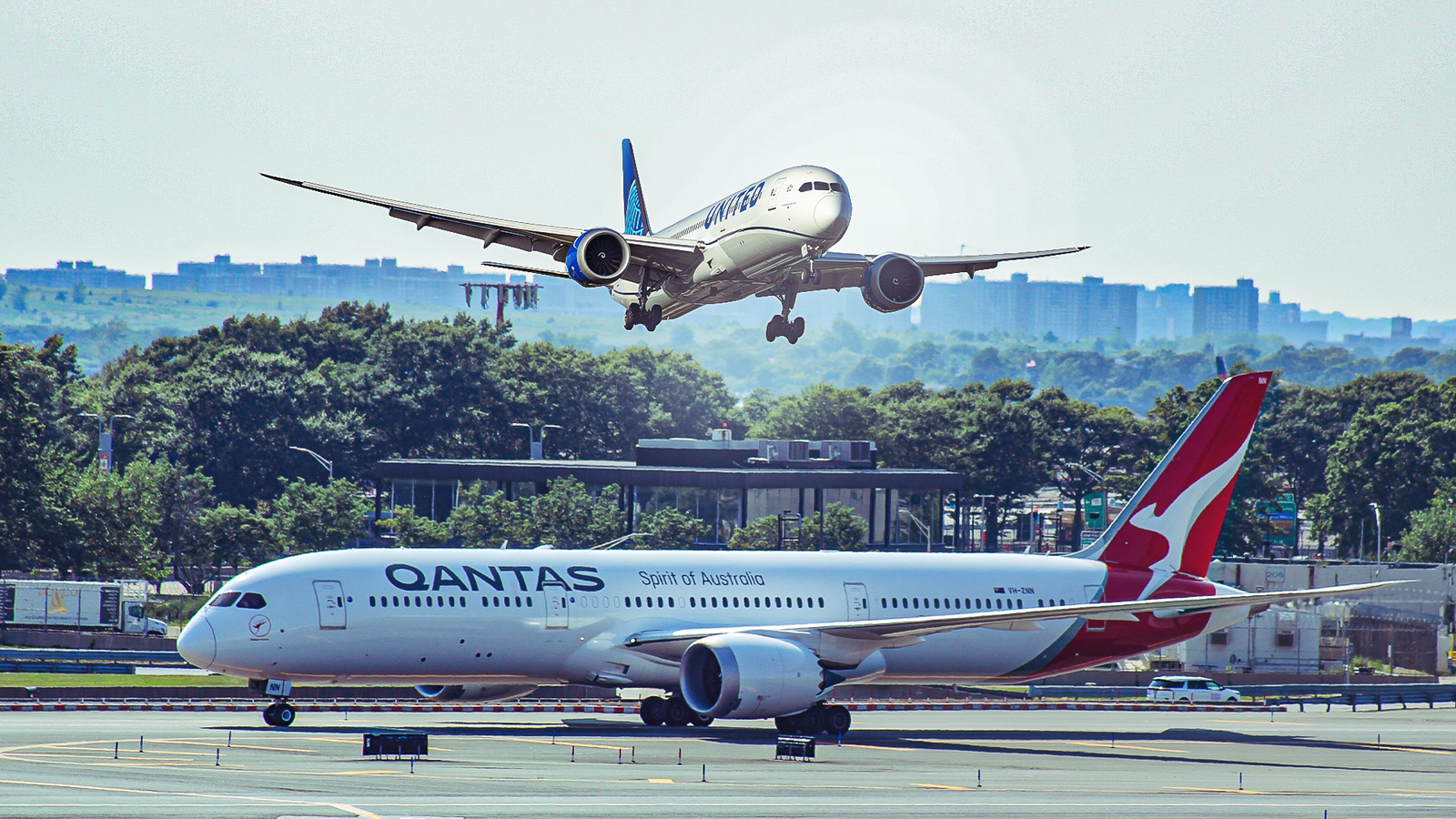
Credit: The Global Guy & Kevin Hackert | Shutterstock, Simple Flying Published Nov 6, 2026, 4:00 AM EST Journalist - Steven has a varied background in communications, and it was this passion for writing combined with his in-depth knowledge of the aviation industry that led him to Simple Flying. A keen linguist, he also has experience in translation and interpreting. Based in Palma, Spain Sign in to your Simple Flying account Nonstop travel between the US and Australia remains one of the most important long-haul markets across the Pacific, connecting major US gateways with Australia's largest cities and several destinations beyond its traditional east coast hubs. In 2026, airlines are operating an extensive selection of services, with the US gateways of Los Angeles International Airport (LAX), San Francisco International Airport (SFO), and Dallas/Fort Worth International Airport (DFW) providing the majority of connections. The market features a combination of established nonstop routes, competitive services, and newer connections designed to give travelers greater flexibility. There are four main airlines providing nonstop links between the two countries, with a total of 8,820 flights scheduled between them in 2026, according to the latest data from ch-aviation. This equates to a total of 2,610,162 seats, and more than 18 billion available seat miles across the various airline and route combinations. These totals illustrate the scale of the market, while individual routes reveal how airlines distribute capacity according to demand, network strategy, and the importance of their respective US gateways. American Airlines Credit: Austin Deppe | Shutterstock American Airlines serves Australia through a focused network linking Los Angeles International Airport and Dallas/Fort Worth International with Sydney Airport (SYD) and Brisbane Airport (BNE). The airline's scheduled services for 2026 include 365 flights between Los Angeles and Sydney, and 135 between Dallas/Fort Worth and Brisbane. The oneworld carrier also schedules 13 flights between Los Angeles and Brisbane, giving it a presence across several important transpacific city pairs rather than relying on a single gateway. Sydney Kingsford Smith Airport (SYD) is the most prominent Australian destination in American Airlines' published network, with the Los Angeles service offering a major link between Southern California and Australia's largest international aviation market. The Dallas/Fort Worth to Brisbane route provides another important option, particularly for travelers originating in the central and eastern US who can connect through American Airlines' major Texas hub. These services complement the airline's broader domestic network, allowing passengers from numerous US cities to travel to Australia without necessarily beginning their journeys on the West Coast. The airline's schedule also demonstrates the different scales of its individual routes, with Los Angeles to Sydney recording 110,960 seats and Dallas/Fort Worth to Brisbane offering 35,031. Its Los Angeles to Brisbane operation is substantially smaller, with 3,705 seats. American Airlines' network between the US and Australia in 2026 is summarized in the table below: Departure Airport Arrival Airport Number Of Flights Distance Los Angeles International Airport (LAX) Sydney Airport (SYD) 365 7,487 miles / 12,049 km Los Angeles International Airport (LAX) Brisbane Airport (BNE) 13 7,161 miles / 11,524 km Dallas/Fort Worth International Airport (DFW) Brisbane Airport (BNE) 135 8,299 miles / 13,355 km Delta Air Lines Credit: Karolis Kavolelis l Shutterstock Delta Air Lines operates an extensive selection of services connecting Los Angeles with Sydney, Brisbane, and Melbourne. The schedule shows 418 flights between Los Angeles and Sydney and 182 between Los Angeles and Melbourne. The SkyTeam carrier's 65 flights between Los Angeles and Brisbane add another option for passengers traveling between the US and Australia's east coast. Los Angeles to Sydney is Delta Air Lines' largest Australian route, accounting for 114,981 seats and 860,862,747 available seat miles. The Los Angeles to Melbourne service adds 50,050 seats, creating a substantial second connection to Australia. These routes give Delta Air Lines a significant presence in the transpacific market, while its Los Angeles connections allow passengers from other parts of the US to access its long-haul services. Departure Airport Arrival Airport Number Of Flights Distance Los Angeles International Airport (LAX) Brisbane Airport (BNE) 65 7,161 miles / 11,524 km Los Angeles International Airport (LAX) Sydney Airport (SYD) 418 7,487 miles / 12,049 km Los Angeles International Airport (LAX) Melbourne (MEL) 182 7,920 miles / 12,746 km Delta Air Lines' network emphasizes established destinations with strong demand for business and leisure travel. Sydney provides access to Australia's largest metropolitan area, while Melbourne attracts visitors interested in its cultural attractions, sporting events, and business districts. Although the airline's Brisbane operation is smaller than its Sydney and Melbourne services, it broadens the available choices for travelers heading to Queensland. Together, these routes demonstrate how Delta Air Lines combines its US network with demand across Australia's principal international gateways. Qantas Credit: A Periam Photography | Shutterstock Qantas has a particularly important role in the US to Australia market as Australia's flag carrier, with services connecting several American cities to Sydney, Melbourne, and Brisbane. The carrier's operation include 353 flights between Los Angeles and Sydney, 357 between Los Angeles and Melbourne, and 336 between Los Angeles and Brisbane. Qantas also operates nonstop services between San Francisco and Sydney, demonstrating that its US network extends beyond its principal Los Angeles gateway. The carrier's Los Angeles to Melbourne route offers 105,666 seats, while Los Angeles to Brisbane offers 78,740 seats. Qantas' Los Angeles to Sydney service provides 170,458 seats, making it one of the most substantial individual routes between the two countries. The airline's San Francisco to Sydney operation adds another important connection for passengers traveling from Northern California, reducing the need to travel through Los Angeles before beginning a transpacific journey. The oneworld carrier's route network is outlined in the table below: Departure Airport Arrival Airport Number Of Flights Distance Los Angeles International Airport (LAX) Brisbane Airport (BNE) 336 7,161 miles / 11,524 km San Francisco International Airport (SFO) Sydney Airport (SYD) 155 7,417 miles / 11,936 km Los Angeles International Airport (LAX) Sydney Airport (SYD) 353 7,487 miles / 12,049 km Harry Reid International Airport (LAS) Sydney Airport (SYD) 1 7,719 miles / 12,422 km Los Angeles International Airport (LAX) Melbourne Airport (MEL) 357 7,920 miles / 12,746 km Dallas/Fort Worth International Airport (DFW) Sydney Airport (SYD) 359 8,569 miles / 13,790 km Dallas/Fort Worth International Airport (DFW) Melbourne Airport (MEL) 191 8,973 miles / 14,440 km Qantas' route structure reflects the importance of connecting Australia's major population centers with the US, particularly for travelers visiting family, pursuing business opportunities, or taking extended holidays. Sydney and Melbourne serve as major international gateways, while Brisbane provides access to Queensland and its coastal tourism destinations. With multiple US departure points and several Australian arrivals, Qantas offers a network that serves both point-to-point travelers and passengers connecting through larger domestic and international networks. United Airlines Credit: Vytautas Kielaitis | Shutterstock United Airlines has a broad network of transpacific services, with routes from San Francisco, Los Angeles, and Houston to destinations ranging from Sydney and Melbourne to Brisbane and Adelaide. Its schedule includes 443 flights between San Francisco and Sydney, 362 between Los Angeles and Sydney, and 363 between San Francisco and Melbourne. San Francisco to Sydney is the largest United Airlines route to Australia, with a total of 115,855 seats and 859,296,535 available seat miles scheduled for 2026. The Los Angeles to Sydney route contributes another 93,034 seats, while San Francisco to Melbourne adds 93,291. United Airlines also serves Sydney from Houston, with 154 flights and 37,163 seats, providing a useful alternative for travelers originating in the southern US: Departure Airport Arrival Airport Number Of Flights Distance San Francisco International Airport (SFO) Brisbane Airport (BNE) 262 7,063 miles / 11,366 km San Francisco International Airport (SFO) Sydney Airport (SYD) 443 7,417 miles / 11,936 km Los Angeles International Airport (LAX) Sydney Airport (SYD) 362 7,487 miles / 12,049 km San Francisco International Airport (SFO) Melbourne Airport (MEL) 363 7,852 miles / 12,636 km Los Angeles International Airport (LAX) Melbourne Airport (MEL) 223 7,920 miles / 12,746 km San Francisco International Airport (SFO) Adelaide Airport (ADL) 44 8,068 miles / 12,984 km George Bush Intercontinental Airport (IAH) Sydney Airport (SYD) 154 8,587 miles / 13,819 km The Star Alliance carrier's extensive US domestic network helps support these long-haul services by connecting passengers from cities across the country to its international gateways. San Francisco offers convenient access for West Coast travelers, while Los Angeles provides another major departure point and Houston expands the network into Texas. The airline's San Francisco to Adelaide Airport (ADL) connection is particularly noteworthy because it extends the available Australian destination choices beyond the country's more established eastern gateways. Los Angeles - Sydney: The Busiest Route Credit: Karolis Kavolelis | Shutterstock Los Angeles to Sydney stands out as one of the defining routes in the US to Australia market, with American Airlines, Delta Air Lines, Qantas, and United Airlines all represented. Their individual schedules show 365, 418, 353, and 362 flights, respectively, giving a combined total of 1,498 flights across these four carriers in 2026. Delta Air Lines records the highest individual flight count, although all four airlines contribute substantial capacity. The route's importance reflects the strong connections between Southern California and Australia's largest city, supported by tourism, business travel, education, and visiting friends and relatives. Los Angeles is also a major connecting hub for passengers arriving from elsewhere in the US, while Sydney offers onward connections to destinations throughout Australia and the wider region. The combination makes the route attractive to both travelers beginning their journeys in either city and those connecting through the respective airline networks. Competition between four major carriers gives passengers a broader choice of schedules, loyalty programs, onboard products, and connecting itineraries. A total of 110,960 seats are due to be operated by American Airlines throughout the year, with 114,981 by Delta Air Lines, 170,458 by Qantas, and 93,034 by United Airlines on their respective Los Angeles to Sydney services. These figures should be read alongside the flight counts, since aircraft capacity and scheduling patterns can influence the number of seats available. The four airlines operate a mix of Boeing 787-9, Airbus A350-900, and Airbus A380 aircraft on this route, and collectively, the services underline the route's central position in transpacific aviation. United Airlines' San Francisco - Adelaide Route Credit: Markus Mainka I Shutterstock United Airlines' San Francisco to Adelaide connection is a noteworthy addition to the range of routes linking the US with Australia, as Adelaide has traditionally received less direct transpacific service than Sydney or Melbourne. The carrier will operate a total of 44 flights and 11,308 seats on this route throughout 2026. Although considerably smaller than the established Los Angeles - Sydney operation, the service offers a direct link to South Australia rather than requiring passengers to arrive at another Australian city first. Adelaide provides access to a different side of Australia, with attractions including its central market, nearby wine regions, coastal scenery, and cultural festivals. The city is also an important gateway for visitors exploring South Australia, including the Barossa Valley and the Fleurieu Peninsula. For US travelers, a nonstop connection can also reduce the need for an additional domestic flight within Australia, although recent reports suggest the services are far from full, leading to a reduction in flights for the rest of 2026. This route broadens United Airlines' Australian network by adding another destination beyond the country's largest eastern cities. Its relatively limited capacity suggests a smaller operation than the airline's established Sydney and Melbourne services, but the connection provides another option for travelers with business, family, or leisure interests in South Australia. The route's longer-term significance will depend on passenger demand, operating frequency, and how effectively United Airlines connects Adelaide with its wider US network.
Every Airline Flying From The US To Australia & The Routes Served In 2026
Full Article
Original Source
Read the full article at Simpleflying →KhanList aggregates and links to publicly available news content. We do not host full articles from third-party sources. Always verify important information with original sources.