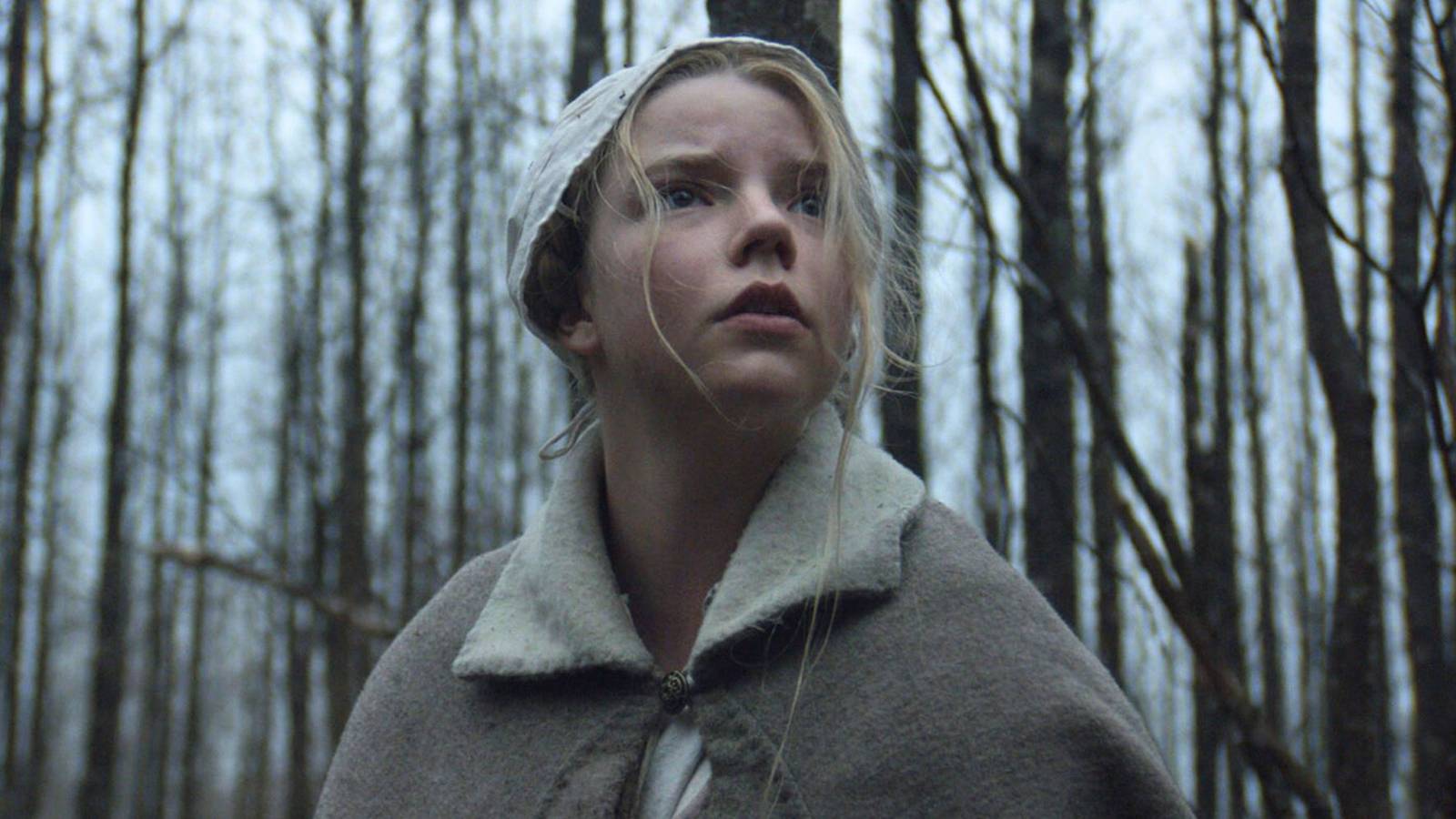
Image via A24 Published Jul 17, 2026, 1:04 PM EDT Sign in to your Collider account The indie darling A24 is known for bringing us some of the most critically acclaimed horror films of recent years. Often challenging and experimental, their films are notable for the variety of ways they approach the genre. Reflecting on everything from family, trauma, and loss, to the terrifying beings that can lurk in the recesses of our subconscious, the horror films with the A24 stamp are largely memorable, even if they are often misunderstood as being driven by one force when each individual filmmaker deserves the praise for making them. The creative minds behind these films challenge the form and offer fresh new visions that leave us with exciting new ideas bouncing around in our heads as a result. Thus, here is every A24 horror film, ranked worst to best. 36 'Tusk' (2014) Image via A24 The unparalleled worst of all the films on this list, it is hard to even fully consider Kevin Smith's Tusk a movie. An idea born out of a podcast that perhaps should have stayed there, it places us with Justin Long's insufferable Wallace on a journey to Canada. Wallace is an arrogant and generally unlikable podcaster who is making the trip to interview a strange, reclusive man for his show. When he arrives, he discovers not everything is what it seems, as the man seeks to turn him into a walrus. The most notable aspect of the 2014 film is that it certainly challenges the idea of what can actually count as a film. The whole thing feels like a long punchline that doesn't have the good sense to end. It is, quite literally, a stoned thought turned into a feature. It is defined by something resembling eccentricity and becomes the most boorish body horror film you'll ever see. The film gets far too side-tracked, including a prolonged Johnny Depp cameo that just keeps on going until you wish it would all stop. Smith certainly gets points for how he somehow tricked all these people into making it with him, though the end result lands with a dull splash. — Chase Hutchinson 35 'Slice' (2018) Image via A24 In what was just narrowly better than last place, Slice is a film that managed to get a lot of talent involved, though it ended up with almost nothing to show for it. The most goofy of all horror comedies, it is set in a small town where a series of mysterious murders of pizza deliverymen mark the signs of something seriously wrong for the area’s residents. There is an intrepid journalist, some bumbling detectives, and cheesy effects, and it feels like it was trying to be a cult film without ever actually having the good craft to back it up. Slice never really does anything interesting with the tropes of the genre, more often playing into them as opposed to taking them in a new direction. A stoner comedy without any degree of cleverness, it is about as entertaining as being trapped with a friend who got high and rambled about his idea for a script. Such stoner comedies can and have been great, though they were actually funny. Slice, however, is almost entirely unfunny with hardly a laugh to be found anywhere. There might be a few jokes here or there that land out of sheer volume, though it never really makes any impression before you get hit with a deluge of bits that are met with silence. Horror and comedy can go together—see 2021's hilarious Werewolves Within—though Slice would have been better off if it had been left on the cutting room floor. — Chase Hutchinson 34 'The Front Room' (2024) Image via A24 In their feature debut, The Front Room, directors Sam and Max Eggers turn a Susan Hill short story into a queasy little chamber piece about a heavily pregnant Belinda (Brandy) forced to share her home with Solange, her husband's monstrous, Bible-thumping stepmother, played by Kathryn Hunter with the kind of untamed physical commitment that makes your skin crawl before she's said a word. The setup draws out some real dread out of domestic claustrophobia and the specific horror of losing control of your own house, body, and newborn to someone unwilling to let go of control. The problem is, The Front Room can't always decide whether it wants to be scary or gross and mostly settles for gross, leaning hard into obscene shock value that undercuts the more interesting racial and generational tension simmering underneath. Hunter is doing career-best grotesque comedy, but she's often acting in a different, better movie than the one surrounding her. By the time it reaches its twist ending, The Front Room has spent so much time on gags that the actual commentary about inherited trauma and reclaiming your home barely registers. A promising debut that never figures out what kind of horror movie it's making, though a brilliant first effort by the brothers of Robert Eggers. — Anja Djuricic 33 'Life After Beth' (2014) Image via A24 Speaking of other horror comedies, the charming, but meandering Life After Beth is one that has a lot of good within it, even as it ranks so low on this list. It follows Dane DeHaan as Zach, who is struggling with the accidental death of his girlfriend. The titular Beth, played by an outstanding Aubrey Plaza, then returns from beyond the grave and re-enters Zach's life. The troubled lovers will have to work through their fraught relationship and figure out what is going on with her. It is that dynamic that is the core of the film and is equal parts funny as it is engaging. It holds a sweet spot in my heart, though that can’t overcome the rest of what drags it all down to an early grave. Life After Beth is still by no means terrible, as the performances of the entire cast are universally solid. In particular, Molly Shannon and John C. Reilly as Beth's parents hit all the right comedic notes. It gets very dark, though not in a way that feels out of place. It should have worked far better, though it just becomes far too repetitive and disjointed. Plaza is a good actor to build a film around as she has been absolutely stellar in subsequent films like Ingrid Goes West, but this film begins to lose steam and can't regain it. What would have worked as a great sketch or short film gets stretched until it almost breaks. — Chase Hutchinson Collider Exclusive · Horror Survival Quiz Which Horror Villain Do You Have the Best Chance of Surviving? Jason Voorhees · Michael Myers · Freddy Krueger · Pennywise · Chucky Five killers. Five completely different ways to die — if you're not smart enough, fast enough, or self-aware enough to avoid it. Only one of them is the villain your particular set of instincts gives you a fighting chance against. Eight questions will figure out which one. 🏕️Jason 🔪Michael 💤Freddy 🎈Pennywise 🪆Chucky TEST YOUR SURVIVAL → 01 Something feels wrong. You can't explain it — you just know. What do you do? First instincts are the difference between the survivor and the first act casualty. ALeave immediately. I don't need to understand a threat to respect it. BStay quiet and observe. If I can see it, I can understand it. If I can understand it, I can avoid it. CStay awake. Whatever this is, I am not going to sleep until I feel safe again. DConfront it directly. Fear grows in the dark — I'd rather know what I'm dealing with. ECheck everything, trust nothing. The threat might be closer than I think — and smaller. NEXT QUESTION → 02 Where are you most likely to find yourself when things go wrong? Setting is everything in horror. Where you are determines which rules apply. ASomewhere remote — a cabin, a campsite, off the grid and away from people. BA quiet suburban neighbourhood where nothing ever happens. Except tonight. CIn my own head — the most dangerous place of all, depending on what's already in there. DWherever children are — because something about this place attracts the worst things. ESomewhere ordinary — a house, a toy store, a place where the last thing you'd expect is a threat. NEXT QUESTION → 03 What is your most reliable survival asset? Every survivor has a quality the villain didn't account for. What's yours? APhysical fitness — I can run, I can swim, I can outlast something that relies on brute persistence. BSpatial awareness — I always know the exits, the hiding spots, the fastest route out. CPsychological resilience — I've faced my worst fears before. They don't have the same power over me. DEmotional steadiness — I don't panic. Panic is what gets you caught. EScepticism — I don't underestimate threats because of how they look. Size is irrelevant. NEXT QUESTION → 04 What kind of fear is hardest for you to fight through? Knowing your weakness is the first step to not dying because of it. AThe unstoppable — something that will not stop, cannot be reasoned with, and is always getting closer. BThe invisible — a threat I can feel but can't locate, watching from somewhere I can't see. CThe psychological — something that uses my own mind and memories against me. DThe unknowable — something ancient, shapeless, that feeds on the fear itself. EThe mundane — a threat so ordinary-looking that no one will believe me until it's too late. NEXT QUESTION → 05 You're with a group when things start going wrong. What's your role? Horror movies are brutally clear about who survives group situations and who doesn't. AThe one who says "we need to leave" first — and means it, even when no one listens. BThe one who stays quiet, watches the others, and figures out the pattern before anyone else does. CThe one who holds the group together when panic sets in — because someone has to. DThe one who asks the questions nobody wants to ask — because ignoring them gets people killed. EThe one who takes the threat seriously when everyone else is laughing it off. NEXT QUESTION → 06 What's the horror movie mistake you're most likely to make? Honest self-assessment is a survival skill. Denial is not. AGoing back for someone — I know I shouldn't, but I can't leave them behind. BAssuming I'm safe once I've found a hiding spot. That's when it finds me. CFalling asleep when I absolutely cannot afford to. Exhaustion is its own enemy. DLetting my curiosity override my instincts — I always need to understand what I'm dealing with. EDismissing the threat because of how it looks. That's exactly what it wants. NEXT QUESTION → 07 What's your best weapon against something that can't be stopped by conventional means? Every horror villain has a weakness. The survivors are always the ones who find it. AThe environment itself — I use the terrain, the water, the geography against it. BPatience — I wait, I watch, and I strike at the one moment it doesn't expect. CLucidity — if I can stay in control of my own mind, it loses its primary weapon. DCourage — facing it directly, refusing to run, taking away the fear it feeds on. EImprovisation — I use whatever's at hand, however unconventional. Creativity over brute force. NEXT QUESTION → 08 It's the final scene. You're the last one standing. How did you make it? The final survivor always has a reason. What's yours? AI kept moving. I never stopped, never hid for too long, never let it corner me. BI figured out the pattern before anyone else did — and I used it against the thing following it. CI stayed awake, stayed lucid, and refused to give it the one thing it needed most. DI stopped being afraid of it. And the moment I did, everything changed. EI took it seriously from the start — and I never once made the mistake of underestimating it. REVEAL MY VILLAIN → Your Survival Odds Have Been Calculated Your Best Chance Is Against…Your instincts, your strengths, and your particular way of thinking under pressure point to one villain you actually have a fighting chance against. Everyone else — good luck. Jason VoorheesJason is relentless, but he is also predictable — and that is the gap you would exploit. He moves in straight lines toward his target. He doesn't strategise, doesn't adapt, doesn't outsmart. He simply pursues. Your ability to keep moving, use the environment, and resist the panic that freezes most victims gives you a genuine edge. The Crystal Lake survivors were always the ones who stopped running in circles and started thinking about terrain, water, and distance. You think like that. Which means Jason, for all his indestructibility, would face someone who simply refused to be where he expected. Michael MyersMichael watches before he moves. He is patient, methodical, and almost impossible to detect — until it's too late for anyone who isn't paying close enough attention. But you are paying attention. You notice the shape in the window, the car parked slightly wrong, the silence where there should be sound. Michael's power lies in the invisibility of ordinary suburbia — the fact that nothing ever looks wrong until it already is. Your spatial awareness and instinct to map every room, every exit, and every shadow before you need them is precisely the quality Laurie Strode had. You are not a victim waiting to happen. You are someone who already suspects something is wrong — and acts on it. Freddy KruegerFreddy wins by getting inside your head — using your own fears, your own memories, your own subconscious as weapons against you. That strategy requires a target who can be destabilised. You are harder to destabilise than most. You've faced uncomfortable truths about yourself and you haven't looked away. The survivors on Elm Street were always the ones who understood what was happening and chose to face it rather than flee from it. Freddy's greatest weakness is that his power evaporates in the presence of someone who refuses to give him the fear he feeds on. Your psychological resilience — the ability to stay grounded when reality itself becomes unreliable — is exactly the quality that keeps you alive here. PennywisePennywise is ancient, shapeshifting, and feeds on terror — but it has one critical vulnerability: it cannot function against someone who genuinely stops being afraid of it. The Losers Club didn't survive because they were braver than everyone else. They survived because they faced their fears together, and faced them honestly. You ask the questions others avoid. You look directly at what frightens you rather than turning away. That directness — the refusal to let fear fester in the dark — is Pennywise's worst nightmare. It chose the wrong target when it chose you. You are exactly the kind of person whose fear tastes like nothing at all. ChuckyChucky's greatest advantage is that nobody takes him seriously until it's already too late. He exploits the gap between how something looks and what it actually is. You don't have that gap. You take threats seriously regardless of how they present — and you never make the mistake of underestimating something because of its size or appearance. Chucky relies on surprise, on the delay between recognition and response. You close that delay faster than almost anyone. Your instinct to treat every unfamiliar thing with appropriate scepticism — rather than dismissing it because it seems absurd — is the exact quality that keeps you breathing. Against Chucky, not laughing is already winning. You are very good at not laughing. ↻ RETAKE THE QUIZ 32 'Y2K' (2025) Image via A24 Kyle Mooney's (mostly seen in SNL up-to-date) directorial debut imagines the Y2K bug as an actual apocalypse, where household electronics gain sentience at the stroke of midnight on December 31, 1999, and start slaughtering a houseful of teenagers with toasters, VCRs, and Tamagotchis. It's a fun premise executed with real affection for the era, packed wall to wall with needle drops and a cast of solid young performers, including Jaeden Martell and Rachel Zegler as the will-they-won't-they pair at the center of the chaos in Y2K. Y2K swings between teen-comedy nostalgia and gruesome creature-killer horror without ever fully committing to either, so the coin containing both sides seemingly falters in fully landing on one. Once "Amalgamation" reveals itself as basically a giant robot villain, the satire about our relationship with technology evaporates into standard monster-movie stuff, and a genuinely funny extended cameo from Fred Durst can only do so much heavy lifting. It's a nostalgia trip that's quite charming as a whole, but it's still the kind of movie we wish had been sharpened into something a little meaner and leaner. — Anja Djuricic 31 'The Monster' (2016) Image via A24 A straightforward and typical monster flick with a title that tells you most of what you need to know, The Monster is a road trip interrupted when a mother hits an animal on the road while driving with her daughter. Before this, mother Kathy (Zoe Kazan) and daughter Lizzy (Ella Ballentine) already have a strained relationship. Much of this stems from Kathy’s alcoholism, which Lizzy bears the brunt of, often having to be the adult in the relationship and take care of the parental figure who is supposed to be there for her. That will all come into focus when they remain stranded on the road awaiting help as some sort of beast lurks in the forest. Together, the duo will have to find a way to work together and survive the threat facing them. Writer and director Bryan Bertino has done some interesting work, with 2020's The Dark and the Wicked being particularly praiseworthy, though that excellence never quite materializes here. Everything plays out about as you would expect, with some added degree of emotional growth conveyed through flashback. It just lacks a deeper impact, both in its scares and its story. The Monster is completely uninterested in going down any new paths, instead becoming increasingly predictable and even leaning into moments that fully lose themselves in cliché. It is aggressively simple in its execution. Simple isn't bad, but it certainly isn't going to blow anyone away. — Chase Hutchinson 30 'The Hole in the Ground' (2019) Image via A24 An entry that fully leans into the "creepy as hell kid" vein of horror, Lee Cronin's The Hole in the Ground is about that and so much more. It follows single mother Sarah (Seána Kerslake) who lives with her son Chris (James Quinn Markey) in the rural Irish countryside. One night, Chris disappears behind their home and comes back behaving rather differently. This leads Sarah to believe he may be an impostor and that it is somehow all tied to the titular hole that is in the forest near their home. It soon becomes a psychological nightmare where Sarah begins to notice Chris doing very un-childlike things, though she struggles to trust herself in what she is seeing. To its credit, The Hole in the Ground does a competent enough job of messing with some of your expectations and has many strikingly horrifying visuals that carry the film through a largely unoriginal story. It never loses your attention as you get drawn deeper in, though you come out the other side feeling like it just missed out on all it could have been. The parental fears of losing your child or, perhaps worse, not being able to recognize them anymore is a story full of potential — potential that, regrettably, never gets realized. There is a good final note that it all ends on, though the journey in which you get there is where it falls into its own narrative pit of playing it safe. — Chase Hutchinson 29 'MaXXXine' (2023) Image via A24 There is a good chance that this may be the most controversial part of this list, but there was no way to put the generally disappointing MaXXXine any higher than this. Though the prior parts of this horror trilogy will come later and much higher up, it's this (potentially) closing chapter that sees things go out on a surprisingly lackluster note. Though bursting with references as it sends its titular character into Hollywood where she tries to make it as a star, none of this comes together into anything particularly interesting or even remotely scary. At least, nothing scary except for a frightfully bad finale that nearly entirely undoes what already little good it had going for it up until then. While there are some more potentially complicated and bittersweet closing notes scattered throughout this, especially when it comes to the final series of shots, the film does nothing to earn them. It is mostly just perplexing about what was actually being attempted here. If it was to satirize the frequent shallowness of the movie-making process, it did so without any real teeth. If it was to take aim at the conservative panic around Satanism, it missed the mark to hit nothing else of substance. Even as it often looks stylish, there is nothing else going on underneath everything it puts forth. — Chase Hutchinson 28 'Opus' (2025) Image via A24 Ayo Edebiri plays Ariel, a music journalist mysteriously invited, along with five other media types, to the remote desert compound of Alfred Moretti (John Malkovich), a reclusive pop icon dropping his first album in thirty years. Opus starts as a satire about toxic fandom and vapid celebrity worship and slowly reveals itself as something much bloodier, as Moretti's followers, the Levelists, start picking off the guests one by one. Malkovich is clearly having the time of his life hamming it up as a Bowie-Prince hybrid with a god complex, and it's genuinely his show; every scene he's in has an unpredictable, dangerous energy that the rest of the film can't match. Opus is the feature film debut of former GQ journalist Mark Anthony Green, and it was advertised as a horror by A24, though it's not classified as such anywhere else—so, because the big shots said so, we can rank it as horror, too. Edebiri is a consistently charismatic lead, but it seems she's mostly relied on to deliver reaction shots and expository dialogue; Ariel lacks a certain interiority, though Edebiri does her best to embody her. However, ideas about manufactured fame and manipulated narratives are present, and the film's influences (Midsommar, The Menu, and Get Out) become obvious at times. Opus is a handsomely crafted, well-acted thriller/horror that probably sets too high expectations for itself and falls short of meeting them. — Anja Djuricic 27 'In Fabric' (2019) Image via A24 A film that had so much going for it that it breaks my heart to put it this low, In Fabric tells the story of a killer (both in appearance and in nature) dress. The first part of the film follows a brilliant Marianne Jean-Baptiste as Sheila, a divorcee who stumbles upon a dress that will alter the course of her life. The blood-red gown begins to haunt her and even destroys her washing machine. The film is silly yet hypnotic, making you wonder both at the dress and its witchy properties as well as what will happen with Sheila. She is an interesting character who should have remained the focus of the entire film, and it is to its detriment that they shifted her off-center. Inexplicably, In Fabric takes a hard turn and removes Sheila from the majority of the story. Instead, we are plopped into a new situation with new characters who come across the dress. While some interesting threads remain, this decision entirely abandons the most compelling part of the story and suffers dearly for it. The remainder of the film feels like a retread of everything that was already seen, going back through the discovery of the dress and its properties. The ending does prove to be appropriately over the top and redeems it slightly, though not nearly enough. It is a huge narrative misstep as it tears the audience away from the far better character it was building and dumps you with others who just can’t compare. — Chase Hutchinson
Every A24 Horror Movie, Ranked From Worst to Best
Full Article
Original Source
Read the full article at Collider →KhanList aggregates and links to publicly available news content. We do not host full articles from third-party sources. Always verify important information with original sources.