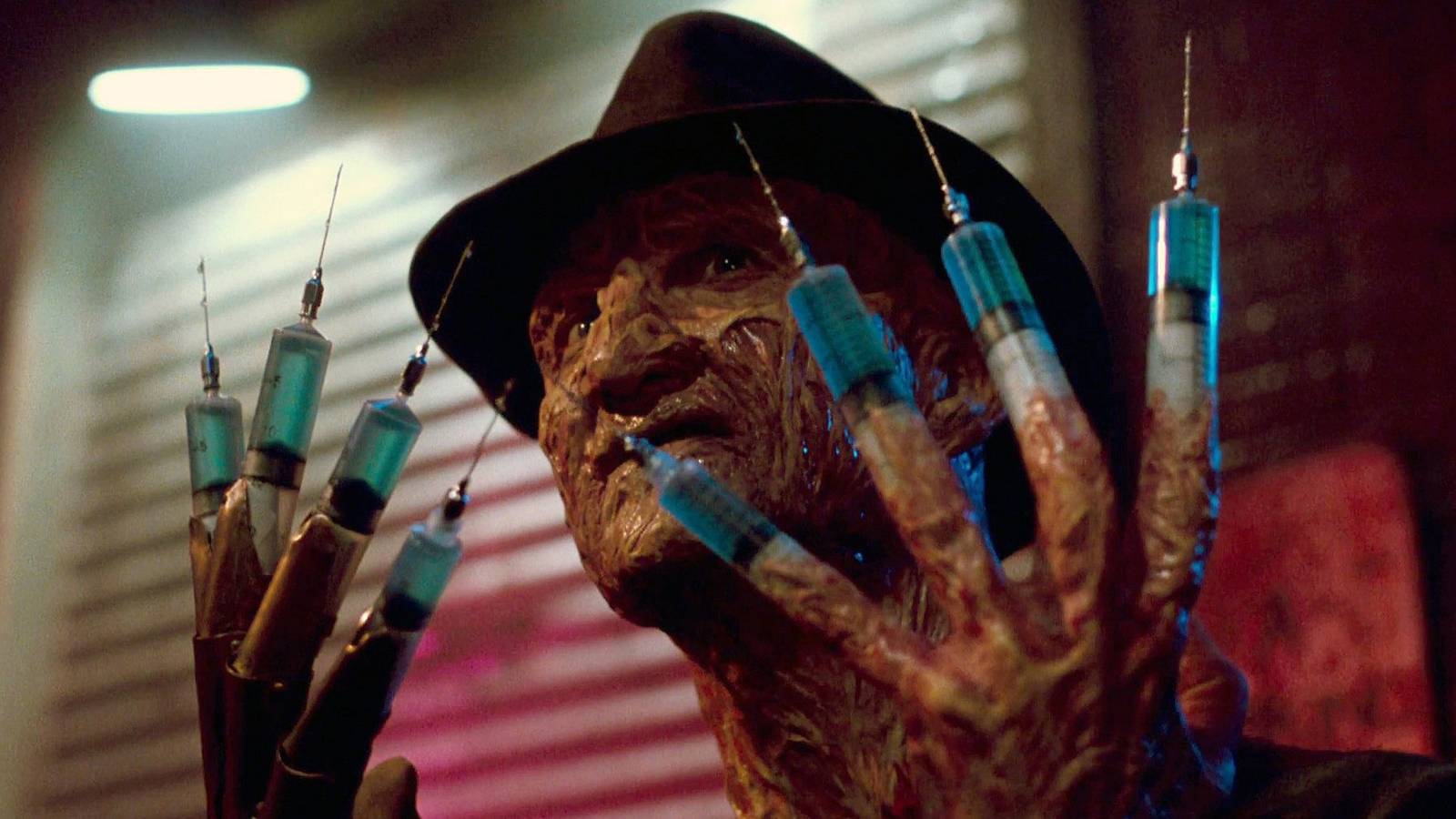
Published Jul 18, 2026, 12:20 PM EDT Richard Craig is a Senior Author at Screen Rant covering film and TV. Richard has also written extensively about horror and film soundtracks, contributing a chapter to the first major academic collection on the folk horror genre, The Routledge Companion to Folk Horror. Richard is also a performing musician and holds an MA in Music and Sound Art. The A Nightmare on Elm Street franchise features some of the most creative and entertaining kills in horror movie history, racking up an impressive pile of bodies in Freddy Krueger’s wake. However, as each installment changes in tone and direction, the sheer number of Freddy victims varies significantly from film to film. The A Nightmare on Elm Street franchise has never been the highest body-count horror series. Unlike Friday the 13th, which often racks up victims like a slasher-themed accounting exercise, Freddy Krueger's films tend to focus on elaborate dream sequences and memorable individual deaths rather than sheer numbers. That's why some entries contain only a handful of kills while others suddenly explode into mass carnage. Of course, not all kills are created equal. Freddy has always been less interested in efficiency than creativity. A single victim transformed into a human puppet can be more memorable than an entire crowd being hacked apart. Indeed, the franchise's best deaths combine surreal nightmare logic, dark comedy, practical effects, and Robert Englund's endlessly quotable performance. For this ranking, only characters killed by the villain during each movie's runtime are counted. Freddy’s flashback deaths, his deaths at the end of films, and previously established deaths are excluded. The result is a surprisingly varied list, ranging from films with just three victims to crossover chaos featuring more than twenty. A Nightmare On Elm Street 5: The Dream Child (1989) — 3 Kills With only three on-screen victims, The Dream Child has the lowest kill count in the entire franchise by a considerable margin. For a series famous for imaginative dream murders, the total feels surprisingly light. Thankfully, Freddy makes an effort to compensate with creativity. Dan's death is arguably the standout, transforming a motorcycle ride into a grotesque body-horror nightmare as man and machine become one before a catastrophic crash. Greta's demise is equally memorable, turning her struggles with appearance and eating disorders into one of Freddy's nastiest psychological attacks as she's forced to consume parts of herself. Mark's comic-book-inspired death is certainly inventive, transforming him into a paper-thin cartoon before he's crushed. However, it often feels more like a visual novelty than a genuinely shocking kill. Despite some excellent concepts, the tiny body count makes this entry feel oddly restrained compared to the franchise's bloodier outings. A Nightmare On Elm Street (1984) – 4 Kills The original A Nightmare on Elm Street only contains four kills, but what it lacks in quantity it more than makes up for in impact. Nearly every death in Wes Craven's classic became instantly iconic. Tina Gray's murder remains one of the most terrifying scenes in horror history. Seeing her dragged across walls and ceilings while invisible forces slash her apart still feels unsettling decades later. Rod's hanging death is comparatively simple, but its eerie presentation makes it unforgettable. Then comes Glen's demise, which may be the franchise's single most famous image. Johnny Depp disappearing into a bed before an impossible geyser of blood erupts from the mattress remains spectacularly over-the-top. Marge's fiery death is less celebrated but perfectly caps the film's surreal final act. Many Elm Street sequels featured bigger effects and more elaborate dream scenarios, but few ever matched the raw shock value and nightmare atmosphere of these four deaths. Wes Craven's New Nightmare (1994) - 4 Kills Like the original, New Nightmare keeps its body count surprisingly low. The difference is that this film focuses more on atmosphere and meta-horror than Freddy's traditional dream-stalking antics. The opening deaths of Chuck and Terry establish that this version of Freddy is darker and more vicious than his increasingly comedic counterpart from the sequels. Chase Porter's death cleverly merges dream and reality, while Julie's demise provides New Nightmare’s most upsetting moment. The sequence intentionally echoes Tina's famous death from the original movie, but there's something especially disturbing about watching it happen in front of a terrified child. It is one of Elm Street's most emotionally devastating scenes. Some count Rex the dinosaur plush toy as a victim, which would technically raise the tally to five. Regardless, New Nightmare proves quality can outweigh quantity. A Nightmare On Elm Street (2010) – 5 Kills The 2010 A Nightmare on Elm Street remake receives plenty of criticism, but its kill count is actually fairly respectable compared to several original entries. It also benefits from some genuinely effective death sequences. Dean's self-inflicted throat-slashing signals the departure from comedy and recenters the franchise firmly in horror territory. Kris later receives the remake's best death, essentially recreating Tina's famous murder with modern effects while retaining much of the original's horror. Jesse's impalement is suitably brutal, while Nancy's mother receives a gruesome final fate involving Freddy's glove bursting through her face. A Nightmare on Elm Street’s additional canine casualty nudges the overall total slightly higher than some of its predecessors. Although few of these kills have achieved the legendary status of the originals, they are generally effective and nasty. Unfortunately, the film surrounding them isn’t. Freddy's Dead: The Final Nightmare (1991) — 5 Kills The sixth Elm Street film often feels like a live-action cartoon, and its kills fully embrace that approach. The body count isn't particularly high in The Final Nightmare, but Freddy's methods become increasingly bizarre. Carlos receives the clear standout death. Freddy exploits the teenager's hearing aid by turning his hearing superhuman, creating a painful sensory nightmare that eventually causes his head to explode. It's ridiculous, inventive, and quintessential late-series Freddy. Spencer's video-game-inspired demise is equally goofy, while John Doe's spiked-bed death delivers some solid practical effects. The Final Nightmare also provides rare insight into Freddy's backstory through the deaths of Loretta Krueger and Alice Cooper's abusive Mr. Underwood. Compared to the darker atmosphere of the original films, these deaths are often more comedic than frightening. Still, the sheer creativity on display keeps them entertaining, even if The Final Nightmare is one of the franchise's most divisive entries. A Nightmare On Elm Street 3: Dream Warriors (1987) — 6 Kills If this ranking were based on quality rather than quantity, Dream Warriors might be sitting at number one. Its six kills include some of the most celebrated deaths in horror history. Phillip's puppet-string murder remains a particular franchise highlight. Freddy ripping tendons from the teenager's limbs and using them like marionette strings is both brilliantly imaginative and genuinely horrifying. Jennifer's television death is equally iconic, thanks to Freddy's unforgettable one-liner before smashing her head through the screen – “Welcome to prime time, b****!” Taryn's needle-finger overdose transforms Freddy’s glove into something even more nightmarish, while Will's death provides a tragic end to one of the film's most lovable characters. Donald Thompson and Nancy's deaths add genuine emotional weight to the finale. Unlike some sequels that relied heavily on body counts, Dream Warriors focused on making every victim memorable, with very fine results. A Nightmare On Elm Street 4: The Dream Master (1988) — 6 Kills Sharing the same kill count as Dream Warriors, The Dream Master takes a much sillier and more effects-heavy approach to Freddy's murders. It quickly eliminates surviving heroes Kincaid, Joey, and Kristen before introducing a fresh set of victims. From there, Freddy becomes increasingly pun-happy. Sheila's death, which involves him literally sucking the life out of her, perfectly demonstrates the sequel's cartoonish tone. Rick's martial-arts-themed demise is a very obvious afterthought, but Debbie's transformation into a cockroach remains a standout moment. Watching her body painfully mutate before Freddy crushes her inside a roach motel is surprisingly upsetting despite the inherent absurdity. The Dream Master’s deaths are often less frightening than those in Dream Warriors, but they're undeniably creative. If Freddy's evolution into a wisecracking supernatural showman began anywhere, it was here. A Nightmare On Elm Street 2: Freddy's Revenge (1985) — 10 Kills The jump from six victims to ten is substantial, and most of that increase comes from one infamous sequence. Without the pool party massacre, Freddy's Revenge would rank much lower. Coach Schneider's death remains one of the movie's most memorable scenes, combining sadism, surreal BDSM imagery, and Freddy's signature claws. Ron Grady's murder is also surprisingly effective, especially given the emotional (and apparently not sexual at all) connection between him and Jesse. The real body count explosion arrives during the backyard pool party. Freddy suddenly abandons his usual dream-based methods and starts slaughtering partygoers in broad daylight. Victims are burned, boiled, stabbed, trampled, and thrown around in one of the franchise's strangest scenes. The sequence dramatically increases the numbers but is unlike almost anything else in the Elm Street series. It's chaotic, bizarre, and uniquely entertaining, helping this often-overlooked sequel secure second place in the ranking. Freddy Vs Jason (2003) — 21 Kills The crossover event absolutely dominates the franchise with an enormous 21 kills. However, Freddy fans should note there's a giant asterisk attached to that number: most of the deaths in Freddy vs Jason deaths belong to Jason Voorhees. Jason's rampage through the cornfield rave alone accounts for a huge portion of the body count. Bodies pile up at a pace usually reserved for Friday the 13th movies, including impalements, decapitations, electrocutions, and one particularly gruesome bisection. Freddy technically only claims two direct victims during the runtime: Mark and Lori's mother. Yet Mark's death is so disturbing and effective that it remains one of the character's best kills in the entire franchise. The image of Freddy exploiting Mark's brother’s death before setting him ablaze perfectly captures why the dream demon became such a horror icon. Even if Jason does most of the heavy lifting, Freddy Vs Jason comfortably wins the A Nightmare on Elm Street kill-count crown by a landslide. Movie(s) A Nightmare on Elm Street, A Nightmare on Elm Street 2: Freddy's Revenge, A Nightmare on Elm Street 3: Dream Warriors, A Nightmare on Elm Street 4: The Dream Master, A Nightmare on Elm Street: The Dream Child, Freddy's Dead: The Final Nightmare, New Nightmare, Freddy vs. Jason, A Nightmare on Elm Street TV Show(s) Freddy's Nightmares First Film A Nightmare on Elm Street Genres Horror, Slasher Cast Robert Englund, Heather Langenkamp, Patricia Arquette, Jackie Earle Haley, Johnny Depp, Lisa Wilcox, Mark Patton, John Saxon, Amanda Wyss, Ken Sagoes Character(s) Freddy Krueger, Nancy Thompson, Kristen Parker, Jesse Walsh, Alice Johnson, Tina Gray, Dr. Neil Gordon, Kincaid, Joey Crusel, Amanda Krueger
Every A Nightmare On Elm Street Movie, Ranked By Kill Count
Full Article
Original Source
Read the full article at Screenrant →KhanList aggregates and links to publicly available news content. We do not host full articles from third-party sources. Always verify important information with original sources.