
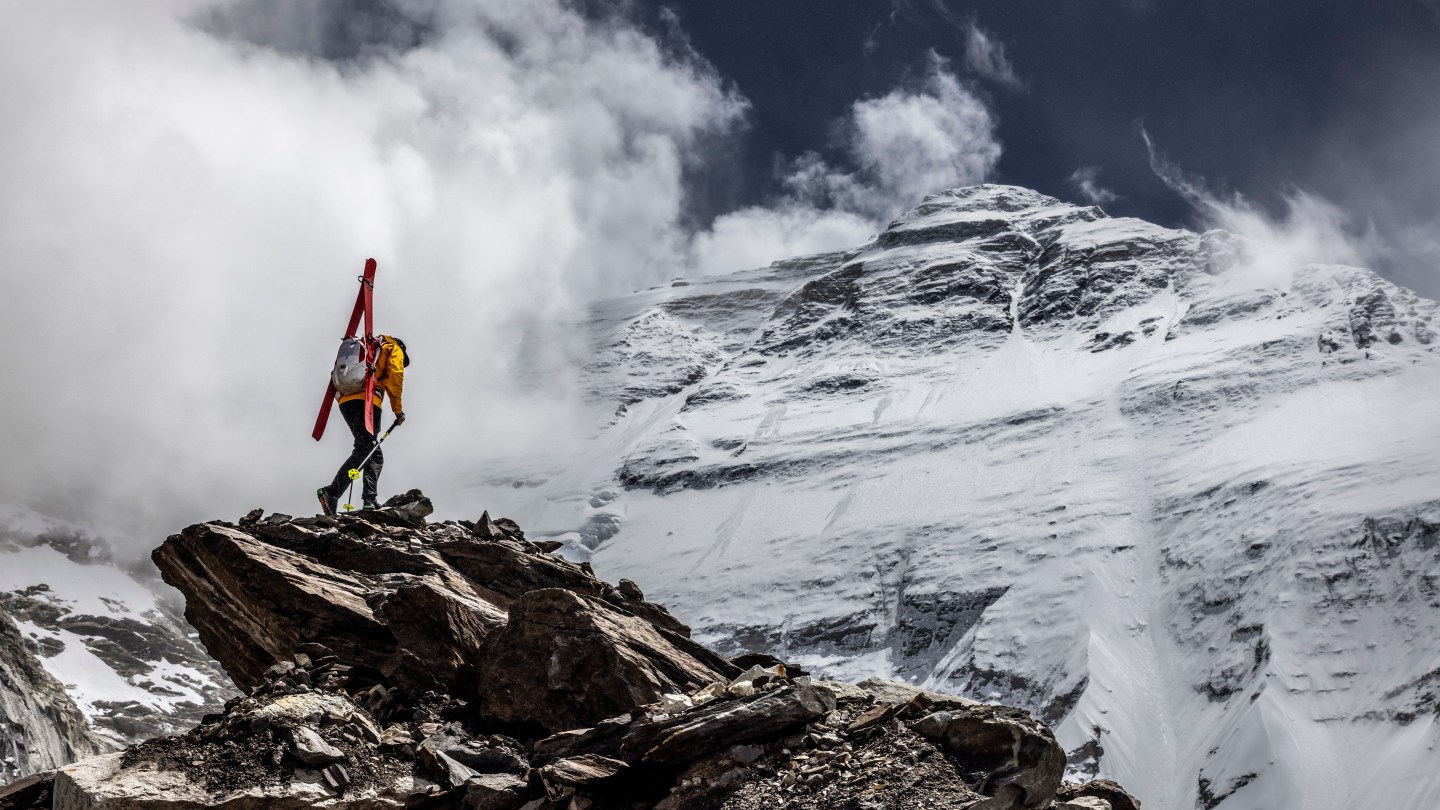
In their gripping, Oscar-winning 2018 documentary Free Solo, husband and wife directors Jimmy Chin and Elizabeth Chai Vasarhelyi examine the boggling daring of Alex Honnold, a rock climber who scales sheer mountain walls without the aid, and protection, of ropes. The film’s climbing scenes are breathtakingly tense, but what sells the movie as more than mere docu-thriller is its sharp assessment of Honnold’s psychological makeup, the jumble of genetics and conditioning that have turned him into a man seemingly unaffected by fear. He’s oddly charming in all his insouciant disregard for his own safety, but there’s something sinister there, too. He takes on these feats with only a small amount of concern for how an accident might impact those who love him, including the woman to whom he’s now married. Honnold is free to not care about himself, but shouldn’t he more thoroughly consider the emotions of those around him? That said, those people are all adults with their own agency; they could choose, much as it might hurt, to walk away from Honnold whenever they pleased. Had children been in the picture, though, Honnold’s death-defying acts would be unforgivable. Everest: The Other Side The Bottom Line An accidental rebuttal to George Mallory’s ‘Because it’s there.’ Venue: Venice Film Festival (Venice Open — Out of Competition)Directors: Jimmy Chin, Elizabeth Chai Vasarhelyi 1 hour 55 minutes And thus the central — and enormous — problem with Chin and Vasarhelyi’s new film, Everest: The Other Side, a portrait of two reckless, ruthlessly self-involved people who like to climb very tall mountains and then ski down them. The documentary begins with couple Jim Morrison and Hilaree Nelson preparing to do something unprecedented: They will scale Mt. Everest’s notoriously difficult north face (the part on the China side of the mountain) and then strap on their skis and head back the way they came. Why they want to do this is explained in the typical grandiose, solipsistic terms. It is a craving for extreme experience that, in Morrison’s and Nelson’s (and the film’s) minds, better connects them to themselves and to the universe. This is more than a passion, they insist. It is a primal need that cannot be denied. “Okay,” we think, watching these two gas each other up. “But what about Nelson’s sons?” Y’know, the two living, breathing, helpless children forced to sit idle while their mother and (almost) step-father constantly and brazenly risk abandoning them. All of the big talk about personal drive, which makes Free Solo so darkly compelling, immediately crumbles into selfish pablum the second that children are introduced into the equation. Rather than heroic, these costly and horribly uncertain stunts come across callous and cruel. Hideous proof of that arrives 20 or so minutes into The Other Side, when we see Nelson in the final seconds before she fell to her death while attempting to ski down the world’s eighth-tallest mountain. One moment she is on her skis testing her position, and in the next the shelf of snow beneath her dislodges and slides off a nearly 6,000-foot cliff. In an awful instant, two boys lose their mother and the movie loses any kind of principled posture. A more inquisitive film might have then turned its gaze inward, becoming a meta investigation of what all this thrill-seeking has wrought, a study of hubris and hamartia. Instead, The Other Side shifts into triumph-over-grief mode, as Morrison prepares to fulfill the Everest mission in honor of his late partner. We learn more about Morrison’s backstory, particularly a baroquely terrible tragedy he endured 15 years ago. It’s impossible to not feel immense pity for Morrison, who suffered something unimaginable. But that sympathy can’t quite make up for the galling fact of Nelson’s sons, now teenagers stuck in limbo as a father figure stubbornly insists on courting further ruin. What’s even more shocking is that Chin, himself a mountaineer, decides to embark on the Everest trip with Morrison (and a load of other men), though he has young children of his own at home. Vasarhelyi appears on camera, wondering where the end of this might be. She asks Chin how many people who have sat at their dinner table are now dead, and in response Chin calmly rattles off a staggeringly long list of names. Are we nonetheless supposed to root for Chin’s decision to support his friend? The Other Side answers an indignant “yes.” What ensues is, in a purely visceral way, wholly transfixing. Extreme mountain climbing has never looked anything but miserable from the distance of a screening room, and The Other Side delivers mightily on all that scraping, straining, gasping toil. While it may only offer limp gestures of acknowledgment to the underpaid and dangerous labor of the Sherpas who facilitate the adventures of well-funded Western men (and a few women), the film still envelops us in the intense rigor and fortitude of Morrison’s pursuit. Its images are stunning, in both exacting close-up and wide, sweeping drone shots. A palpable suspense overtakes us as Morrison and his team work their way up this daunting monolith, potential cataclysm lurking in every crack of rock and tumble of snow. Cynically or not, Chin and Vasarhelyi understand that these primal thrills are enough to distract us from the frustrating and sorrowful truth at the center of the story. Well, almost enough. Every time the film cuts back to Nelson’s sons, we are reminded that none of this needs to happen, that a lot of people would still be alive today had they only ignored the juvenile, daredevil id they have dressed up as noble calling. The Other Side works hard to combat or paste over the heavy moral questions it provokes, uplifting ending and all. But I left the theater feeling angry and bitter, suddenly put off by the whole project of mountaineering. Senseless death (or risk of death) is simply not inspiring, no matter what jockish bromides Morrison, Nelson, Chin, et al. throw at us. Basely captivated as I was by the mighty struggle up The Other Side, my mind kept drifting back to that dinner table, to Vasarhelyi’s anguished bewilderment that her husband has decided to put his children in danger of losing a parent in order to honor a colleague who did indeed inflict that dreadful fate on her own children. If only the film had lingered longer on Vasarhelyi’s totally rational horror and disbelief. But I guess that wouldn’t make for a very exciting mountain-climbing documentary, would it?
‘Everest: The Other Side’ Review: A Frustrating, Guiltily Compelling Portrait of the Triumph and Tragedy of Extreme Mountaineering
Full Article
Original Source
Read the full article at Hollywoodreporter →KhanList aggregates and links to publicly available news content. We do not host full articles from third-party sources. Always verify important information with original sources.