
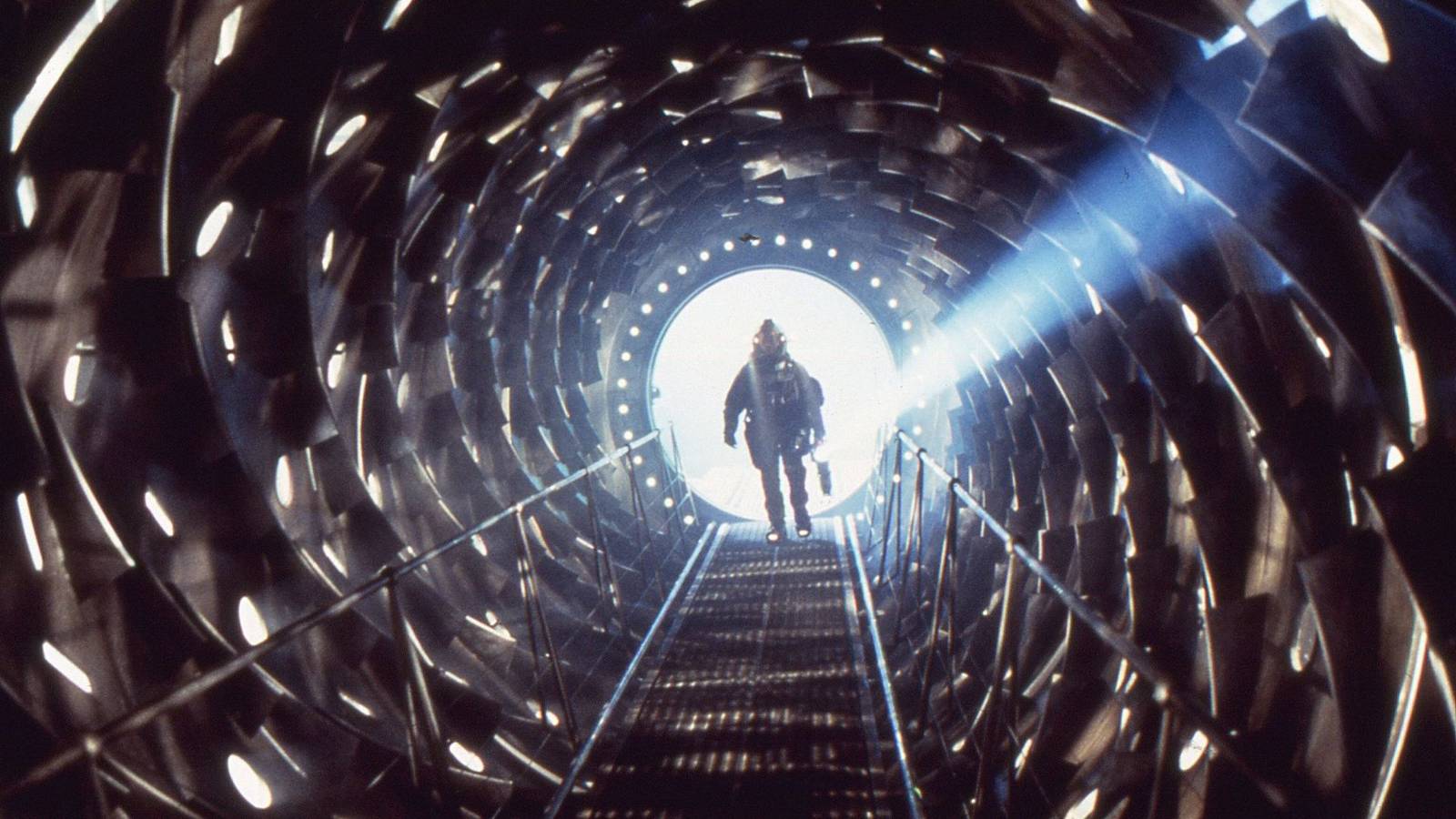
Event Horizon Proves The Best Space Horror Doesn't Need Aliens Image via MovieStillsDB Published Oct 6, 2026, 4:30 PM EDT Anthony is a news reporter and a guide writer who has covered the entertainment industry for five years. He has covered a wide range of genres, including aviation incidents and international crime, and has a keen eye for details that may slip under the radar. When he's not writing, Anthony can be found at Brands Hatch race track or at home watching indie horror movies nobody has heard of. The sci-fi genre is home to arguably some of the scariest creatures on the silver screen. Unsurprisingly, most of these pertain to mysterious, extraterrestrial creatures, as was the case with The Thing, Alien, and so many other iconic sci-fi horror movies. A monster from outer space is a natural explanation for the terror that characters go through in films of their kind - but Event Horizon is one movie that broke away from that formula. Event Horizon was released in 1997 and has only grown more popular over time. The Paul W. S. Anderson movie actually underperformed at the box office, though it's arguably become a cult classic sci-fi horror. It's a frightening movie, and it's also unique because it doesn't even need an alien to be scary. Event Horizon Explained The Event Horizon itself is a huge spacecraft using experimental black hole technology to 'fold' space for faster-than-light travel. The ship mysteriously vanished during its maiden voyage, and information about the technology was classified. Miller (Lawrence Fishburne) captains the Lewis & Clark salvage craft. He and his crew are sent into deep space with Dr. Weir (Sam Neill) aboard. He built the Event Horizon and explains that the authorities encountered a distress signal from the ship, even though it had been missing for seven years. The Lewis & Clark crew investigate, but it's immediately obvious something catastrophic occurred on board. They find remains of the previous crew and only cryptic clues hinting at what happened to the previous occupants. Suddenly, a pulse erupts from the experimental Gravity Drive, damaging the Lewis & Clark and forcing the crew onto the Event Horizon. Justin (Jack Noseworthy) is also pulled into the gateway and is never the same again. The crew members all endure bizarre hallucinations on board, targeting their deepest fears and regrets. Starck (Joely Richardson) theorizes that the ship reacts to their presence, and it grows stronger the longer they stay. To make matters worse, Dr. Weir seemingly becomes obsessed with the ship. It forces him to gouge his own eyes out with his thumbs in a particularly gruesome scene. He tries to activate the Gravity Drive to take the Event Horizon back to wherever it went before, condemning the Lewis and Clark crew to a fate worse than death. Miller, Starck, and Cooper (Richard T. Jones) ultimately foil Weir's plan, though Miller sacrifices himself. They escape in life pods, but the ending is ominous. Starck sees Weir when she wakes up, but it appears to be a nightmare. It remains unclear if it was trauma or something more sinister. The Film Features Something Scarier Than Aliens Event Horizon doesn't feature an alien creature, but the movie is terrifying enough without one. Weir explains that the ship "tore a hole in our universe, a gateway to another dimension, a dimension of pure chaos, pure evil." We only catch glimpses of this alternate dimension, leaving our minds to fill in the gaps. When Miller asks Weir what happened to his eyes, he replies with arguably one of the most chilling lines in sci-fi horror: "Where we're going, we won't need eyes to see." It's shocking because it suggests this other dimension is so unfathomable that you don't even need sight to experience it. Weir reinforces this idea further in a direct confrontation with Miller. As they fight, Weir says, "It is time to go back." Miller interrupts, "I know, to hell." Weir replies with another cold line, stating that hell is just a word and that the reality is so much worse. He shows Miller visions, though we only witness flickers of what he sees. Once again, Paul W. S. Anderson leaves us to fill in the gaps. It's far more effective than showing the audience a hellscape, which could dull the mystique of this other dimension. We only see the aftermath and how it affects people. Whatever Justin saw was so terrible that he blew himself out of an airlock to escape it. We also see a brief recording of what happened to the former crew. The horror comes from seeing how these visions affect the characters, rather than showing exactly what they saw in Event Horizon. Release Date August 15, 1997 Runtime 95 minutes Director Paul W. S. Anderson Cast Laurence Fishburne Miller Writers Andrew Kevin Walker, Philip Eisner Producers Jeremy Bolt, Lawrence Gordon, Lloyd Levin
Event Horizon Is The Scariest Sci-Fi Movie That Doesn't Feature Aliens
Full Article
Original Source
Read the full article at Screenrant →KhanList aggregates and links to publicly available news content. We do not host full articles from third-party sources. Always verify important information with original sources.