
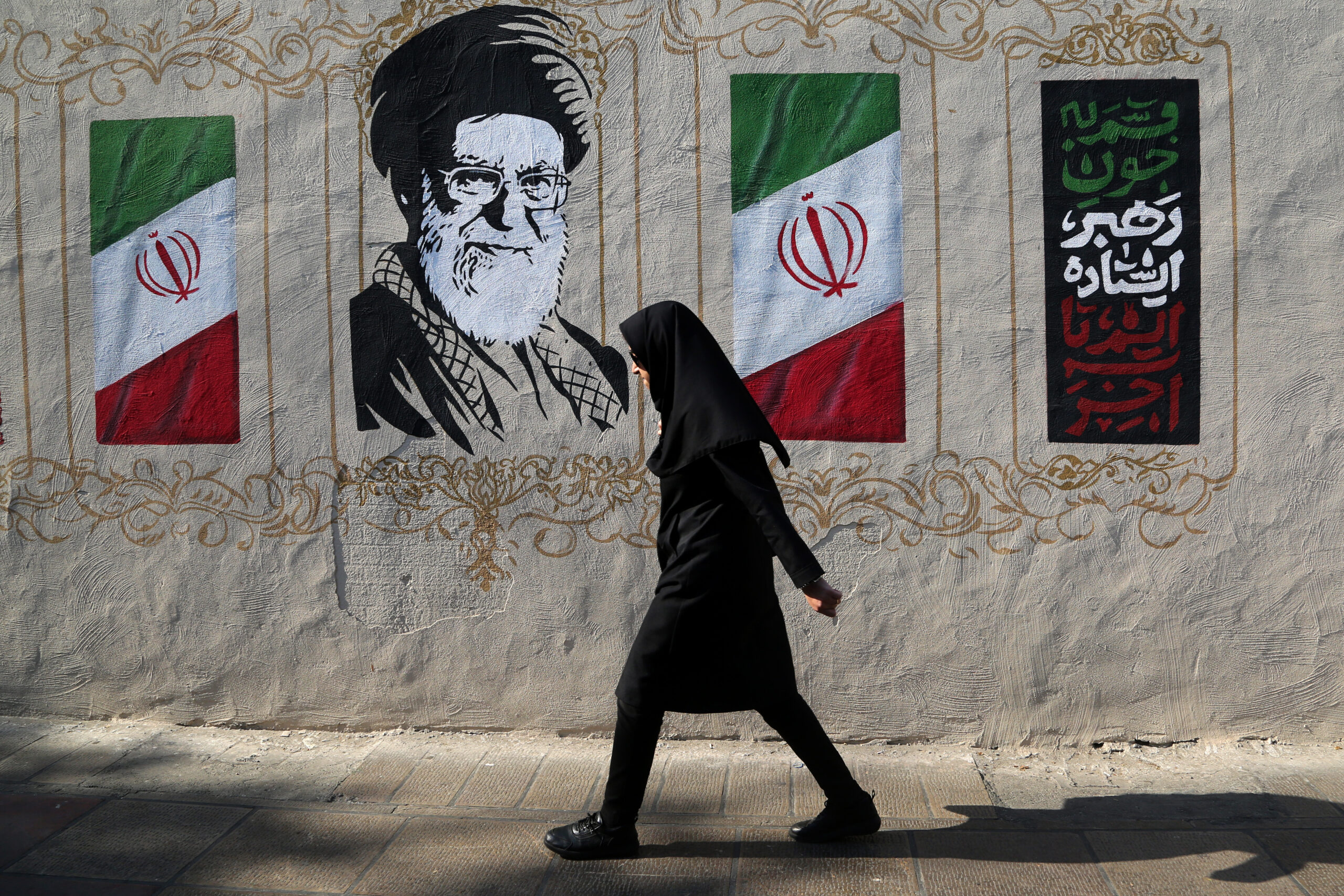
The Iran War What would the day after look like in the region? Photo by Fatemeh Bahrami/Anadolu via Getty Images I’m in a generous mood. Let’s say the newest scheme works: The latest iteration of attempted economic strangulation causes state collapse in Iran. I remain skeptical, but in my expansive goodwill, I’ll go ahead and grant the premise for the sake of argument. I’ll even grant that it happens on a manageable political timescale, oh, six months or so. What then? Some portion of the country is still devoted to the actually existing regime of the Islamic Republic. (I’ve seen estimates from 15 percent to 30 percent; there’s not exactly a ton of cutting-edge opinion polling coming out of Iran.) It seems likely that the overthrow of the regime would kick off a pretty good-sized civil war between hardline remnants of the IRGC, which has a fairly decentralized command structure, and whichever IRGC and regular army elements joined whatever fresh adventure in human organization took power in Tehran. (This is laying aside the possibility of power struggles within the revolutionary government’s own constituent groups, such as those which characterized the 1979 revolution.) Separatist movements in the Iranian periphery would also probably take their shot at independence, particularly violent, left-wing Kurdish groups like the Komala and the PJAK (the Iranian affiliate of the PKK). This would probably invite a Turkish military intervention; after having spent a great deal of blood and treasure neutralizing the PKK affiliate in Syria, the SDF, and much political capital to disarm and normalize the group’s Turkish mothership, the Erdoğan government is unlikely to tolerate a fresh eruption of armed Kurdish agitation. The PKK’s fractious relations with other, more mainstream Kurdish groups would also introduce instability into the closest thing the region has to a success story this century: autonomous Iraqi Kurdistan. So our fledgling champion of freedom in Tehran starts life at war with remnants of the old regime and previously latent threats to its territorial integrity. (States, even newborn revolutionary states, don’t seem to enjoy losing territory very much, and Iran’s humiliating 20th-century history of occupations at the hands of foreign powers has rather sharpened this sensitivity.) It will have a foreign power intervening in and possibly occupying its territory. It will be desperately poor, its infrastructure will be collapsing, and its military power will be severely degraded. This is an unenviable start to life. Then there’s the question of aligned groups. This war has become regionalized, to put it mildly. While the Houthis, the Iraqi militias, and Hezbollah all depend on Iran for largesse to some extent, they do also have their own resources—particularly the Houthis, who directly control large portions of Yemen’s industry and infrastructure. State collapse in Iran is not going to dissolve these groups overnight. Subscribe Today Get daily emails in your inbox What’s the point of this little scenario? To show that the overthrow of the ayatollahs is unlikely to be a nice, clean end to America’s little jaunt in the region. No matter how much you jabber about how “nation building” was the besetting sin of the Bush administration, it is simply true that leaving an enormous, chaotic power vacuum in the Persian Gulf will continue to constrain energy flows, which has become a thematic parameter of American policy. Any new Iranian state would require stupendous amounts of aid to establish the state capacity to sustain stability and territorial integrity; it is likely that it will require direct military support in the civil war following its ascent. The application of American military power might also be required to quell the ongoing peripheral conflicts in Yemen and Iraq. (Wouldn’t you love for the U.S. to go back into Iraq? Haven’t you been dreaming of that for the past 15 years?) Money for foreigners, even framed as investment, is not something in large supply or very good political odor in the United States at this particular moment. All this is to say that, if all goes according to plan and Scott Bessent’s godlike intelligence engineers the downfall of a major nation, “the end of the war”—the supposedly total political victory of overthrowing the Islamic Republic—is unlikely to be the actual end of the war. Mopping up the ruins of the peace could take a long time, and it wouldn’t be cheap. And, in my final act of generosity, this presumes that limited American materiel is even up to the task. Sometimes you break it and there’s not enough money in your wallet to buy it. A deal continues to be the only way this war ends on a politically acceptable timescale, short of an embarrassing unilateral withdrawal. A return to the June memorandum of understanding framework remains the most realistic way to bridge a gap between the warring parties that seems to grow wider by the day. Some games aren’t worth the candle; “outright victory in Iran” is likely to be one.
Even If ‘Operation Economic Outcast’ Works, It Won’t End the War
Full Article
Original Source
Read the full article at Theamericanconservative →KhanList aggregates and links to publicly available news content. We do not host full articles from third-party sources. Always verify important information with original sources.