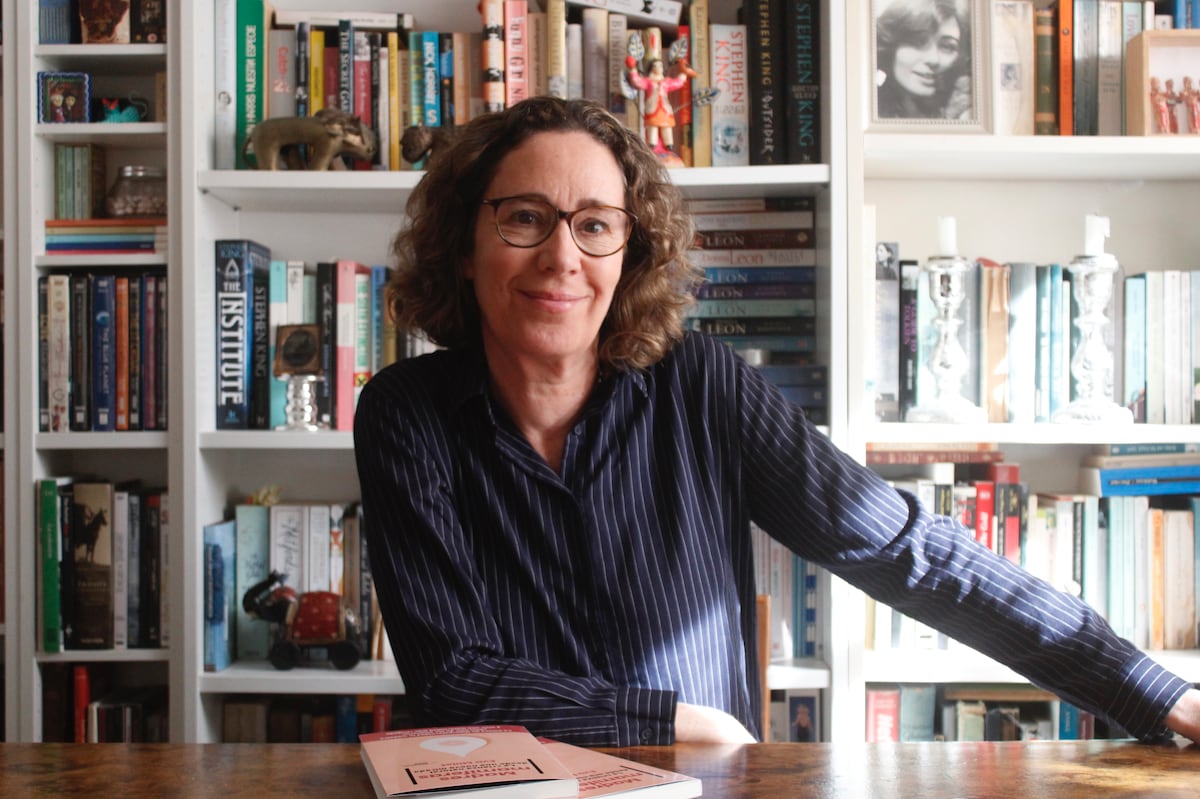
From the United States come the echoes of a parenting style known as “FAFO parenting” (“Fuck Around and Find Out”), a trend that — to put it simply — advocates that children should learn more from the natural consequences of their actions and less from constant adult intervention. “I’ve read about it, and it seems logical to me that this approach is being discussed. I think parents are a bit tired of constantly intervening in their children’s lives and meticulously weighing everything they do and say, simply because they’re scared of not being ‘respectful’ enough, or of traumatizing them for life,” writer and journalist Eva Millet tells EL PAÍS.“I think a trend that eases the burden of guilt a bit — [while also giving] parents more leeway — will be well-received, both by parents and children,” adds the 57-year-old Barcelona-born author. She has published eight Spanish-language works in total, including four children’s books. Still, Millet asserts that terms like “respectful parenting” or “conscious parenting” will continue to exist. “After all, who doesn’t want to raise their children that way? The opposite of that is hardly appealing. If there are labels that define a way of raising children with such a positive connotation, it’s logical that many parents will want to identify with them,” she adds. Millet has written four books on parenting. Among them is Hiperpaternidad (2016) (Hyperparenting), which has been a great success in the Spanish-speaking world. It celebrates its 10th anniversary this year.Q. You mention a certain weariness among parents. How does this manifest itself and what factors do you think explain it?A. Yes, I perceive a clear weariness, especially among mothers, who still shoulder much of the responsibility for organizing family life. It’s very noticeable on social media. And I’m not just talking about vulnerable families, but also middle- and upper-class families, who feel that the burden of raising children has become excessive. Raising children has never been easy, but today, it has become unnecessarily complicated. On the one hand, there’s a constant aspiration for perfection: to have the perfect child and to be the perfect father or mother… something as unattainable as it is exhausting. On the other hand, certain parenting models — respectful, positive, conscious, or attachment parenting — seem to impose a series of requirements for belonging to the group of “good parents.” If you don’t meet this standard, there is a feeling that your child will not develop secure attachment, emotional intelligence, or their full potential. In short, it can make parents feel that they have failed in their role.Q. Do you think some interpretations of so-called “respectful parenting” have ended up creating excessive pressure on families?A. Yes. These models have led to very intensive parenting and anything that is so intense eventually becomes exhausting. It was predictable that, sooner or later, a disruptive approach like FAFO would emerge. Parenting is natural, instinctive and creative. Human relationships are full of imperfections. But some interpretations of respectful parenting leave hardly any room for error. It seems that parents can’t simply say “no,” they have to justify every decision, always listen with complete attention, validate every emotion, ask permission before taking any action, and never raise their voice. This ends up being maddening, because we’re human. The constant pursuit of perfection is an excellent recipe for guilt, frustration and unhappiness.Q. The so-called “FAFO parenting approach” advocates that children learn through the natural consequences of their actions. What aspects of this approach do you find interesting? And which ones raise the most doubts for you? A. Even though the acronym sounds kind of aggressive, the idea is simple: whoever makes a decision must accept the consequences. As long as there are no risks to their safety, I think it’s positive for children to discover that not everything goes as planned and that making mistakes is also a learning experience. Many parents struggle to tolerate their children’s frustration and try to prevent any setbacks. FAFO proposes a more relaxed parenting style, an idea I already defended in my book Hyperparenting. Sometimes, it’s enough to observe before intervening. If we never allow a child to fail, we also don’t give them the opportunity to learn. Q. Where is the line between allowing a child to experience the consequences of their decisions and completely washing your hands of them?A. The difference lies in assessing what the child can do for themselves. Before solving any problem, we should ask ourselves: “Can they do it alone?” Can they get dressed, carry their backpack, make their bed, resolve a conflict with a friend, or do their homework without help? If the answer is “yes” — and if there’s no risk to their safety — it’s best to let them do it and trust them. I’m also concerned about the enormous polarization that exists in parenting today. There are children who are overprotected, overindulged and smothered, while others live in situations of neglect or hardship. It’s becoming increasingly difficult to find a balance.Q. Is there a risk that this trend will lead to a return to more authoritarian or punitive models?A. I don’t think so. Today, we know that authoritarianism doesn’t work. And it shouldn’t be confused with authority. The problem is that many families have gone to the other extreme: they consider saying “no” to be a form of aggression. It isn’t. Children need clear, consistent, and age-appropriate boundaries. Love and boundaries remain the two most important educational tools.Q. Do you feel that there’s a reaction when you push back against over-involvement or overprotection?A. Yes. Many people still identify with labels like “positive,” “respectful,” or “attachment parenting” because these have enormous symbolic power. We all want to be respectful parents; no one wants to define themselves as the opposite. But a reaction against excessively interventionist models is beginning to emerge. I especially notice it among teachers and also among many grandparents, who observe — with surprise — just how much we’ve overcomplicated parenting.Q. You mentioned that a trend that “eases the burden of guilt” — that relieves parents of blame — could be well received. Why do you think so many families feel this burden today?A. Because many parenting approaches convey the idea that there’s a right way to raise children and that, if you follow all the steps, you’ll have an extraordinary child. This message comes across through books, courses, conferences and social media. The problem is that no one can follow so many commandments. And, when parents fail, guilt arises. And this starts very early: [there are] mothers who feel like failures for having had a C-section, for not being able to breastfeed, for yelling at their children one day, or for not being able to afford the school they consider to be ideal. But we all make mistakes sometimes, and that doesn’t make anyone a bad parent.Q. What role has social media played in this feeling that parents have to do everything right?A. A huge role. Today, many parents use social media as one of their main sources of guidance for raising children. There are excellent professionals, but there’s also an abundance of perfect family narratives that have little to do with reality and that make many families feel inadequate. Added to this is the enormous amount of misinformation about parenting that gets circulated. Q. If you had to define the balance between offering support, setting limits and giving children space to learn on their own, what would it be?A. Limits are essential for family well-being. It’s not about constantly saying “no,” but rather about establishing clear, reasonable rules adapted to each stage of a child’s development. Supporting children doesn’t mean not doing things for them, either. A baby needs very different attention than a 10- or 12-year-old. I always say that parenting is about letting go. Our goal shouldn’t be to raise dependent children, but rather autonomous individuals who are capable of managing on their own. This is because a dependent person is unlikely to be a happy person.Sign up for our weekly newsletter to get more English-language news coverage from EL PAÍS USA Edition
Eva Millet, writer: ‘The constant pursuit of perfection is a recipe for guilt, frustration and unhappiness’
Full Article
Original Source
Read the full article at English →KhanList aggregates and links to publicly available news content. We do not host full articles from third-party sources. Always verify important information with original sources.