
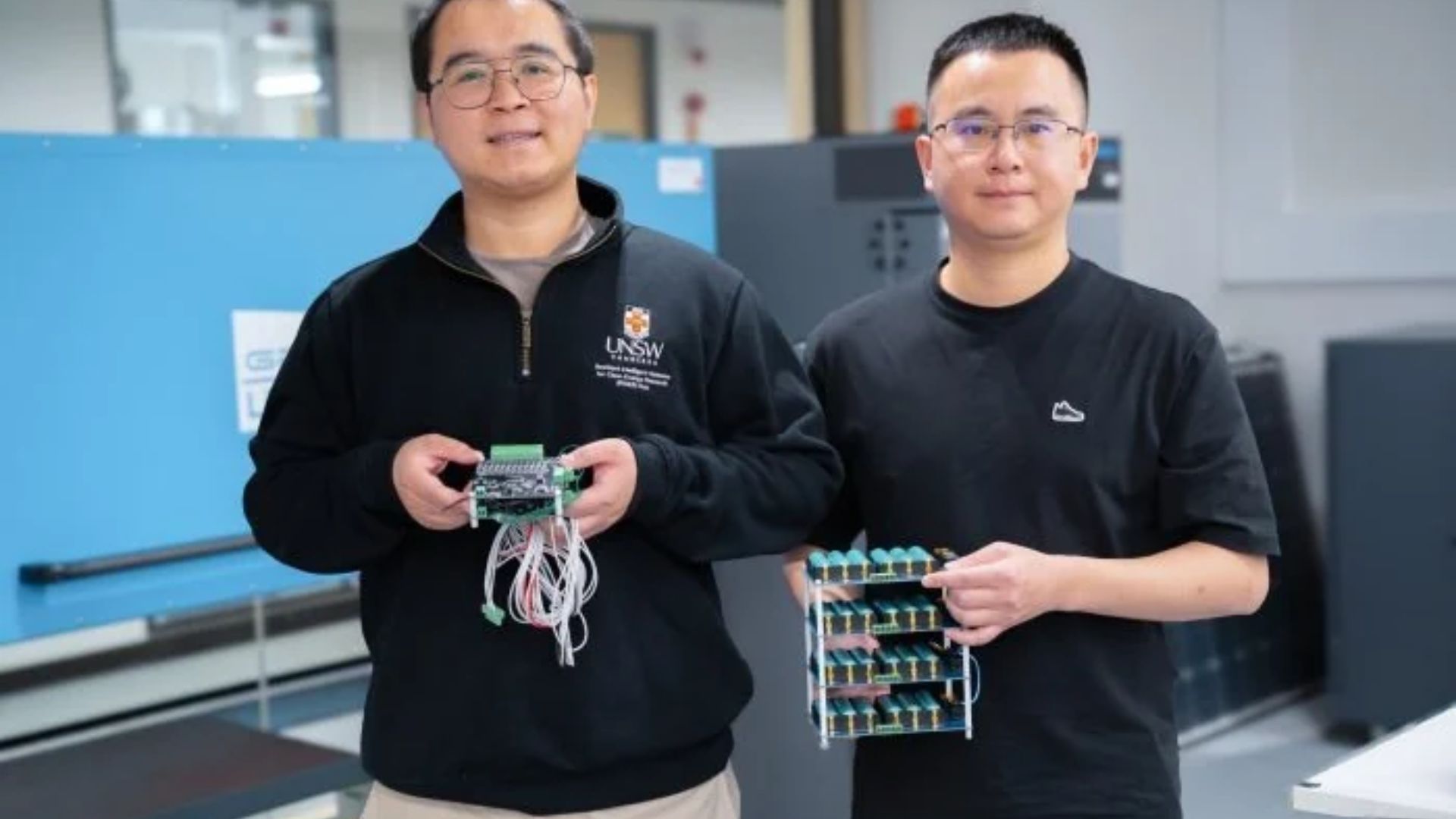
Around 250 million electric vehicles are expected to hit global roads by 2030. This is good, but at the same time, it also creates an impending wave of retired batteries that still hold massive untapped energy. Testing those used power packs for a safe second life currently takes a 10 hours per unit. Plus, it costs roughly $120 and carries a real risk of triggering a chemical fire. A new $1.3 million partnership in Sydney is slashing that marathon diagnostic down to less than three minutes. Researchers at UNSW Sydney have teamed up with battery recycling company DY New Energy to bring a rapid battery assessment platform out of the laboratory and onto the factory floor. Supported by the Australian government’s Trailblazer for Recycling and Clean Energy (TRaCE) Lab to Market Fund, the technology replaces stressful full charge-discharge cycles with short, targeted electrical pulses. Statistical models then analyze how each cell responds, estimating battery health with over 90 percent accuracy, and keeping testing costs below $25 per pack. Rapid pulse testing Slow and expensive diagnostics often force operators to scrap viable batteries prematurely or dump them into landfill. Co-lead Associate Professor Huadong Mo pointed out a stark gap in the industry: up to 95 percent of a battery’s components are recoverable. But Australia currently collects only a tiny fraction of its lithium-ion cells for recycling. “As more EVs reach the end of their first life, Australia has a real opportunity to build a local second-life battery industry, with retired batteries supporting grid and community energy storage. Fast, affordable testing is one of the key pieces needed to make that happen, because every battery we can safely give a second life keeps delivering value instead of heading straight to landfill,” Mo said. Real-world recycling plants rarely receive neat, uniform shipments of identical power cells. The team built their statistical models to handle messy, mixed batches across the three dominant lithium-ion chemistries: lithium iron phosphate (LFP), nickel cobalt aluminum (NCA), and nickel manganese cobalt (NMC). An AI-powered decision engine will sit at the core of the platform. Interestingly, this system will automatically recommend whether a retired unit should be routed to recycling or repurposed for stationary energy storage. Engineers are also developing an intelligent Battery Management System (iBMS) module to embed these insights directly into working battery packs for continuous, real-time monitoring. “Validating [our technology] across more than 500 batteries in real operating conditions is the critical next step. Lab results are promising, but industry needs to see the technology perform on the factory floor and in working energy storage systems before adopting it,” said Dr Ziyang Lyu. Future uses DY New Energy will supply the live operational data, industrial workflows, and physical testing grounds needed to prove the system under commercial pressure. Once proven across those 500 units, the platform could establish a faster, safer global standard for keeping clean energy hardware in circulation. Electric vehicle batteries are typically retired once they drop to 70 to 80 percent of their original capacity. While that reduced charge is no longer ideal for long highway drives, these packs remain strong enough for stationary energy storage. In the future, these repurposed units can power off-grid solar farms, telecom backup generators, EV fast-charging stations, and community microgrids for another five to ten years before finally being broken down for their raw metals.Get the latest in engineering, tech, space & science - delivered daily to your inbox.Mrigakshi is a science journalist who enjoys writing about space exploration, biology, and technological innovations. Her work has been featured in well-known publications including Nature India, Supercluster, The Weather Channel and Astronomy magazine. If you have pitches in mind, please do not hesitate to email her.
EV battery testing time cut from 10 hours to three minutes with electrical pulse method
Full Article
Original Source
Read the full article at Interestingengineering →KhanList aggregates and links to publicly available news content. We do not host full articles from third-party sources. Always verify important information with original sources.