
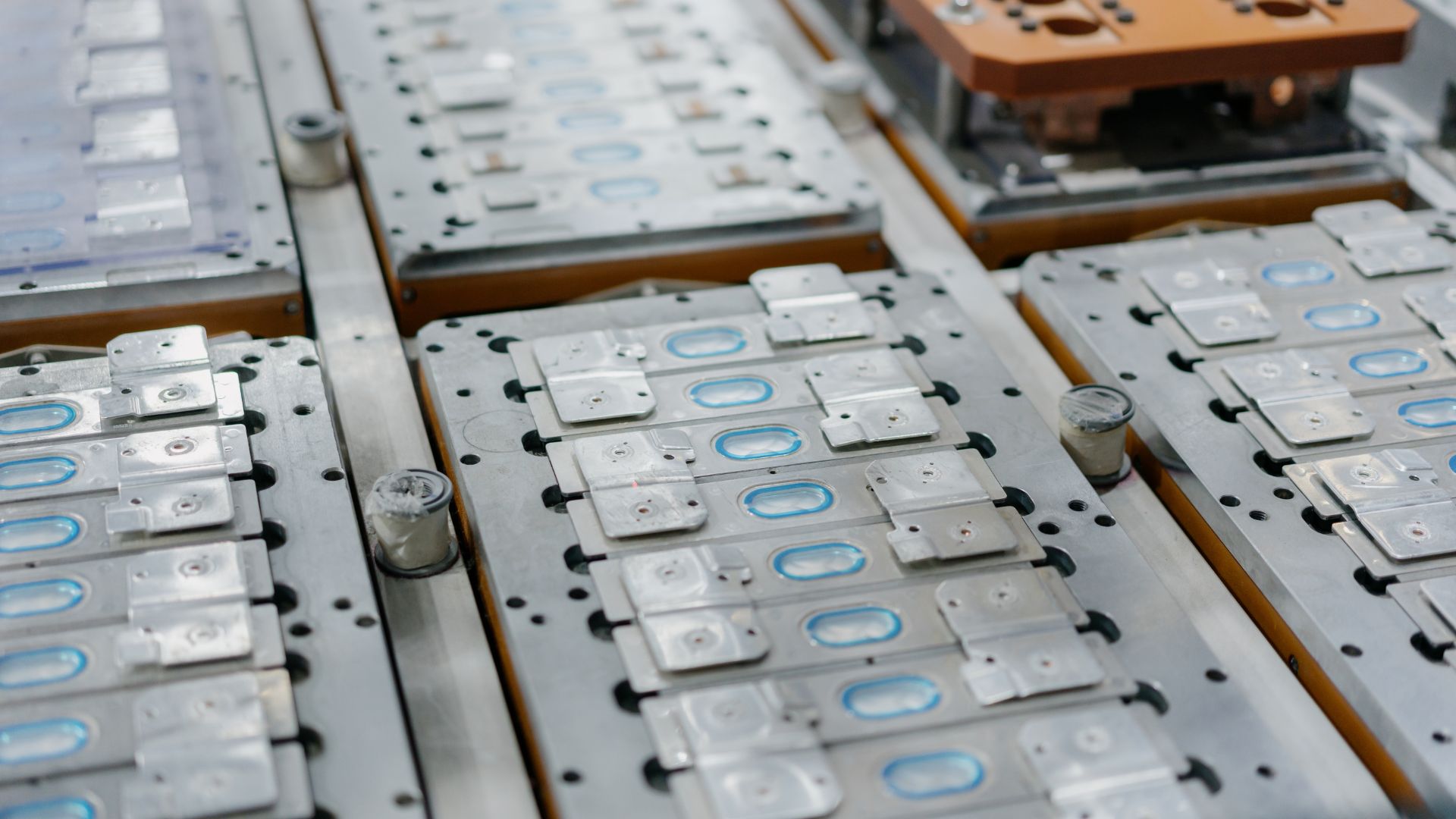
A handful of aging cells can shorten the life of an electric vehicle battery pack, a new study has found. Researchers led by Prof. CHEN Zhongwei of China’s Dalian Institute of Chemical Physics and Prof. ZOU Changfu of Sweden’s Chalmers University of Technology examined vehicle data over more than three years. The dataset covered passenger cars using nickel-manganese-cobalt batteries and buses using lithium-iron-phosphate batteries. The team developed a fleet-scale framework to measure how cell differences affect pack performance, longevity, and energy utilization. Some vehicles had traveled up to 300,000 kilometers. The weakest cell sets the limit An EV battery pack contains cells working as one system. However, variations in materials, manufacturing, cell grouping, temperature, and operating conditions can cause them to deteriorate at different rates. This creates a “weakest-cell” effect. During charging, a lower-capacity cell can reach the upper voltage limit first. During discharge or high-power operation, a cell with greater internal resistance may reach its safety limits. Once the fastest-aging cell reaches the retirement threshold, the pack may be removed from service even if the remaining cells retain usable capacity. Unlike earlier research based on laboratory tests, the study examined the long-term consequences of cell inconsistency during actual vehicle operation. Real-world data reveals aging patterns The researchers analyzed voltage, current, temperature, and state-of-charge signals. They combined battery-model identification with neural networks to estimate changes in the capacity and internal resistance of cells under standardized conditions. This method reduced the influence of seasonal changes and differences in charge levels and operating conditions, allowing consistent comparisons be aging trajectories. In passenger cars, state-of-health variation remained small at lower mileage. After vehicles crossed roughly 105,633 miles (about 170,000 kilometers), however, some cells began aging faster, and the differences became pronounced. The severity of this accelerated degradation varied between vehicles. Packs leave usable energy behind Under a common retirement threshold, inconsistency reduced usable pack-level state of health by 6.2 percent in passenger cars and 7.5 percent in buses. Compared with the average lifetime of their cells, pack life fell by 17.7 percent and 22.8 percent, respectively. Differences in internal resistance also reduced power capability by 12.9 percent in passenger cars and 15.1 percent in buses. Meanwhile, state-of-charge imbalance typically reduced usable charged capacity by less than 2 percent under the balancing strategies used. Lifetime energy-resource utilization reached only 80.7 percent for passenger-car packs and 72.9 percent for bus packs. Consequently, about 19.3 percent and 27.1 percent of their potential energy resources remained unused when the weakest cells prompted retirement. “Our findings show that the performance and lifetime of an EV battery pack are not determined solely by the average aging level of their cells, but can be strongly constrained by a small number of faster-aging cells,” said Prof. CHEN. “By quantifying this weakest-cell effect under real-world EV operation, our study provides a basis for improving battery utilization, lifetime management, and system-level optimization,” he added. Better manufacturing consistency, cell grouping, balancing controls, thermal management, and reconfigurable battery systems could reduce the weakest-cell effect, the researchers said.The study was published in the journal Nature Energy.Get the latest in engineering, tech, space & science - delivered daily to your inbox.Atharva is a full-time content writer with a post-graduate degree in media & amp; entertainment and a graduate degree in electronics & telecommunications. He has written in the sports and technology domains respectively. In his leisure time, Atharva loves learning about digital marketing and watching soccer matches. His main goal behind joining Interesting Engineering is to learn more about how the recent technological advancements are helping human beings on both societal and individual levels in their daily lives.
EV battery packs waste up to 27% of potential energy, new study reveals
Full Article
Original Source
Read the full article at Interestingengineering →KhanList aggregates and links to publicly available news content. We do not host full articles from third-party sources. Always verify important information with original sources.