
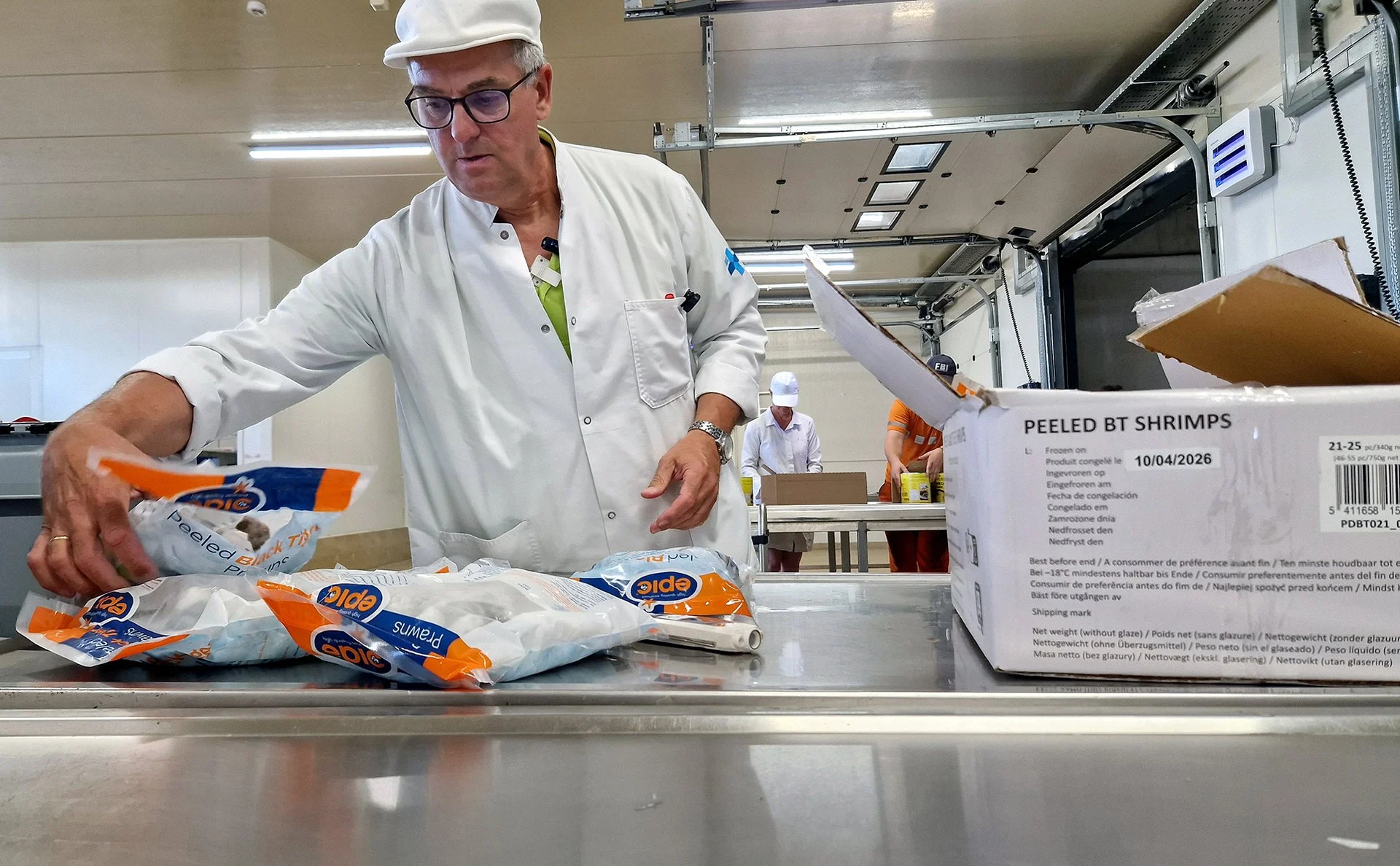
First published in Respekt. Europe is opening new trade routes and strengthening its system for controlling imported food. We went directly to Antwerp to see how it is done. “Once we found a frozen dog in a container from China. That was strange, because importing frozen dogs into the EU is not allowed,” veterinarian Stefan Van Deun answered sternly when asked the strangest thing he had ever seen while inspecting imported goods. As he speaks, he gets up from the desk in a spacious room full of his colleagues. Some are furiously stamping stacks of documents; others are staring at computer monitors full of various tables and charts. We are in the office of a border control post in the Belgian port of Antwerp. After Rotterdam in the neighbouring Netherlands, this is the second-largest port in Europe. And Van Deun, with several documents clipped to a file board in his hand, is about to leave the office for a completely different environment. “You have to put on a coat and a hairnet,” he said in the adjacent, smaller room, while setting an example and putting on a white medical coat. Only instead of a hairnet, he put a white cloth flat cap on his head. The walk down the glazed, heated side corridor takes only a moment, yet you can still catch a glimpse of part of the impressive port – tall cylindrical buildings and distant wind turbines. After a few seconds, we step into a spacious, thoroughly cleaned hall. On the back wall of the tiled room, there are six large garage doors. Everything in the hall is aggressively white, except for the beige floor and the silvery stainless-steel examination tables in front of each of the doors. The room resembles a grandiose mortuary. Van Deun quickly wheels a small metal trolley over from a corner and, looking over his glasses, focuses intently on the documents in his hand. "Right, so now we will look at a shipment of shrimps from India," he said. He and his colleagues are tasked with inspecting the containers in which food, feed or plant products are brought into the EU from third countries for commercial purposes. "We always scan and open all containers and carefully check the documentation for every single consignment. In the case of India, every second shipment also has to undergo testing – I will show you what that looks like," he said. Source: Magdalena Fajtová. Van Deun is one of many experts who inspect imported food and other goods at the EU’s external borders. In recent months, the bloc has concluded a series of major trade agreements, including with India and the Mercosur countries, and a strong emphasis is being placed on food safety controls. As a result, the European Commission's department for health and food safety (DG SANTE) is tightening its rules and, at the same time, in line with the current European effort to cut unnecessary bureaucracy, trying to speed up and simplify the system. Border checks still differ slightly across member states, yet the EU has long had one of the highest levels of food quality in the world – to a large extent thanks to people like Stefan Van Deun. The frozen shrimps Van Deun walks with the metal trolley and the file board across the spacious room towards one of the doors in its centre. One of his colleagues opens them and behind them a container is already in place – the front side of this huge metal box fits exactly into the corresponding opening in the wall. Van Deun gives his colleagues a signal and they cut the seal on the container door and yank it open. A blast of icy air immediately pours into the room and then Van Deun steps up to the container and picks out five of the countless cardboard boxes stacked on top of each other.
EU’s hidden food border inspectors get busier in an era of expanding trade
Full Article
Original Source
Read the full article at Euobserver →KhanList aggregates and links to publicly available news content. We do not host full articles from third-party sources. Always verify important information with original sources.