
An open Europe in an open, globalised world. For the last 30 years, that’s how EU apparatchiks saw the European project and the EU’s place in the world. The Germans had an expression for it, Wandel durch Handel, which translates as “change through trade”.It was based on the belief that the more you enmeshed countries in trade, the more they would cohere to global liberal norms. Economic rationalism would suppress conflict.It was the real-world expression of Francis Fukuyama’s End of History thesis: the belief that communism’s failure in 1990 would lead every country down the path of liberal capitalism.This fantasy crashed in 2022 when Russia invaded Ukraine.READ MORERussia, it was thought, would never have risked its lucrative trade with Europe by initiating a war and weaponising the most lucrative part of that trade: energy.But that’s exactly what it did, making former German chancellor Angela Merkel’s appeasement of Moscow and all-in bet on Russian gas go down as one of the biggest strategic errors of modern times.[ Angela Merkel’s legacy under scrutiny in a Germany gripped by distrust and a rising far-rightOpens in new window ]But in reality the debunking of Europe’s open borders fantasy came earlier and had a bigger gatecrasher than Russia.Beijing’s “Made in China 2025” plan, announced by Chinese premier Xi Jinping in 2015, is perhaps the real starting point.The aim of the plan was to transform China from low-grade assembler of cheap goods into high-tech manufacturing hub.To climb the global industrial ladder, it leveraged massive state investment, integrated supply chains and its rare earth monopoly, to produce at scale and at low cost.[ Francis Fukuyama and the case for being ‘usefully wrong’Opens in new window ]Many say this climb has been aided by unfair trade practices, including import controls, ownership limits and trade espionage. Regardless, the strategy has transformed China from industrial giant into manufacturing superpower. It accounts for nearly two-thirds of global EV (electric vehicle) sales and makes more than 75 per cent of the world’s lithium-ion batteries.European leaders are slowly waking up to the so-called “China shock 2.0″, not because it is so apparent that China is the lead force in many sectors, including EVs, machinery, chemicals, pharma and software, but because Europe, rather than the US, is the principal victim of this colossal industrial pivot.As China searches for markets to absorb its excess exports, it has increasingly directed much of that manufacturing overcapacity at Europe, hollowing out the continent’s industrial capacity.This process has been accelerated by Donald Trump’s tariffs, which have reduced the US’s imports from China while accelerating Europe’s.EU imports from China have spiked by 89 per cent since 2015 and the bloc’s trade deficit with Beijing now exceeds €1 billion a day.Germany’s car industry is at the coalface of this hollowing-out. The big three -Volkswagen, BMW and Mercedes-Benz – are facing job cuts and plant closures as their Chinese sales plummet and they lose market share to lower-priced Chinese EVs.Volkswagen plans to axe 100,000 jobs by 2030. And it’s not just cars: batteries, commercial vehicles, solar panels, wind turbines, machine tools and software are all being produced cheaper in China.China’s state-run aircraft manufacturer, Comac, has even begun to rival Boeing and Airbus.European leaders are pushing China to accept import quotas.[ EU urges UK to raise tariffs on Chinese cars to avoid ‘made in Europe’ barriersOpens in new window ]In her state of the union address last month, European Commission president Ursula von der Leyen said Europe’s “unsustainable” deficit with China had reached a tipping point and that the bloc was suffering from deindustrialisation as a result.The original China shock took place in the US.The US is estimated to have lost five million manufacturing jobs in the 10-15 years after China joined the World Trade Organisation in 2001. A combination of cheap imports and US firms making strategic decisions to offshore production in search of cheaper labour gutted the country’s manufacturing base.The decline was unprecedented in US economic history and created the so-called Rust Belt from the Midwest to the Great Lakes, an area that spans from western New York to Michigan and north Illinois, encompassing states such as West Virginia, Ohio and Indiana.It was once the backbone of US industry but is now synonymous with economic decline, population loss and urban decay.The so-called “Rust Belt revolt” unified black and white working-class voters against Hillary Clinton and the Democratic Party. Trump and the politics currently playing out in Washington are largely a product of this backlash.Now it’s Europe’s turn.Germany’s far-right Alternative for Germany (AfD) party has been the chief beneficiary of the country’s manufacturing woes.Its recent political victory in the German state Saxony-Anhalt – a manufacturing hub for automotive parts and components – was a watershed moment as it placed a far-right party on the brink of power at a regional level for the first time since the fall of the Third Reich in 1945.[ West fears AI may kill us all but China and others see ‘immense’ opportunityOpens in new window ]The AfD’s anti-immigration, anti-woke, “Germany for Germans” message is almost an exact replica of Trump’s Make America Great Again soundbite.Europe needs to rebalance – fast – if it is to avoid the same fate as the US.
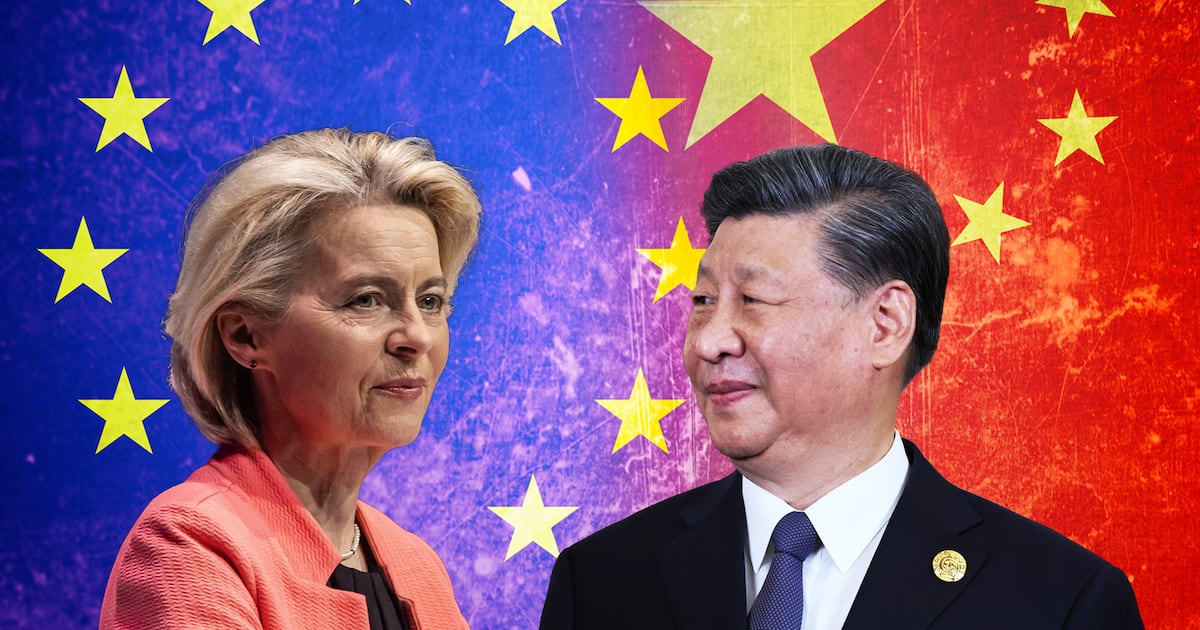
Europe’s China shock is hollowing out industry and shifting politics to the right
Full Article
Original Source
Read the full article at Irishtimes →KhanList aggregates and links to publicly available news content. We do not host full articles from third-party sources. Always verify important information with original sources.