
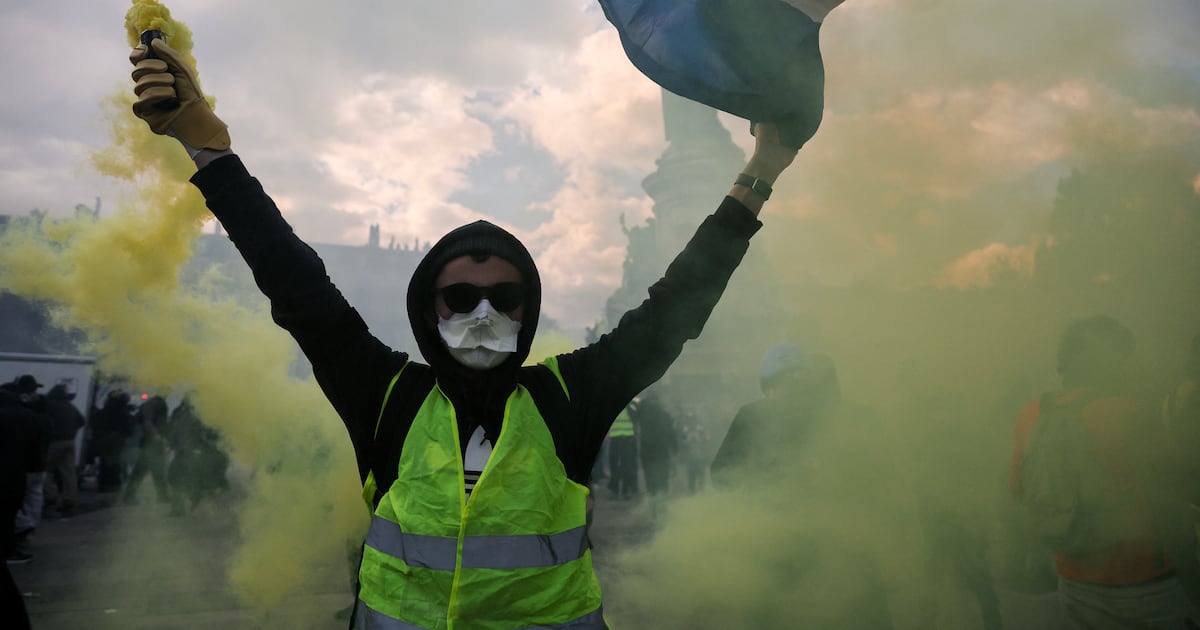
Young people are at the forefront: angry about education conditions, Gaza and the sense they are getting a raw deal. In Spain and Portugal, the housing crisis is the main motivation. In Albania, it is opposition to a government seen as corrupt, with students at the forefront.In Italy and France, autumn student protests have a greater sense of momentum than in previous years. This weekend in both countries a new contingent of people joined protests, apparently intent on destruction and confrontation with the police. Looting followed.The French government has announced a massive security operation to prevent a repeat this weekend, while Rome has imposed a sweeping emergency security law, clearly concerned about a contagion effect.France: students, riots and curfewsIn France, online calls for nationwide protest against fuel prices and the cost of living on October 17th began to go viral in September, branded as a revival of the “gilet jaune”, or yellow vest, movement.READ MORESeparately on September 17th, students at a high school in Créteil, southeast of Paris, began protesting about teacher shortages. Protests spread to other secondary schools, with schools emptying and students marching on Tuesdays and Thursdays. Teacher unions declared their support and universities joined too, fuelled by outrage at a heavy-handed response by police. The movement had momentum.On Saturday, October 17th, the student movement and gilet jaune call-out combined. A small hardcore group on the sidelines of the official marches set about rioting, looting and burning down buildings. Sporadic looting followed on the evening of Sunday 18th.[ What’s behind the violence shaking France, and what comes next?Opens in new window ]Unrest diminished as French authorities announced local curfews. All eyes are now on the next protests: the yellow vests have called for an “act two” on Saturday, October 24th, and unions have called a large protest and strike for November 5th.Belgium: French unrest crosses borderIn Belgium, high school students in French-speaking areas began protesting in solidarity with their peers in France from October 1st. Tens of thousands marched in protest at school conditions and austerity measures on October 9th, and a smaller protest about the cost of living on October 17th saw violent clashes with police.Italy: Protests, looting and crackdownIn Italy, autumn protests and the occupation of high schools by students are almost a seasonal event.In Rome it began this year with a march by tens of thousands in solidarity with Palestine on September 22nd, which saw students occupy part of La Sapienza university. A high school was occupied next.On September 24th, the government of prime minister Giorgia Meloni passed an emergency decree limiting the percentage of students in each class who can be non-Italian citizens. Several more high schools began protesting in response. On October 16th, students marched across Italy under the banner of “No Meloni Day”. Complaints included school conditions, funding for the defence industry, and the government’s school decree. They also expressed solidarity with their peers in France. Demonstrators light flares during a protest organised by the Italia in Piazza movement in Milan on Saturday. Photograph: Piero Cruciatti/AFP via Getty Images A string of further high schools were occupied by their students.Social media channels “L’Italia in Piazza” and “Movimento 17 ottobre” called for protests against the cost of living in several Italian cities on Saturday, October 17th. In some cities it was a flop. In Milan, a protest march was confronted by the police and devolved into rioting, disorder and looting, reminiscent of scenes happening simultaneously in France.[ Italy’s Giorgia Meloni faces a challenge from the rightOpens in new window ]Italian media report that those involved in unrest were disadvantaged young people from the suburbs, a different group to the protesting students, apparently driven by footage on social media.Further sporadic rioting, again attributed to social media posts, occurred on Sunday, October 18th.The government announced the deployment of army troops to Milan. Clearly concerned about the possibility of contagious rioting, the Meloni government passed a sweeping emergency decree on Tuesday night.The decree reduces the presumed age of criminal responsibility to 14, extends powers of preventive detention from the age of 16, introduces fines for the parents of minors involved in disorder, and introduces a new crime of “organised violence at public protests”.[ Michael McDowell: France is falling to the extremes of left and right. Ireland cannot be complacentOpens in new window ]Such emergency decrees become effective immediately in Italy, but need to be approved by parliament within 60 days or they lapse.The “October 17 Movement” have called for protests every Saturday at 3pm. Students and grassroots movements have called a new day of protest for October 30th. Major unions have called a general strike for November 20th.Spain: Rents, evictions and angerSpain saw widespread protests about the housing crisis from September. Anger crystallised around the eviction and subsequent death of 87-year-old Maricarmen Abascal, a Madrid widow who lost her flat of 60 years after an investment firm bought it and she couldn’t afford the rent hike. Protesters set up encampments in some cities.People wave the Spanish flag in Madrid's Puerta del Sol in front of a protest encampment in the square. Photograph: Eduardo Parra/Europa Press via Getty Images After failing to pass measures to ease the housing crisis through a hung parliament, prime minister Pedro Sánchez called a snap election for November 29th. The centre-right conservative party is currently leading in polls.Portugal saw connected protests about spiralling housing costs, with demonstrators setting up encampments in Lisbon and Porto.Albania: Youth-led revolt growsAlbania saw initial protests in May against the planned development of an ecologically protected island overseen by Jared Kushner, Donald Trump’s son in law. The government of prime minister Edi Rama was accused of cronyism.Fresh protests co-ordinated over social media broke out on October 13th, with high school students and university students at the forefront. A protester holds an Albanian flag in front of a burning kiosk in central Tirana on October 15th. Photograph: Armend Nimani/AFP via Getty Images Their demands focus on high tuition and poor conditions on campuses, but the protests are also about broad dissatisfaction with the government, economic stasis and alleged corruption. The last week has seen fierce clashes between police and protesters demanding Rama’s resignation.
Europe’s angry autumn: what’s driving the wave of protests?
Full Article
Original Source
Read the full article at Irishtimes →KhanList aggregates and links to publicly available news content. We do not host full articles from third-party sources. Always verify important information with original sources.